
The Deep Dive Digest is a weekly digest of the site’s key news. You can subscribe for free to an ad-free version, automatically emailed to your inbox. Sign up below.
This is a special edition of the Deep Dive Digest, built around female athlete tech. If your training group or circle includes female athletes who use a Garmin, Oura, or Whoop, it is worth forwarding directly. The data discussed here affects training decisions in ways most wearable reviews have not addressed.
Garmin’s VO2max algorithm was trained predominantly on male data. For female runners the output can mislead in both directions, and the research explains why and by how much. Oestrogen and progesterone affect heart rate, fuel use, body temperature, HRV, and recovery scores across the menstrual cycle. Most wearables measure some of these signals and interpret none of them in hormonal context. The guide covers what is actually happening at each phase, and what your device can and cannot tell you about it.
Optical heart rate accuracy varies across skin tones and wrist sizes. The research is less settled than the headlines suggest, and the controlled studies tell a more nuanced story than either the critics or the manufacturers acknowledge.
RED-S shows up in declining HRV baselines, recovery scores that will not improve, and menstrual cycles that shift before they disappear. The guide covers the physiology, identifies what Garmin, Oura and Whoop data can realistically flag, and is clear about what only a clinician can confirm.
The final piece is practical: how to cross-reference Garmin recovery metrics with menstrual phase to make smarter training decisions across a 28-day cycle. All five pieces are collected at the5krunner’s FemTech Hub.
This week’s Indie App Spotlight is IntervalCoach, the most read entry in the series. IntervalCoach is an AI training app that rewrites today’s cycling or running session based on your recovery data, available on web, iPhone, Mac and Android.
Female VO2max on Garmin: Why the Number Lies and What to Do
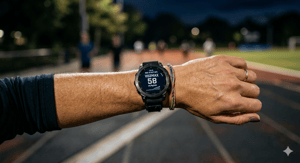
Garmin VO2max estimates are built on algorithms trained predominantly on male data. For female runners the number can mislead in both directions. Here is what the research shows and how to interpret your own figure.
Hormones and Endurance Training: What Your Cycle Actually Does
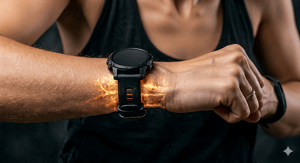
Oestrogen and progesterone affect heart rate, fuel use, body temperature, HRV, and recovery scores across the menstrual cycle. Here is what is actually happening at each phase, and what your wearable can and cannot tell you about it.
Wrist HR Accuracy: Dark Skin and Small Wrists Explained
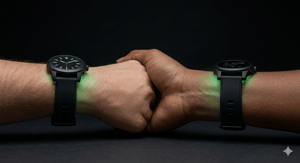
Optical heart rate monitors behave differently across skin tones and wrist sizes, but the research is less settled than the headlines suggest. Here is what the controlled studies actually show, where the evidence is thin, and what it means for training decisions.
The Deep Dive Podcast
Listen to one of our recent discussions on the Deep Dive podcast – EP75 Why smartwatches fail female physiology
Browse every edition in the Deep Dive Digest archive.
Previous edition: Deep Dive Digest #17
Last Updated on 3 October 2026 by tfk the5krunner
Small things I always use
- Garmin 90-degree charging adapter: Charges your Garmin from any USB-C cable. Essential when travelling. I use one.
- Body Glide: The blue anti-chafe stick swimmers and runners carry. I use it.
- Speedo earplugs: Fewer ear infections and no cold-water dizziness. I use them.
- Dryrobe Advance: My winter changing robe for open-water swims. I use one. A cheaper option is the AONYIYI changing robe.
- Maurten: Race fuel that stays easy on the stomach. I use them.
- Garmin charging puck: The quickest way to top up before a session. I use one.
- Injinji: Toe socks that stop rubbing, so you run more. I use them.
- Ultimate toe protectors: Stop black toenails on long runs. They work. I use them.
- Compressport R2 v2 calf sleeves: My calf sleeves of choice. I use them.
- Cellucor C4: My pre-workout before hard sessions.
- TPU tubes: Schwalbe Aerothan, Tubolito and Pirelli SmarTube. Light, tiny spares. I use all three.
- G8 insoles: Adjustable insoles that are good. I use them.
- Cycplus Cube: A 97g electric pump that gets a road tyre rideable in two minutes. I carry one. 5% off with code THE5KRUNNER.
Watches and sensors
- Polar H10: My daily driver for waking HRV.
- Polar Verity Sense: My backup arm-worn HR sensor.
- Nomad bedside charger: Charges my iPhone and Apple Watch overnight. I use it, and many of their bands.
- Train.Red: The best muscle oxygen sensor I’ve used.
- Tymewear: Accurate heart rate and reliable ventilatory zones. I use it to pace endurance rides over an hour.
- Garmin Forerunner 970: A pro-grade triathlon watch. I use this.
- Apple Watch Ultra 4: My daily smartwatch. No phone needed on rides.
- Garmin Fenix 9 Pro: I’ve just bought one.
On the bike
- Continental GP5000 for everyday riding, and Aero 111 on the front for special occasions.
- Helmets: Specialized S-Works Evade 3 for road riding, and Rudy Project Wing for TT-style races. I use both.
- Ravemen FR300: A front light that mounts under your Garmin or Wahoo. I use one.
- Wahoo TRACKR Radar: I use it on one bike and Varia on the other. They perform the same.
- Garmin Varia RTL515: Radar that warns you of cars from behind. I use this model.
- Wahoo ELEMNT Roam 3: The bike computer that’s easy to use. I use mine on most rides.
- Favero Assioma Pro RS2: Accurate power pedals that swap easily between bikes. I use this model.
Home and indoor training
- NPE Runn: Makes my basic treadmill smart, sending more accurate speed and distance to my watch and Zwift. I use it.
- Google Wifi: Keeps Zwift connected in my pain cave. I use it.
- Apple TV 4K: Zwift on the big screen. I use two.
- Google Nest Doorbell (wired, 2nd gen): My video doorbell, running in both Google Home and Apple Home. I use it.
Health, recovery and sleep
- FreeStyle Libre 3 Plus: Shows how my blood sugar responds to diet.
- hDrop: Measures my sweat loss in summer and indoors.
- Fourth Frontier Zone: Checks my heart under load in hard sessions.
- Oura Ring 5: My partner’s recovery tracker of choice.
- Kineon MOVE+: Red light therapy for niggles. It works.
- Eight Sleep: A cooling mattress cover my partner and I use nightly.
Reader-Powered Content

This content is not sponsored. It’s mostly me behind the labour of love, which is this site, and I appreciate everyone who supports it.
Support the site: Follow (free, fewer ads) · Subscribe (paid, ad-free) · Buy Me A Coffee ❤️
Written by real people, with AI assistance. Fact-checked and verified for originality. See the Editorial Policy. FTC: Affiliate Disclosure — some links pay commission. As an Amazon Associate, I earn from qualifying purchases.
tfk is the founder and author of the5krunner, an independent endurance sports technology publication. With 20 years of hands-on testing of GPS watches and wearables, and competing in triathlons at an international age-group level, tfk provides in-depth expert analysis of fitness technology for serious athletes and endurance sport competitors. ID
