DirtBags: Reusable Fuel Pouches That Replace Single-Use Gel, Chew and Powder Packets
Runners training for 8 to 10 hours a week and doing long runs of 2 hours or more can burn through a lot of fuel. A training block of three to four months might see over 100 single-serve fuels consumed. For ultra-marathon training with three- and four-hour-long runs on the weekend, that number climbs quickly.
Suppose you are using single-use gels, chews or energy powders to fuel your training and racing; that equates to hundreds of multi-layered laminated plastic packets going to landfill. Most are not recyclable.
For trail runners, mountain runners, and ultra-marathoners like Martin, who trains mostly in nature and enjoys the wildlife on the trail, this just doesn’t sit right. A packet that only holds sugar, used once and binned.
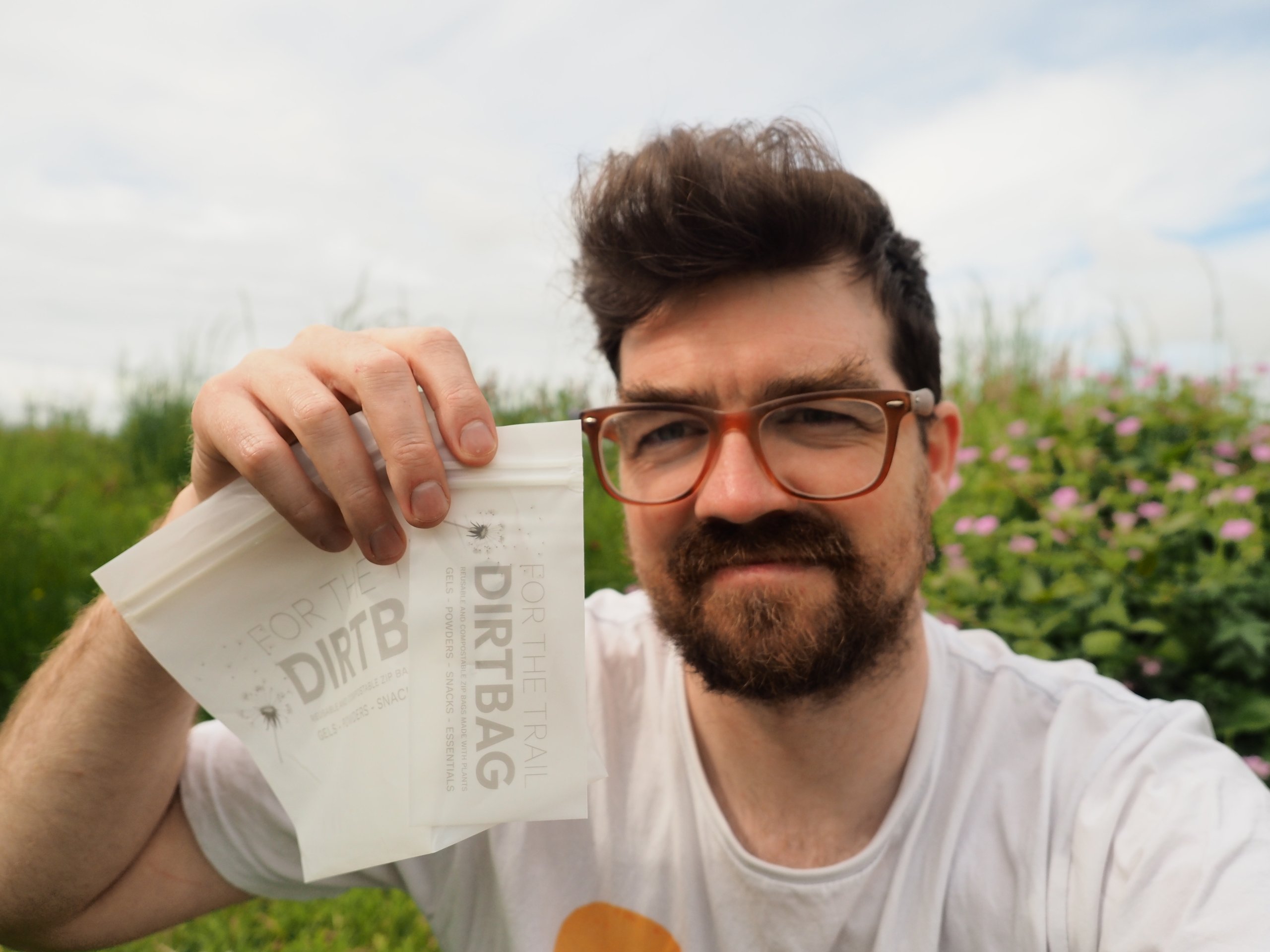
That is why Dirtbag’s owner, Martin, spent the last two and a half years working on a solution and came up with DirtBags. You can find them at shop.forthetrail.com.
They are gel-packet-sized zip pouches made from bioplastic, designed to be filled with your own fuel, whether bought in bulk or made at home, washed afterwards and reused for your next training run, race or adventure. When they eventually wear out, they can be composted in your own home compost setup: they are TUV and DIN CERTCO certified for home composting.
DirtBags come in two sizes: the Small DirtBag and the Large DirtBag.
The Small DirtBag is 14 cm x 6 cm, similar in size to a large energy gel packet. After hundreds of iterations and prototypes, it has been made to work well for single-serve energy gels, energy chews or energy powder that you later decant into your bottles or flasks.
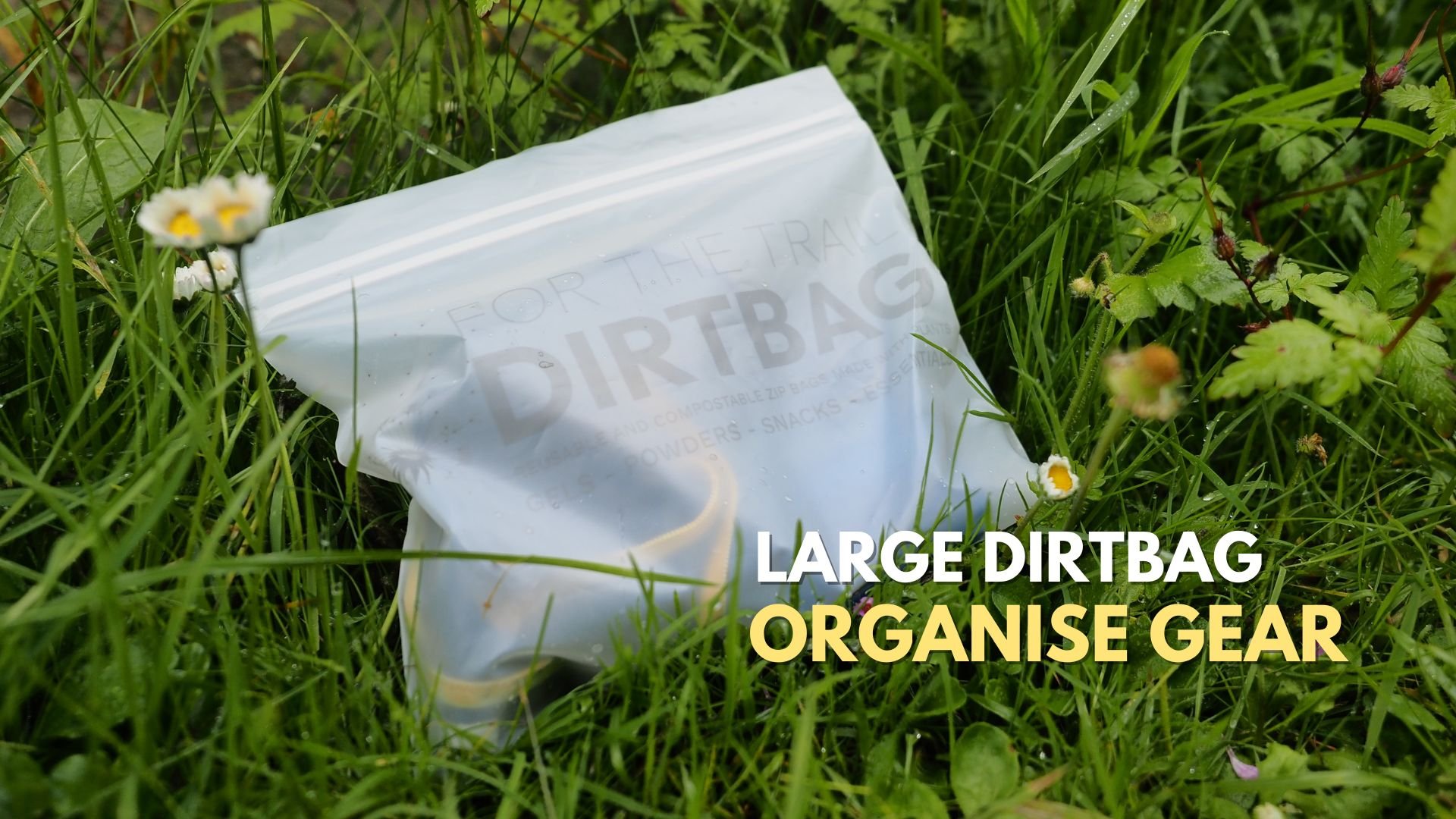
The Large DirtBag measures 16 cm x 18 cm and is ideal for bulk powder, snacks, or keeping small items dry and organised.
What problem are they solving?
For The Trail was set up to tackle two issues simultaneously: the affordability of running as prices continue to rise across every aspect of the sport, and the need to reduce single-use waste.
Gels, chews, and powders can cost £5- £6 per hour, provide just 60g of carbs, and generate waste at the same time. Switching from single-serving fuels in single-use packets to bulk or homemade alternatives gives you the same carbohydrates and often identical products for a fraction of the price.
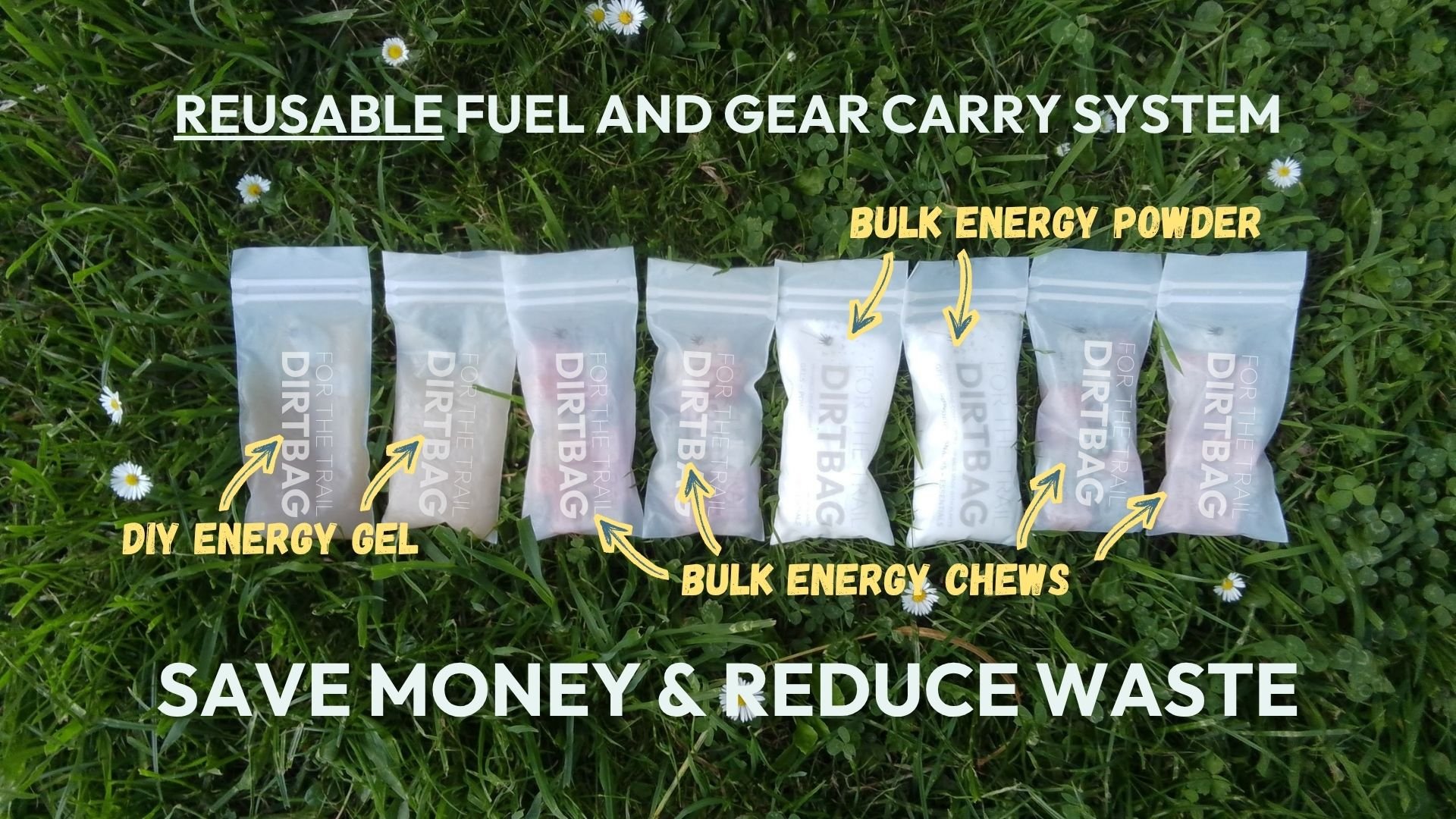
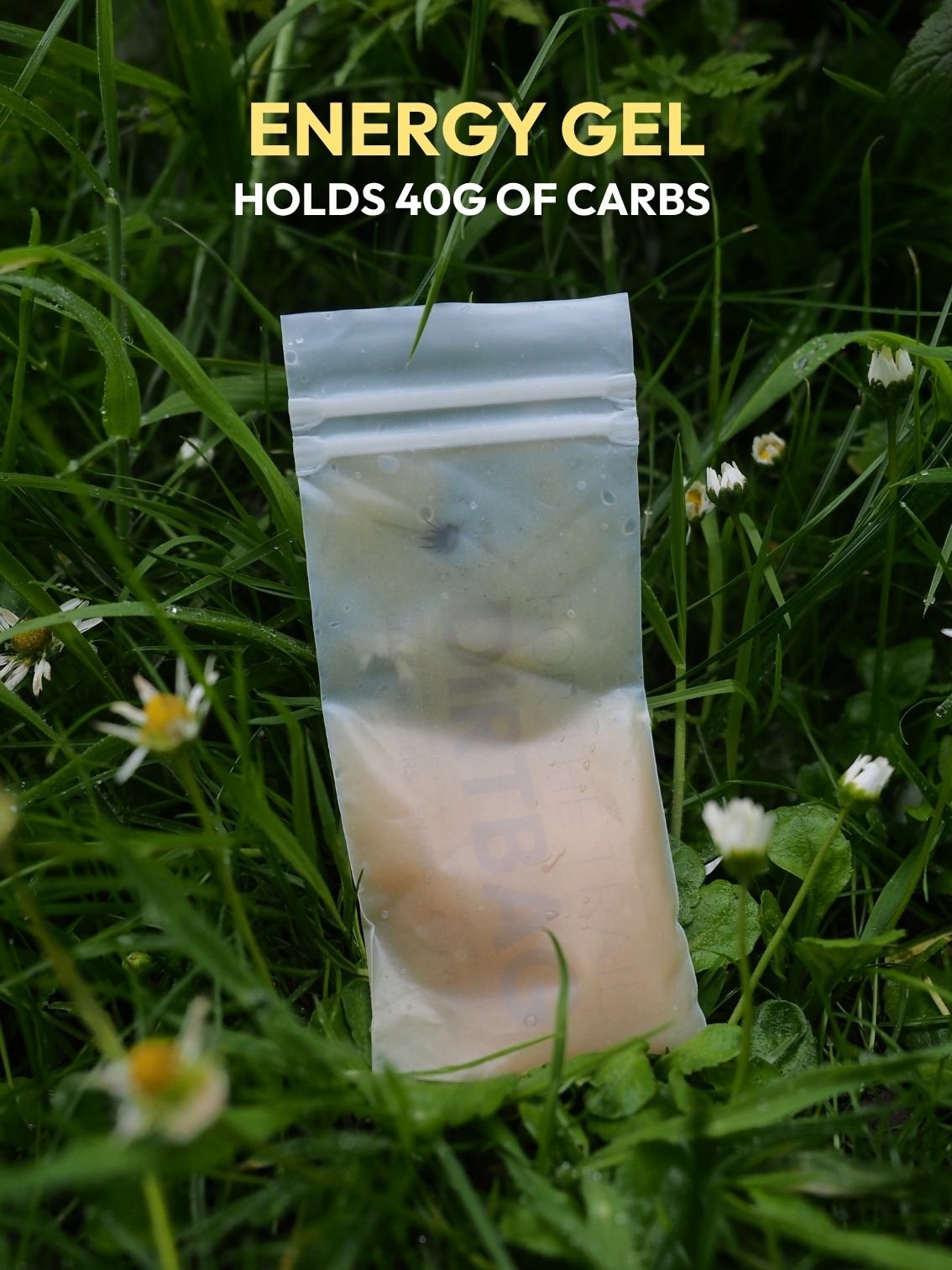
DirtBags are essentially a reusable single-serving gel, chew and powder packet. Fill a Small DirtBag with 30 to 50 grams of carbohydrates at home, seal it, put it in your vest, and it behaves the same way a single-serve packet would. You wash it afterwards and reuse it.
As well as making fuelling more affordable, DirtBags produce fewer emissions during production than conventional plastic. Even a single use carries a smaller environmental footprint than a conventional single-use equivalent. Reuse the bag repeatedly across a training block, and the impact compounds further. When it eventually wears out, the bioplastic material composts at home rather than going to landfill.
Unlike single-use gels, chews, powder or snack packets, which follow a linear waste model, DirtBags work within a circular life cycle.
How they work in practice
The Small DirtBag has been specifically designed to replace a single-serving large gel, an energy powder packet, or a pack of energy chews.
Decant your fuel source into a Small DirtBag, weigh the packet to confirm your carbohydrate count, then pack it in your hydration vest, running belt or pocket to use according to your nutritional plan for that run or race.
The 14 x 6 cm size is deliberate: large enough to get your fingers in for chews, small enough to work for energy gels or to decant an energy powder into a silicone soft flask or bottle. Just like a large gel packet, it fits in any pocket or space you normally carry nutrition.
Cleaning is simple. Use cold water to rinse them out. If the bag has held sticky substances like gels or dates, use warm water, add a drop of eco soap and flush through while cleaning with your fingers. Do not put them in the dishwasher or hold them under hot water for any sustained period, as this can damage the bioplastic.
If you are using a Large DirtBag to carry or organise gear, simply empty it at home and pack it away for the next race or adventure.
What goes inside them
DirtBags are compatible with whatever fuel sources you already use or trust. The For The Trail Sustainable Fuel Guide lists nutritional brands that sell in bulk, supermarkets that stock bulk snacks and a range of recipes to make your own energy chews, energy bars, powder and gels at home for a fraction of commercial prices.
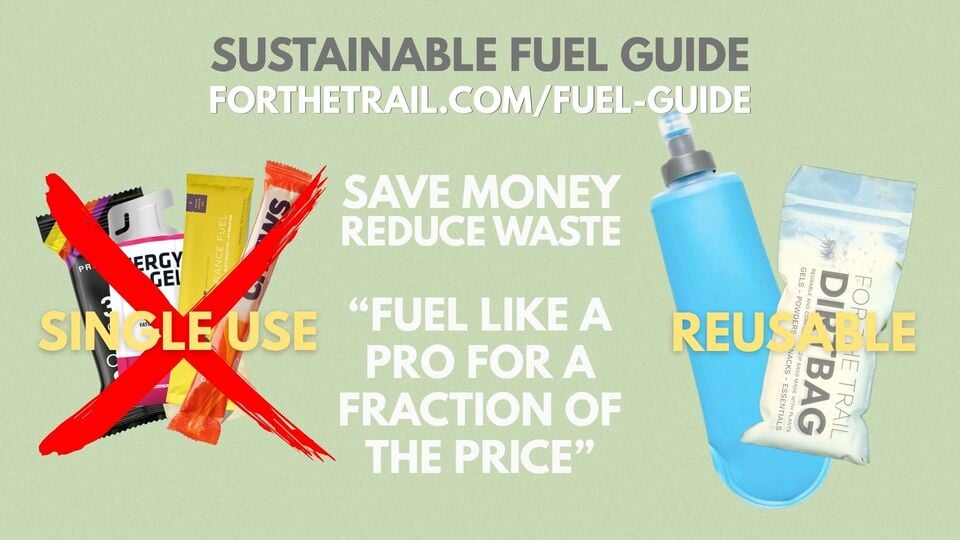
Over the last two years, the owner, Martin, personally used DirtBags to carry precise carbohydrate amounts and fuel every 20 to 30 minutes to hit 60 to 80g of carbs per hour with the following sources:
- Maple syrup decanted into a Small DirtBag
- Bulk-bought energy gel from Active Root and High5 decanted into a Small DirtBag
- Homemade energy gels
- Homemade energy chews
- Bulk-bought energy chews from nutritional brands like High5
- Bulk-bought chews like Turkish Delight, which share an almost identical ingredient profile to commercial energy chews
- Bulk-bought chewy and soft sweets from supermarkets such as Leo the Lion and Walter the Worm
- Bulk-bought energy powders from nutritional brands
- Homemade energy powders that replicate more expensive commercial products
- Homemade energy bars, including chewy rice crispy bars similar to products from Maurten and Styrkr
- Dates, with cornstarch added so they remain dry to the touch and non-sticky
- Banana bread
- Homemade flapjacks
- Bulk-bought biscuits such as fig rolls
- Bulk-bought stroopwafels
Each of these has cost a fraction of the price of a single-serve gel from a nutritional brand, sometimes as much as ten times cheaper for an equivalent product.
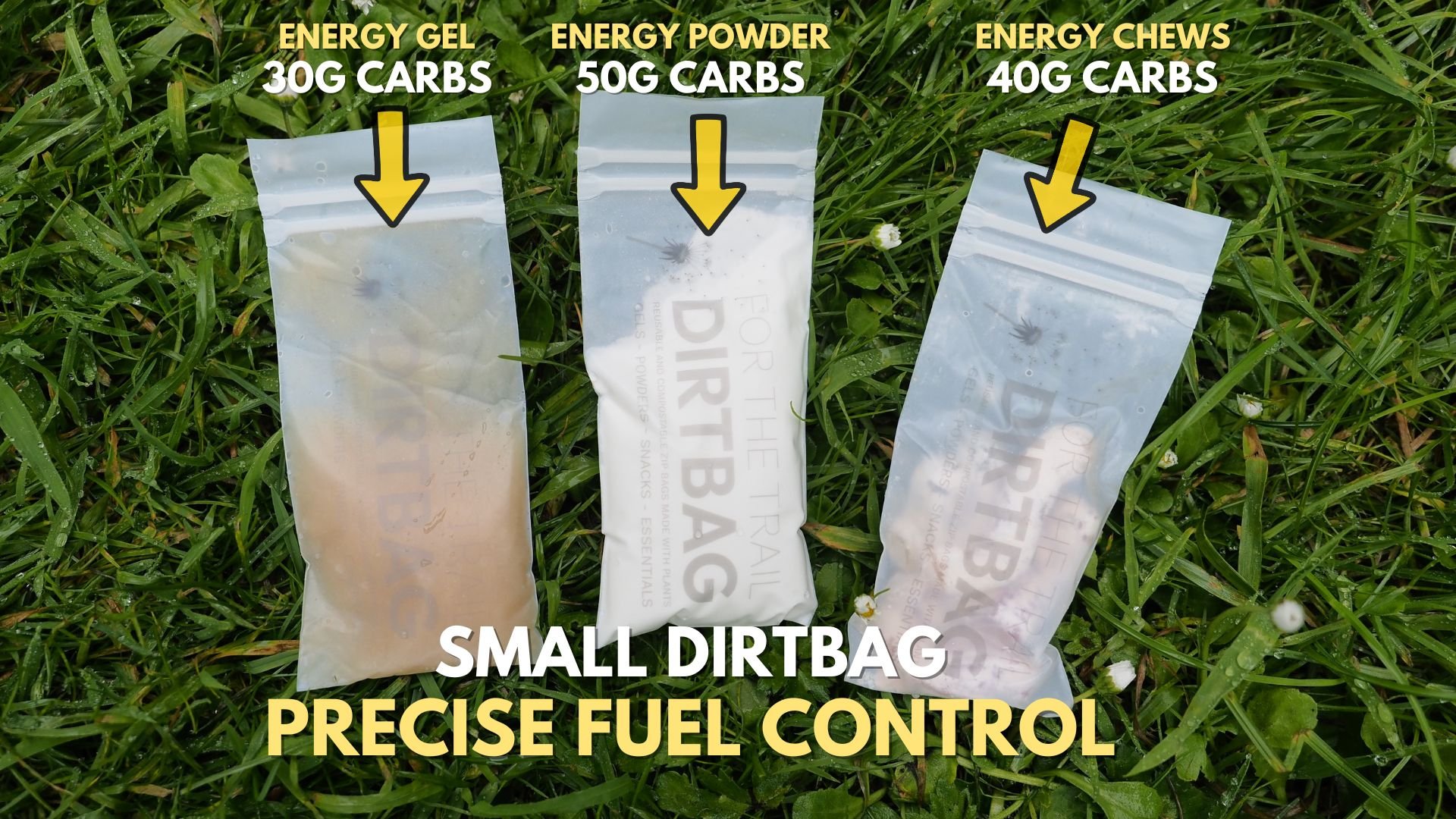
With this approach, Martin has fuelled multiple ultra-marathons, multi-day fastpacking adventures and countless long training runs of two to four hours. The method is the same as with single-serve options: work out how many hours you’ll be out and how many carbs you want per hour. For The Trail’s founder targets 60g and upwards of 90g and packs the right number of Small DirtBags into his vest.
When racing or on routes with aid stations along the way, he also takes empty Large DirtBags and uses them to collect snacks and food from checkpoints to eat after leaving each station.
For The Trail and the weekly drop model
For The Trail is a project built around a simple question: how can trail, mountain and ultra running ask less of the planet? DirtBags are Project 1, tackling single-use plastic waste in the running nutrition industry. Every few months, a new project will follow, developed with the community, each asking the same question of cost and environmental impact simultaneously.
Orders ship once per week, every Wednesday. Consolidated weekly logistics reduce delivery emissions and packaging waste compared to on-demand fulfilment. Order by midnight Monday to get your DirtBags in that week’s batch.
Summary
DirtBags give runners a reusable, compostable container for single-serve fuel portions. A set of DirtBags used across a full training block replaces hundreds of single-use plastic packets. When they reach the end of their life, the bioplastic material composts at home rather than going to landfill. The cost savings are substantial: switching from single-serve commercial fuel to bulk or homemade alternatives with DirtBags can cut hourly fuelling costs by up to 90% while maintaining the same carbohydrate intake.
Written by Martin, founder of For The Trail and Kelp and Fern. Edited by the5krunner.
Quick answers
Are DirtBags home compostable?
Yes. DirtBags carry TUV and DIN CERTCO certification for home composting. When they eventually wear out, the bioplastic material breaks down in a standard home compost setup without requiring an industrial composting facility.
Can DirtBags be used with liquid fuel like energy gels?
Yes. The zip seal keeps liquid fuel contained until you need it. The Small DirtBag (14 x 6 cm) works with energy gels, energy chews and powders. For sticky substances such as gels or dates, clean with warm water and a drop of eco soap. Do not use a dishwasher or sustained hot water, as these damage the bioplastic material.
How much fuel fits in a Small DirtBag?
The Small DirtBag holds 30 to 50 grams of carbohydrates depending on fuel type, making it equivalent in capacity to a large single-serve gel packet. The 14 x 6 cm format fits any vest pocket or space you would normally carry nutrition.
The previous Indie Spotlight covered CycleLytic.
Last Updated on 3 October 2026 by tfk the5krunner
Small things I always use
- Garmin 90-degree charging adapter: Charges your Garmin from any USB-C cable. Essential when travelling. I use one.
- Body Glide: The blue anti-chafe stick swimmers and runners carry. I use it.
- Speedo earplugs: Fewer ear infections and no cold-water dizziness. I use them.
- Dryrobe Advance: My winter changing robe for open-water swims. I use one. A cheaper option is the AONYIYI changing robe.
- Maurten: Race fuel that stays easy on the stomach. I use them.
- Garmin charging puck: The quickest way to top up before a session. I use one.
- Injinji: Toe socks that stop rubbing, so you run more. I use them.
- Ultimate toe protectors: Stop black toenails on long runs. They work. I use them.
- Compressport R2 v2 calf sleeves: My calf sleeves of choice. I use them.
- Cellucor C4: My pre-workout before hard sessions.
- TPU tubes: Schwalbe Aerothan, Tubolito and Pirelli SmarTube. Light, tiny spares. I use all three.
- G8 insoles: Adjustable insoles that are good. I use them.
- Cycplus Cube: A 97g electric pump that gets a road tyre rideable in two minutes. I carry one. 5% off with code THE5KRUNNER.
Watches and sensors
- Polar H10: My daily driver for waking HRV.
- Polar Verity Sense: My backup arm-worn HR sensor.
- Nomad bedside charger: Charges my iPhone and Apple Watch overnight. I use it, and many of their bands.
- Train.Red: The best muscle oxygen sensor I’ve used.
- Tymewear: Accurate heart rate and reliable ventilatory zones. I use it to pace endurance rides over an hour.
- Garmin Forerunner 970: A pro-grade triathlon watch. I use this.
- Apple Watch Ultra 4: My daily smartwatch. No phone needed on rides.
- Garmin Fenix 9 Pro: I’ve just bought one.
On the bike
- Continental GP5000 for everyday riding, and Aero 111 on the front for special occasions.
- Helmets: Specialized S-Works Evade 3 for road riding, and Rudy Project Wing for TT-style races. I use both.
- Ravemen FR300: A front light that mounts under your Garmin or Wahoo. I use one.
- Wahoo TRACKR Radar: I use it on one bike and Varia on the other. They perform the same.
- Garmin Varia RTL515: Radar that warns you of cars from behind. I use this model.
- Wahoo ELEMNT Roam 3: The bike computer that’s easy to use. I use mine on most rides.
- Favero Assioma Pro RS2: Accurate power pedals that swap easily between bikes. I use this model.
Home and indoor training
- NPE Runn: Makes my basic treadmill smart, sending more accurate speed and distance to my watch and Zwift. I use it.
- Google Wifi: Keeps Zwift connected in my pain cave. I use it.
- Apple TV 4K: Zwift on the big screen. I use two.
- Google Nest Doorbell (wired, 2nd gen): My video doorbell, running in both Google Home and Apple Home. I use it.
Health, recovery and sleep
- FreeStyle Libre 3 Plus: Shows how my blood sugar responds to diet.
- hDrop: Measures my sweat loss in summer and indoors.
- Fourth Frontier Zone: Checks my heart under load in hard sessions.
- Oura Ring 5: My partner’s recovery tracker of choice.
- Kineon MOVE+: Red light therapy for niggles. It works.
- Eight Sleep: A cooling mattress cover my partner and I use nightly.
Reader-Powered Content

This content is not sponsored. It’s mostly me behind the labour of love, which is this site, and I appreciate everyone who supports it.
Support the site: Follow (free, fewer ads) · Subscribe (paid, ad-free) · Buy Me A Coffee ❤️
Written by real people, with AI assistance. Fact-checked and verified for originality. See the Editorial Policy. FTC: Affiliate Disclosure — some links pay commission. As an Amazon Associate, I earn from qualifying purchases.
tfk is the founder and author of the5krunner, an independent endurance sports technology publication. With 20 years of hands-on testing of GPS watches and wearables, and competing in triathlons at an international age-group level, tfk provides in-depth expert analysis of fitness technology for serious athletes and endurance sport competitors. ID
