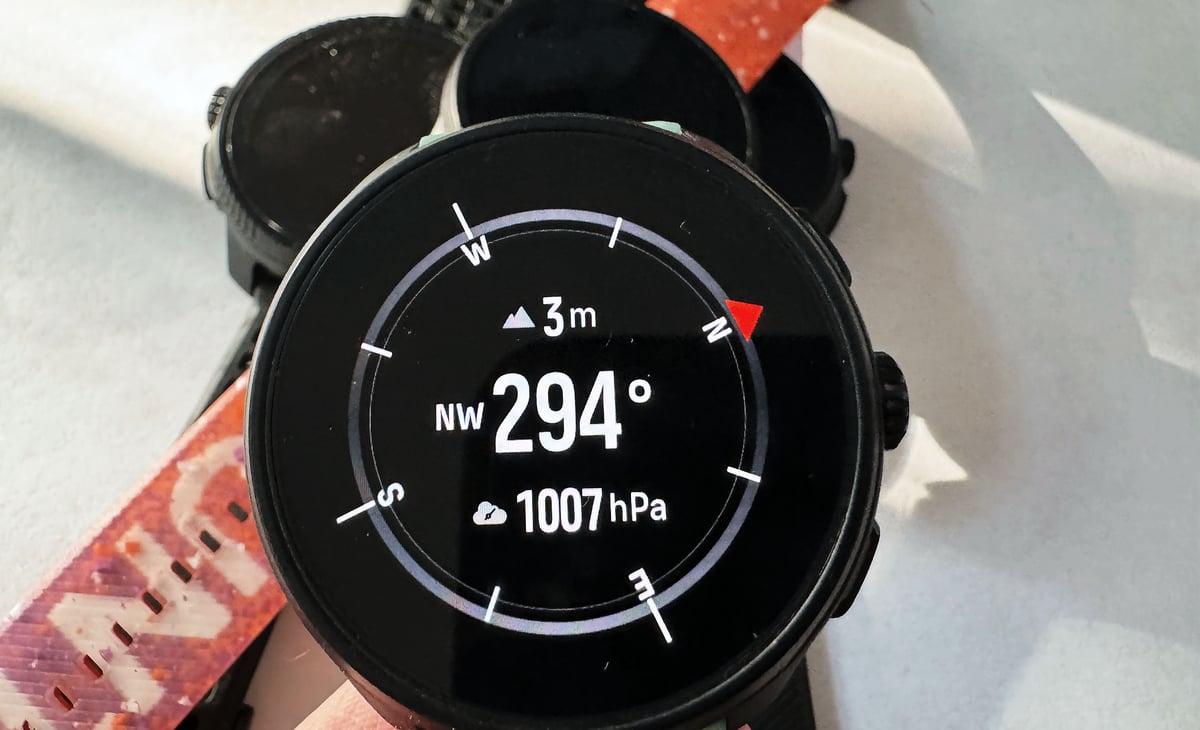
Suunto Run 2 vs Run: A Major Hardware Upgrade
Suunto Run 2 keeps the same 46mm case size as the original Run, but the hardware inside has changed significantly. It has a new GNSS chipset, a new heart rate sensor, a brighter LTPS AMOLED display and a battery that’s 29% larger. It also adds offline maps for the first time and weighs 1g less than the original.
This isn’t a full review of either watch. The questions here are simple: if you already own a Run, is Run 2 worth upgrading to? And if you’re buying your first Suunto, does the original Run, even at a discount, still make sense?
For the full testing and specs behind these figures, see the Suunto Run 2 review, Suunto Run Review, Run 2 specifications, and Run specifications.
What changed?
| Spec | Suunto Run 2 | Suunto Run |
|---|---|---|
| Case size | 46 x 46 x 11.7mm | 46 x 46 x 11.5mm |
| Weight | 35g | 36g |
| Display | 1.32 in LTPS AMOLED, up to 2,000 nits | 1.32 in AMOLED, up to 600 nits |
| GNSS chipset | New-generation dual-band L1+L5 | Sony dual-band L1+L5 |
| Heart rate sensor | New 12-channel sensor behind 2.5D curved glass | Previous-generation sensor |
| Battery capacity | 380mAh | 295mAh |
| Charger | Magnetic, 2026-style Suunto charger | Proprietary 4-pin |
| Storage | 4GB or 64GB | 4GB |
| Offline maps | Yes | No. Breadcrumb trail and waypoint navigation |
| Launch price | £265 (4GB) / £299 (64GB) | £199 |
The bezel, case material and lens remain the same on both watches: a steel bezel, glass-fibre-reinforced polyamide case and Gorilla Glass.
The biggest improvement: heart rate accuracy
The original Run’s optical heart rate sensor could be inconsistent, as this site found in extensive testing after its 2025 release. Suunto’s current listing still recommends a chest strap for sports use but the Run 2 performed much better in testing. Across eight sessions covering tempo running, treadmill intervals, trail running, cycling, track work, weights and steady running, its average heart rate difference stayed below 1bpm compared with chest-strap and optical-armband references.
For many runners, better HR accuracy is the strongest reason to upgrade.
Offline maps are another big upgrade
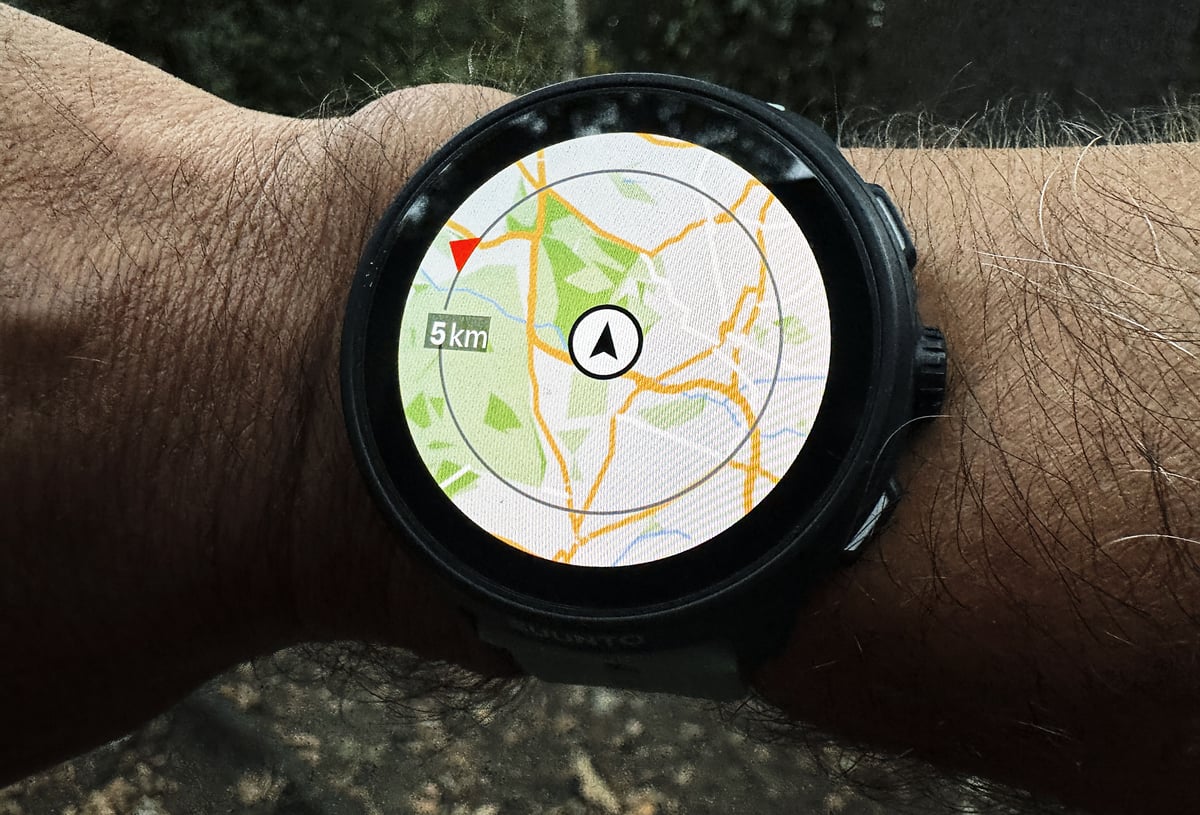
The original Run uses breadcrumb trails and manually placed waypoints for navigation. Run 2 adds worldwide offline maps as standard on both the 4GB and 64GB versions, which give significantly richer context and perspective when following a route.
The 64GB model gives you all the room for your mapping and music storage needs, but the 4GB version is enough for roughly one smaller US state, South East England, or a smaller European country at a time. Both versions have the same mapping features.
Software: what’s actually new?
Some Run 2 features were already available on the original Run. Here’s what genuinely changes between the two.
New on Run 2
- EnergySense: shows your remaining effort in real time against your lactate threshold. It’s in beta and currently limited to running. Conceptually, this is similar to Garmin’s Real-Time Stamina metric, which I have found useful.
- Heat Strain Score: combines temperature, humidity, wind and heart rate to estimate cumulative heat stress during training. This feature will not always work because core temperature, not ambient temperature, drives heat stress.
Available on both watches
These three are the ones actually worth knowing about for an upgrade decision. The wider baseline, 35 sport modes on Run 2 against 34 on the original, daily activity and recovery tracking, training load monitoring, third-party app connections for activity sync, and the barometric altimeter and SpO2 sensor, carry over largely unchanged between generations.
- Ghost Runner: lets you race against a virtual runner at a target pace. It has been available on the original Run since launch.
- Marathon Time: provides a live finish-time prediction based on your current pace. The original Run calls this “Finish-Time (Marathon) mode.”
- ZoneSense: adjusts Zone 2 and Zone 4 training in real time using HRV. It arrived on the original Run through a firmware update and requires a good-quality Bluetooth chest strap on both watches.
Not supported on either watch
The key omission at this price point is external-provider structured workouts. Both watches support manually created structured workouts through SuuntoPlus Guides. Neither supports guides from external providers such as TrainingPeaks.
They also lack access to the separate SuuntoPlus Sports Apps store, which is reserved for Suunto’s more expensive watches.
Should you upgrade?
The original Run still makes sense if
- You already use a chest strap for every run.
- You mainly run familiar routes and don’t need offline maps.
- You’d rather save £66–100 than pay for the newer hardware.
Run 2 makes more sense if
- You want reliable wrist-based heart rate without a separate sensor.
- You run unfamiliar routes, travel regularly or want offline maps.
- You specifically want EnergySense or Heat Strain Score.
- You want more accurate pace that comes from a more accurate GPS chip
- You want a brighter display for use in very bright, direct sunlight

Price
Run 2 launched at £265 for 4GB and £299 for 64GB. That’s £66–100 more than the original Run’s £199 launch price.
The original Run is still available from Suunto and is often discounted below its launch price, making it the cheaper option for runners who don’t need the newer features.
For where to buy the newer watch, see Suunto Run 2 price and where to buy.
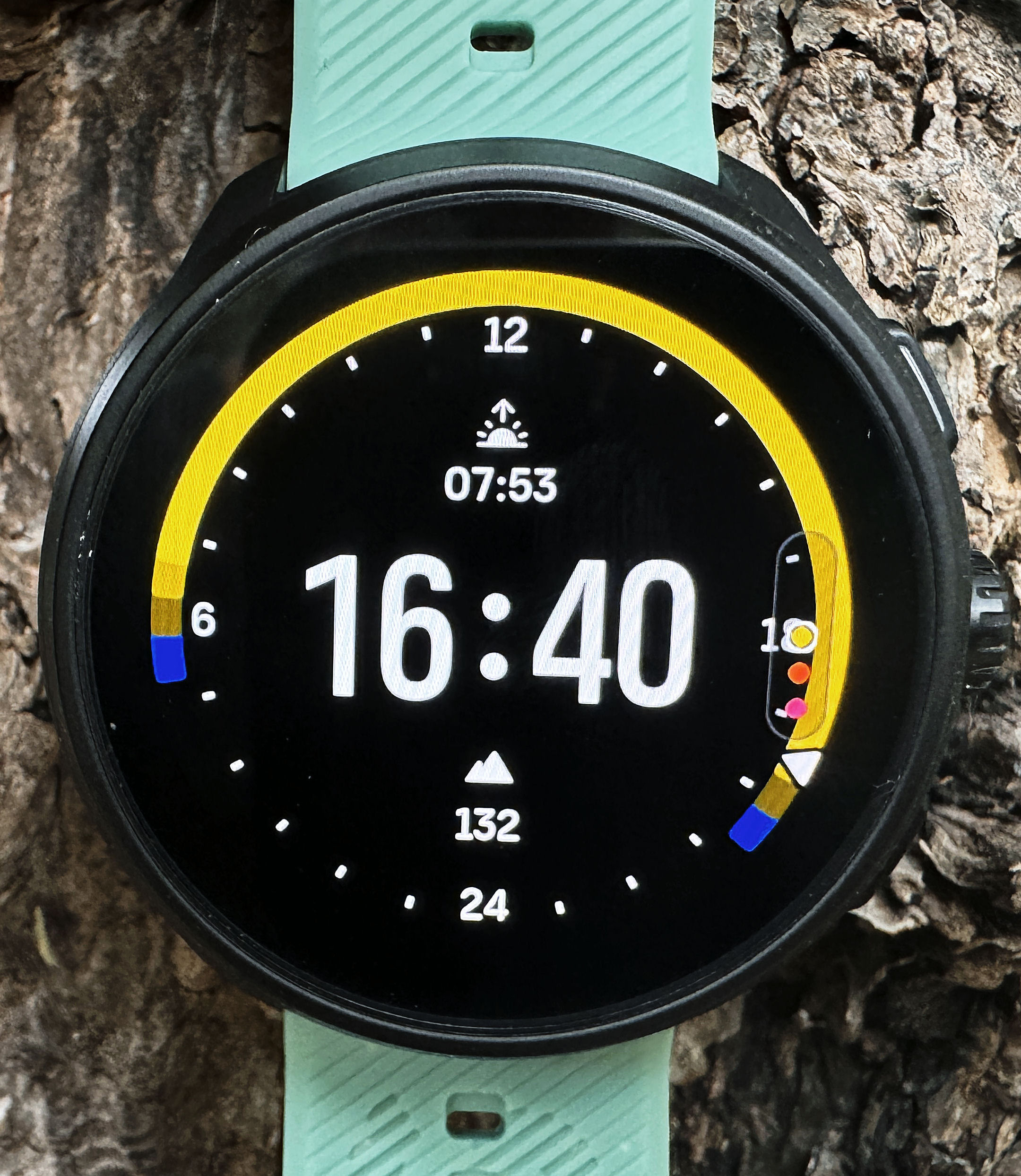
Suunto Run 2
Stainless steel bezel, 1.32" AMOLED (2,000 nits), dual-band GPS, 10-day battery.

Quick answers
Is the original Suunto Run being discontinued?
Suunto has not confirmed that. The watch remains available directly from Suunto and is often sold below its £199 launch price.
Does ZoneSense need a chest strap on both watches?
Yes. ZoneSense uses HRV data from a Bluetooth chest strap on both the Run and Run 2. The wrist sensor alone isn’t enough.
Can I use TrainingPeaks structured workouts on either watch?
No. SuuntoPlus Guides support manually created workouts on both watches. TrainingPeaks and other external-provider guides aren’t supported.
Is the Run 2 heart rate sensor much better?
Yes. Testing across eight sessions showed an average difference of less than 1bpm compared with chest-strap and optical-armband references. The original Run’s sensor was less consistent, and Suunto recommends a chest strap for sports use.
Last Updated on 3 October 2026 by tfk the5krunner
Small things I always use
- Garmin 90-degree charging adapter: Charges your Garmin from any USB-C cable. Essential when travelling. I use one.
- Body Glide: The blue anti-chafe stick swimmers and runners carry. I use it.
- Speedo earplugs: Fewer ear infections and no cold-water dizziness. I use them.
- Dryrobe Advance: My winter changing robe for open-water swims. I use one. A cheaper option is the AONYIYI changing robe.
- Maurten: Race fuel that stays easy on the stomach. I use them.
- Beet It Sport nitrate shots: Beetroot shots I take in the days before a race. I use them.
- Garmin charging puck: The quickest way to top up before a session. I use one.
- Injinji: Toe socks that stop rubbing, so you run more. I use them.
- Ultimate toe protectors: Stop black toenails on long runs. They work. I use them.
- Compressport R2 v2 calf sleeves: My calf sleeves of choice. I use them.
- Cellucor C4: My pre-workout before hard sessions.
- TPU tubes: Schwalbe Aerothan, Tubolito and Pirelli SmarTube. Light, tiny spares. I use all three.
- G8 insoles: Adjustable insoles that are good. I use them.
- Cycplus Cube: A 97g electric pump that gets a road tyre rideable in two minutes. I carry one. 5% off with code THE5KRUNNER.
Watches and sensors
- Polar H10: My daily driver for waking HRV.
- Polar Verity Sense: My backup arm-worn HR sensor.
- Nomad bedside charger: Charges my iPhone and Apple Watch overnight. I use it, and many of their bands.
- Train.Red: The best muscle oxygen sensor I’ve used.
- Tymewear: Accurate heart rate and reliable ventilatory zones. I use it to pace endurance rides over an hour.
- Garmin Forerunner 970: A pro-grade triathlon watch. I use this.
- Apple Watch Ultra 4: My daily smartwatch. No phone needed on rides.
- Garmin Fenix 9 Pro: I’ve just bought one.
On the bike
- Continental GP5000 for everyday riding, and Aero 111 on the front for special occasions.
- Helmets: Specialized S-Works Evade 3 for road riding, and Rudy Project Wing for TT-style races. I use both.
- Ravemen FR300: A front light that mounts under your Garmin or Wahoo. I use one.
- Wahoo TRACKR Radar: I use it on one bike and Varia on the other. They perform the same.
- Garmin Varia RTL515: Radar that warns you of cars from behind. I use this model.
- Wahoo ELEMNT Roam 3: The bike computer that’s easy to use. I use mine on most rides.
- Favero Assioma Pro RS2: Accurate power pedals that swap easily between bikes. I use this model.
Home and indoor training
- NPE Runn: Makes my basic treadmill smart, sending more accurate speed and distance to my watch and Zwift. I use it.
- Google Wifi: Keeps Zwift connected in my pain cave. I use it.
- Apple TV 4K: Zwift on the big screen. I use two.
- Google Nest Doorbell (wired, 2nd gen): My video doorbell, running in both Google Home and Apple Home. I use it.
Health, recovery and sleep
- FreeStyle Libre 3 Plus: Shows how my blood sugar responds to diet.
- hDrop: Measures my sweat loss in summer and indoors.
- Fourth Frontier Zone: Checks my heart under load in hard sessions.
- Oura Ring 5: My partner’s recovery tracker of choice.
- Eight Sleep: A cooling mattress cover my partner and I use nightly.
Reader-Powered Content

This content is not sponsored. It’s mostly me behind the labour of love, which is this site, and I appreciate everyone who supports it.
Support the site: Follow (free, fewer ads) · Subscribe (paid, ad-free) · Buy Me A Coffee
Written by real people, with AI assistance. Fact-checked and verified for originality. See the Editorial Policy. FTC: Affiliate Disclosure — some links pay commission. As an Amazon Associate, I earn from qualifying purchases.
tfk is the founder and author of the5krunner, an independent endurance sports technology publication. With 20 years of hands-on testing of GPS watches and wearables, and competing in triathlons at an international age-group level, tfk provides in-depth expert analysis of fitness technology for serious athletes and endurance sport competitors. See the gear tfk uses. ID
