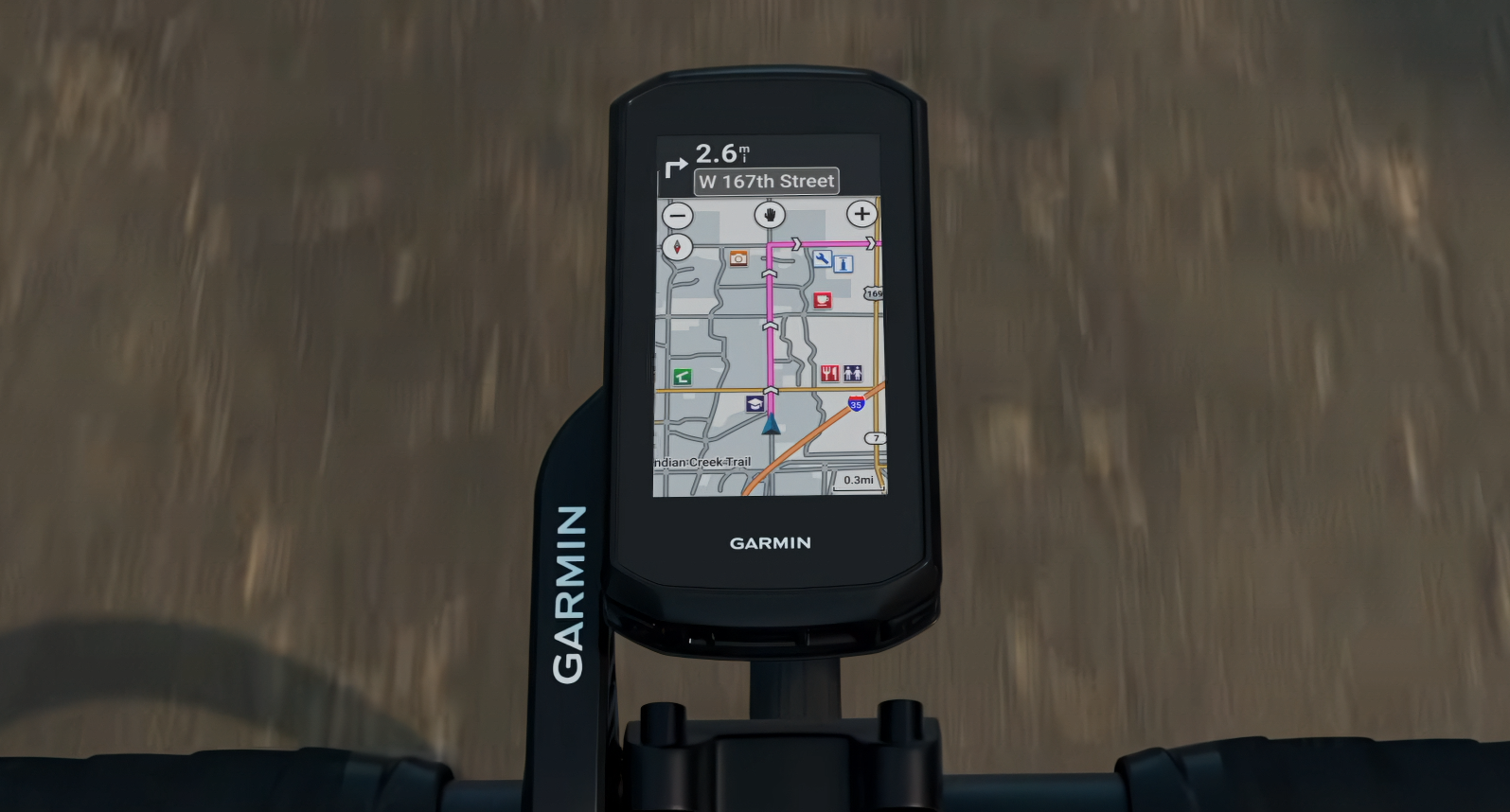
Garmin’s Edge 850 costs £469.99, compared with £349.99 for the Edge Explore 3, and on three things riders notice first, the cheaper device wins. The Explore 3 has a larger screen, four more hours of riding between charges, and newer routing software. The 850 keeps the training analysis, multi-band positioning, and Garmin Pay, all of them handy.
Both have touchscreens, making this a fair comparison in the range rather than the Explore 3 against the button-only Edge 550.
Where the cheaper device wins
The Explore 3 has a 3-inch screen, while the 850 has a 2.7-inch screen. The 850 has a better resolution (420x600px versus 360×640), so it packs more pixels into a smaller panel, but the Explore 3 offers more physical map area at a glance. On a bar-mounted device you read at speed, size matters more than density, but the two are fairly similar.
Battery life is where the meaningful difference lies. The Explore 3 runs up to 16 hours in demanding use and 48 hours in battery saver, against 12 and 36 on the 850. A long sportive with navigation running is comfortable on the Explore 3 and very tight on the 850, a complaint that has bedevilled the 850 and 550 since launch.
The routing software is the surprise. The Explore 3 ships with free-flow routing, pin-drop navigation from Google Maps or Apple Maps, Up Ahead points of interest, and a course preview showing surface, traffic, and reported hazards. Those arrived with the Edge 1060 and weren’t on the 850 at launch, though Garmin has said some of the new software will reach it via update. For now, the £349.99 Explore 3 device plans a route better than the £469.99 performance computer!
What the extra £120 buys
The extra goes toward the ride data analysis layer, and it is a long list of meaty features, but they’re only useful if you truly need them.
The 850 includes training status, heat and altitude acclimation, cycling ability and course demands, real-time stamina, and Power Guide, while the Explore 3 has none of these. The 850 also includes Cycling Dynamics, MTB Dynamics, Grit and Flow, Enduro and downhill profiles with 5Hz recording and timing gates, ForkSight with Trailforks trail data, and on-device gear tracking and gear ratio analysis with electronic shifting.
In plain terms, the Explore 3 will record a ride with power and estimate your FTP and VO2 max. It will not tell you what six weeks of riding has done to your form, nor pace you to a power target up a named climb. For a rider who trains to numbers, that’s what you ‘need’ to buy.
The 850 also has multi-band positioning, which the Explore 3 does not. Both receive GPS, GLONASS and Galileo, but only the 850 does so on two frequencies, and that is where the accuracy difference shows in cities and steep valleys, but the difference here is smaller than you’d imagine, as cycling tends to place the athlete in a better reception position than runners, although of course it depends on exactly the kind of cycling you’re planning.
Garmin also doesn’t list Strava Live Segments for the Explore 3, but the 850 does. A big deal for some and an irrelevance for others.
Garmin Pay and 64GB of storage on the 850, against 32GB, is also part of the higher price tag, and the 850 has a speaker and digital bell where the base Explore 3 has none.
The Plus muddies it
The Edge Explore 3 Plus costs £429.99, putting it £40 under the 850 rather than £120. For that, it adds a microphone and hands-free voice control, a speaker that doubles as a digital bike bell, and Wi-Fi with the Wi-Fi map manager so map regions easily update on the device. It loses two hours of battery, running 14 hours in demanding use.
At £40 apart, the choice sharpens rather than blurs. The Plus is better for navigation, and the 850 is better for training, and almost nobody needs both answers at once.
Side by side
| Edge Explore 3 | Edge Explore 3 Plus | Edge 850 | |
|---|---|---|---|
| Price at launch | £349.99 / $399.99 | £429.99 / $499.99 | £469.99 / $599.99 |
| Display | 3 inch, 360 x 640 | 3 inch, 360 x 640 | 2.7 inch, 420 x 600 |
| Input | Touchscreen | Touchscreen | Touchscreen and buttons |
| Battery, demanding use | Up to 16 hours | Up to 14 hours | Up to 12 hours |
| Battery saver | Up to 48 hours | Up to 48 hours | Up to 36 hours |
| Dimensions | 53.8 x 104.5 x 18.0mm | 53.8 x 104.5 x 18.0mm | 54.6 x 92.2 x 16.8mm |
| Weight | 118.8g | 121.5g | 113g |
| Multi-band GNSS | No | No | Yes |
| Training status, stamina, Power Guide | No | No | Yes |
| Free flow routing and pin drop navigation | Yes | Yes | Not at launch |
| Speaker | No | Yes | Yes |
| Microphone and voice control | No | Yes | No |
| Wi-Fi map manager | No | Yes | Yes |
| Garmin Pay | No | No | Yes |
| Storage | 32GB | 32GB | 64GB |
Full details are on the Edge Explore 3 specifications and Edge 850 specifications pages.
One more thing about the size
The Explore 3 is 104.5mm long against the 850’s 92.2mm, so it is 12mm longer and 6g heavier. On a road bike with a short stem, that difference will affect the aesthetics or even prevent your computer from fitting. Size the diagonal against the gap from the bars to the centre of the mount.
Which to buy
Buy the Edge Explore 3 if you tour or ride unfamiliar routes for pleasure, want the biggest screen you can get under £400, and would rather have 48 hours in battery saver than a training status page you never open. If the riding you had in mind is a commute, neither of these is the answer: the route is known, so the maps will be rarely used, and a bike locked in public is better off carrying a cheap computer that logs the ride for that one occasion when you forget to remove it.
Buy the Edge Explore 3 Plus if that describes you, and you also want to ask for a reroute without taking a hand off the bars, or you swap map regions often enough that Wi-Fi management matters.
Buy the Edge 850 if you train to power, race, or ride off-road seriously. Training status, stamina, Power Guide, and the MTB metrics are why it exists, and no Explore will ever carry them. Accept 12 hours of battery and a smaller screen as the price.
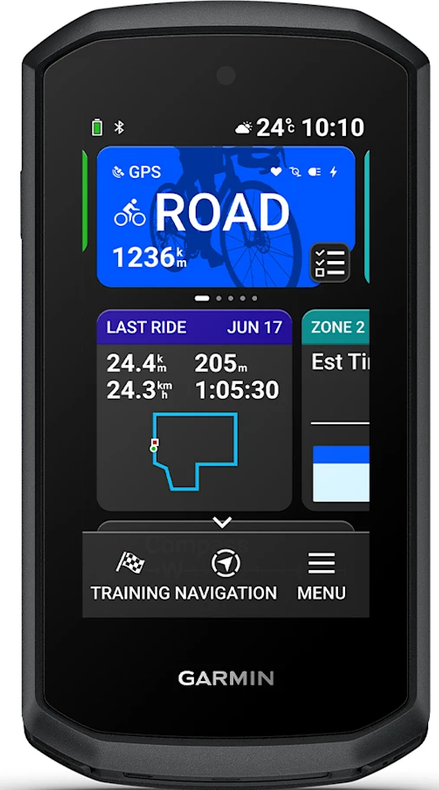
Garmin Edge Explore 3
Garmin's navigation-led bike computer. Bike maps, free flow routing and pin drop navigation on a 3-inch touchscreen, with 48 hours in battery saver mode. The Plus adds voice control and Wi-Fi maps.
 +other retailers
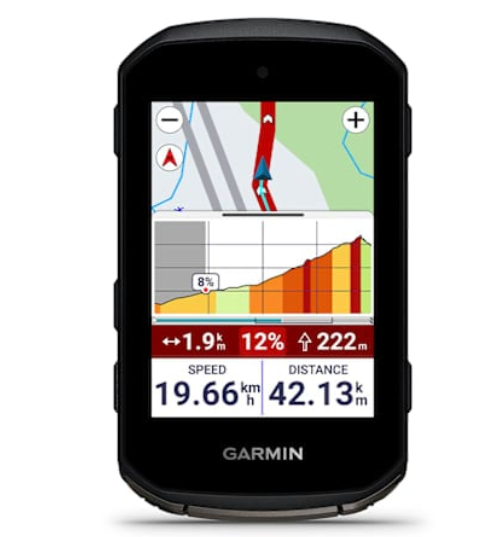
The rest of the range sits on the Garmin Edge hub: the Edge 1060 vs 850 vs 550 comparison covers the performance models against each other, and existing owners should start with the Garmin Edge upgrade guide. Current picks across all brands are in the best cycling computer guide, and feature explanations are in the Garmin features hub.
Quick answers
Is Edge Explore 3 better than Edge 850?
It is better for navigation and worse for training. The Explore 3 has a larger screen, four more hours of battery, the newer routing features and costs £120 less. The 850 has the analysis layer, multi-band positioning, Garmin Pay and twice the storage.
Does Edge Explore 3 have training features?
It includes Garmin Coach cycling plans, structured and interval workouts, daily suggested workouts, VO2 max, training effect, an FTP estimate, Recovery Advisor, and Physio TrueUp. It lacks training status, acclimation, cycling ability, course demands, real-time stamina, Power Guide, and cycling dynamics, which are on the Edge 850 and above.
Which has the better screen, Edge Explore 3 or Edge 850?
The Explore 3 is physically larger at 3 inches against 2.7, and the 850 is denser at 420 x 600 against 360 x 640. The Explore 3 shows more map area; the 850 shows slightly finer detail.
Does Edge Explore 3 have multi-band GPS?
No. Both Explore 3 models receive GPS, GLONASS and Galileo on a single frequency. The Edge 850 adds multi-band reception, which matters most in cities and steep valleys.
Should I buy Edge Explore 3 Plus or Edge 850?
They are only £40 apart, at £429.99 and £469.99. Choose the Plus for voice control, a bigger screen, and longer battery life; choose the 850 for training analysis and multi-band positioning.
Garmin’s official specifications are on its Edge Explore 3 product page.
Last Updated on 21 October 2026 by tfk the5krunner
Small things I always use
- Garmin 90-degree charging adapter: Charges your Garmin from any USB-C cable. Essential when travelling. I use one.
- Body Glide: The blue anti-chafe stick swimmers and runners carry. I use it.
- Speedo earplugs: Fewer ear infections and no cold-water dizziness. I use them.
- Dryrobe Advance: My winter changing robe for open-water swims. I use one. A cheaper option is the AONYIYI changing robe.
- Maurten: Race fuel that stays easy on the stomach. I use them.
- Beet It Sport nitrate shots: Beetroot shots I take in the days before a race. I use them.
- Garmin charging puck: The quickest way to top up before a session. I use one.
- Injinji: Toe socks that stop rubbing, so you run more. I use them.
- Ultimate toe protectors: Stop black toenails on long runs. They work. I use them.
- Compressport R2 v2 calf sleeves: My calf sleeves of choice. I use them.
- Cellucor C4: My pre-workout before hard sessions.
- TPU tubes: Schwalbe Aerothan, Tubolito and Pirelli SmarTube. Light, tiny spares. I use all three.
- G8 insoles: Adjustable insoles that are good. I use them.
- Cycplus Cube: A 97g electric pump that gets a road tyre rideable in two minutes. I carry one. 5% off with code THE5KRUNNER.
Watches and sensors
- Polar H10: My daily driver for waking HRV.
- Polar Verity Sense: My backup arm-worn HR sensor.
- Nomad bedside charger: Charges my iPhone and Apple Watch overnight. I use it, and many of their bands.
- Train.Red: The best muscle oxygen sensor I’ve used.
- Tymewear: Accurate heart rate and reliable ventilatory zones. I use it to pace endurance rides over an hour.
- Garmin Forerunner 970: A pro-grade triathlon watch. I use this.
- Apple Watch Ultra 4: My daily smartwatch. No phone needed on rides.
- Garmin Fenix 9 Pro: I’ve just bought one.
On the bike
- Continental GP5000 for everyday riding, and Aero 111 on the front for special occasions.
- Helmets: Specialized S-Works Evade 3 for road riding, and Rudy Project Wing for TT-style races. I use both.
- Ravemen FR300: A front light that mounts under your Garmin or Wahoo. I use one.
- Wahoo TRACKR Radar: I use it on one bike and Varia on the other. They perform the same.
- Garmin Varia RTL515: Radar that warns you of cars from behind. I use this model.
- Wahoo ELEMNT Roam 3: The bike computer that’s easy to use. I use mine on most rides.
- Favero Assioma Pro RS2: Accurate power pedals that swap easily between bikes. I use this model.
Home and indoor training
- NPE Runn: Makes my basic treadmill smart, sending more accurate speed and distance to my watch and Zwift. I use it.
- Google Wifi: Keeps Zwift connected in my pain cave. I use it.
- Apple TV 4K: Zwift on the big screen. I use two.
- Google Nest Doorbell (wired, 2nd gen): My video doorbell, running in both Google Home and Apple Home. I use it.
Health, recovery and sleep
- FreeStyle Libre 3 Plus: Shows how my blood sugar responds to diet.
- hDrop: Measures my sweat loss in summer and indoors.
- Fourth Frontier Zone: Checks my heart under load in hard sessions.
- Oura Ring 5: My partner’s recovery tracker of choice.
- Eight Sleep: A cooling mattress cover my partner and I use nightly.
Reader-Powered Content

This content is not sponsored. It’s mostly me behind the labour of love, which is this site, and I appreciate everyone who supports it.
Support the site: Follow (free, fewer ads) · Subscribe (paid, ad-free) · Buy Me A Coffee
Written by real people, with AI assistance. Fact-checked and verified for originality. See the Editorial Policy. FTC: Affiliate Disclosure — some links pay commission. As an Amazon Associate, I earn from qualifying purchases.
tfk is the founder and author of the5krunner, an independent endurance sports technology publication. With 20 years of hands-on testing of GPS watches and wearables, and competing in triathlons at an international age-group level, tfk provides in-depth expert analysis of fitness technology for serious athletes and endurance sport competitors. See the gear tfk uses. ID

Interesting. I “need” the training features but i don’t need my 850 for them – i have an FR965 which gets me those features and did so in combination with my old edge 530. That combo actually worked better than the FR965 + E850 which garmin acknowledged doesn’t work properly but its been about a year now with zero progress on fixing that so i have to assume they have no intention of doing so. It seems likely then that FR965 + Explore 3 would give me the best of both worlds, at a lower cost. Mind you, being garmin there are sure to be plenty of other things that don’t actually work the way they’re supposed to…
https://forums.garmin.com/sports-fitness/cycling/f/edge-850/424741/unified-training-status-not-working