FORM Smart Swim 2 LT Review: Pool Pacing and SwimStraight at $149
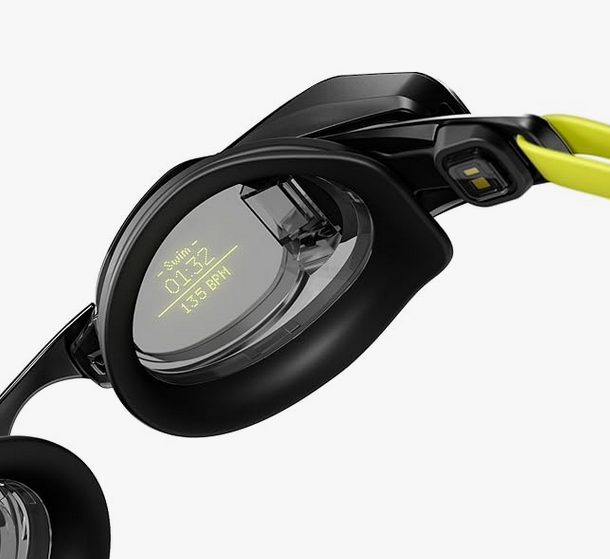
The FORM Smart Swim 2 LT costs $149 and strips the FORM lineup down to the core: live performance metrics while you swim, a tool to help you swim straight, stroke technique improvement metrics, and subscription access to workouts you can see as you swim. No onboard GPS. No heart rate sensor. No expensive glass. Just stuff to make you a better, faster swimmer.
What’s not to like? I’ll tell you.
FORM Smart Swim 2 LT Review
Summary
The FORM Smart Swim 2 LT puts live swim metrics — pace, stroke rate, distance and direction — directly into your field of vision as you swim, at the lowest price the platform has ever carried. For $149, it drops the integrated heart rate sensor found in the $199 Smart Swim 2, but keeps everything else: the AR display, SwimStraight open-water navigation, HeadCoach coaching, and structured workout support. For pool pacing and straighter open-water swimming, it is the most accessible entry point yet into a category with no direct competitor.

Pros
- $149 is a genuine entry point. Earlier FORM generations cost more without fully justifying it.
- The AR display works well in the pool. Seeing your length time and other metrics without stopping or looking at a pace clock makes pacing easier.
- SwimStraight is currently included on all models without a subscription.
- HeadCoach now covers all stroke types, which matters for more serious pool swimmers.
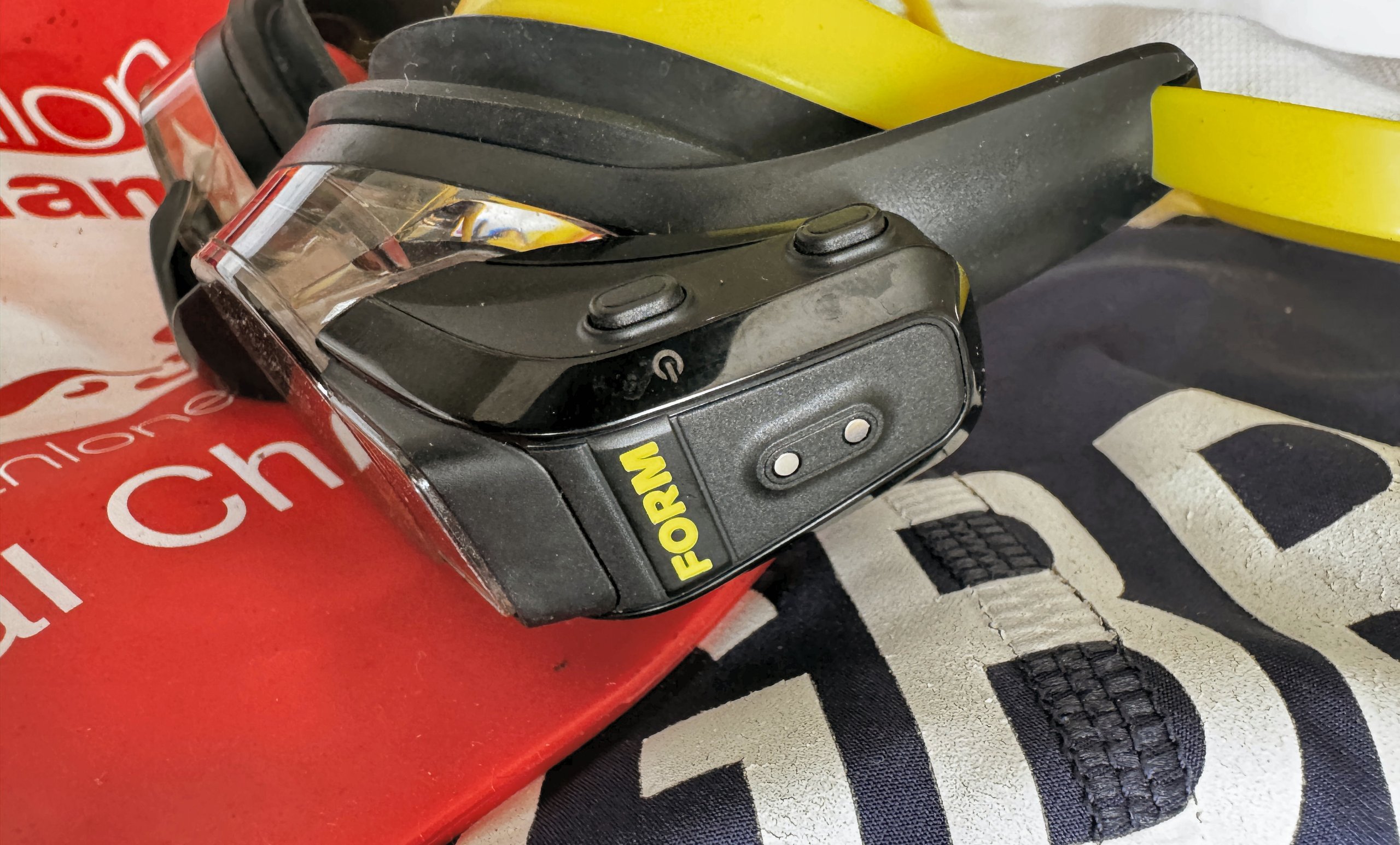
- Five interchangeable nose bridges, replaceable eye seals, and a 14-hour rated battery. Race-legal under World Triathlon, USA Triathlon, British Triathlon, and PTO supertri rules since October 2023.
- Stroke metrics are accurate in the pool. In testing, at most one miscounted length per session.
- Prescription correction possible up to approximately -3, which most reviews overlook.
- Can be positioned in front of either eye.
Cons
- No HR sensor. A deal-breaker for zone-based pool training. A Polar Verity Sense can be clipped to the strap as on earlier FORM models, but it is awkward, can flip, and occupies the single BLE channel, blocking simultaneous Garmin pairing.
- Pool pace appears only at the turn, not mid-length. In open water, pace updates live via a paired Garmin or Apple Watch.
- The SwimStraight compass is prominent and sways too readily with head movement.
- Peripheral vision is reduced. Noticeable in a shared pool lane, a genuine liability at a crowded race start. The geometry is unchanged since 2019, and takes a couple of sessions to adapt to.
- HeadCoach scores are relative benchmarks, not absolutes; to me, some assessments felt generous.
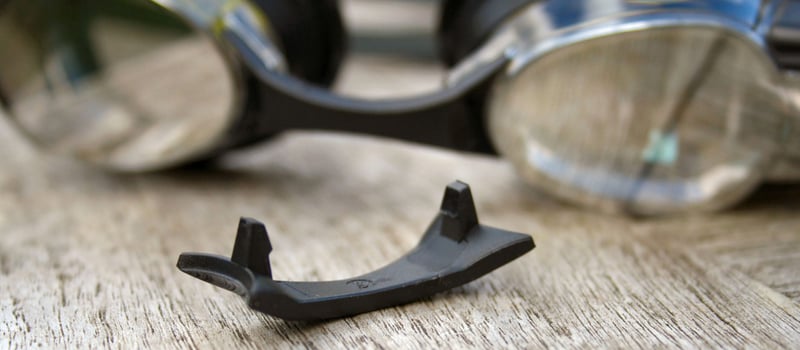
- Nose bridge fit needs experimentation to help the rubber seals sit correctly. There is no magic formula other than experimentation.
User Review
( votes)The FORM Lineup
FORM has been the original and best smart swim goggles since the Gen 1 product in 2019. It started with the core of a display and basic metrics. Next, its successor, Smart Swim 2, added an integrated optical heart rate sensor in the temple. The subsequent PRO version swapped the plastic lenses with Corning Gorilla Glass and includes an anti-fog kit. The range was getting better, but also more expensive each time. The LT reverses that in a very smart move, bringing core competencies for a reasonable price.
- Swim 2 LT $149
- Swim 2 $199 – adds HR sensor
- Swim 2 Pro $259 – adds Gorilla glass
All three models share the same core
- AR waveguide display – a fancy name for the in-goggle display
- SwimStraight navigation – a live compass bearing
- Stroke metrics, including metrics from external HR and GPS sensors (not included)
- Headcoach 5 head technique metrics for every stroke style, displayed in the goggle and in the app (subscription)
- Access to the FORM Swim System plan and structured workouts (subscription)
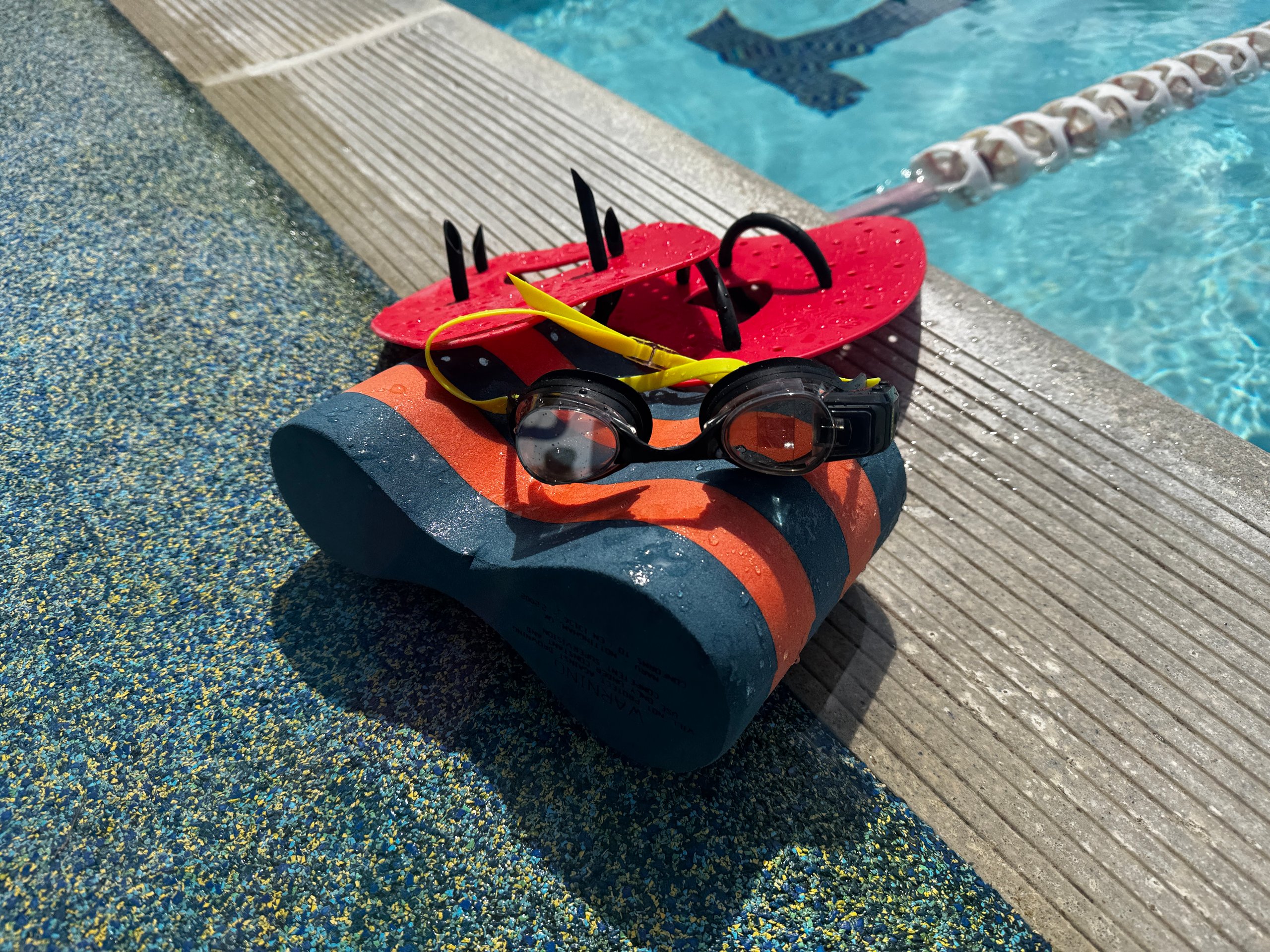
The case for the LT is mostly the cost. Smart goggles that cost $199 or $259, and might leak, break, or be lost at a triathlon transition, represent a meaningful financial risk. At $149, that risk is easier to accept, particularly for a swimmer new to swim training or returning after a break.
Pool
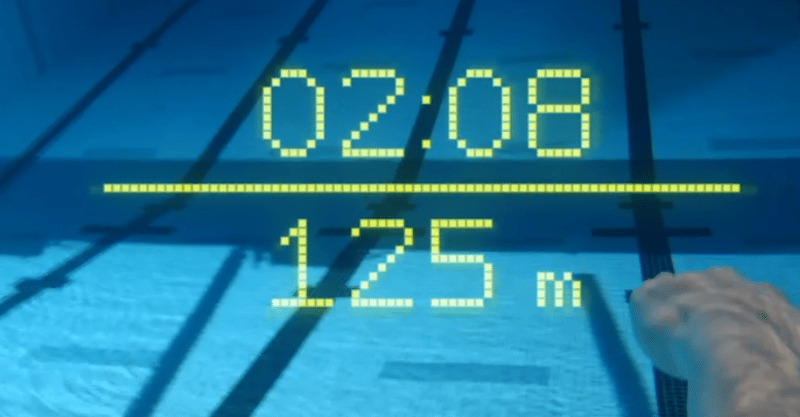
The most immediately practical function is the simplest: current length time in your field of vision. It removes the pace clock and keeps your head in the water and on task. HeadCoach structured sets (workouts, sessions) appear as clear in-goggle prompts, for example, “100m Free @ 2:00”, and are intuitive to follow without stopping to check your phone or poolside, paper-based set.
As a triathlete, I can just about spell breaststroke, but that’s it. Stroke detection nailed detecting my freestyle and recorded the drills I manually added. The accelerometer triggers the turn at the end of each lane and must be relatively straightforward to get right – it does. At most, it misrecorded one length each session.
Head roll and pitch metrics are potentially useful for tracking improvement over a training block, but I found them less useful than I expected for real-time drill correction; there seemed to be a lag. The reduction in peripheral vision is the most noticeable limitation in a shared lane; swimmers passing close on either side appear different from normal, and I found it a little disconcerting. I became more worried about other people than concentrating on pulling.
Open Water
Testing covered the Shepperton Lake (a familiar and very popular venue with large buoys), Oak Ash Lake (an unfamiliar layout with small, low buoys), and the Hampton 36m outdoor pool.
SwimStraight performed unexpectedly better for me in the familiar venue.
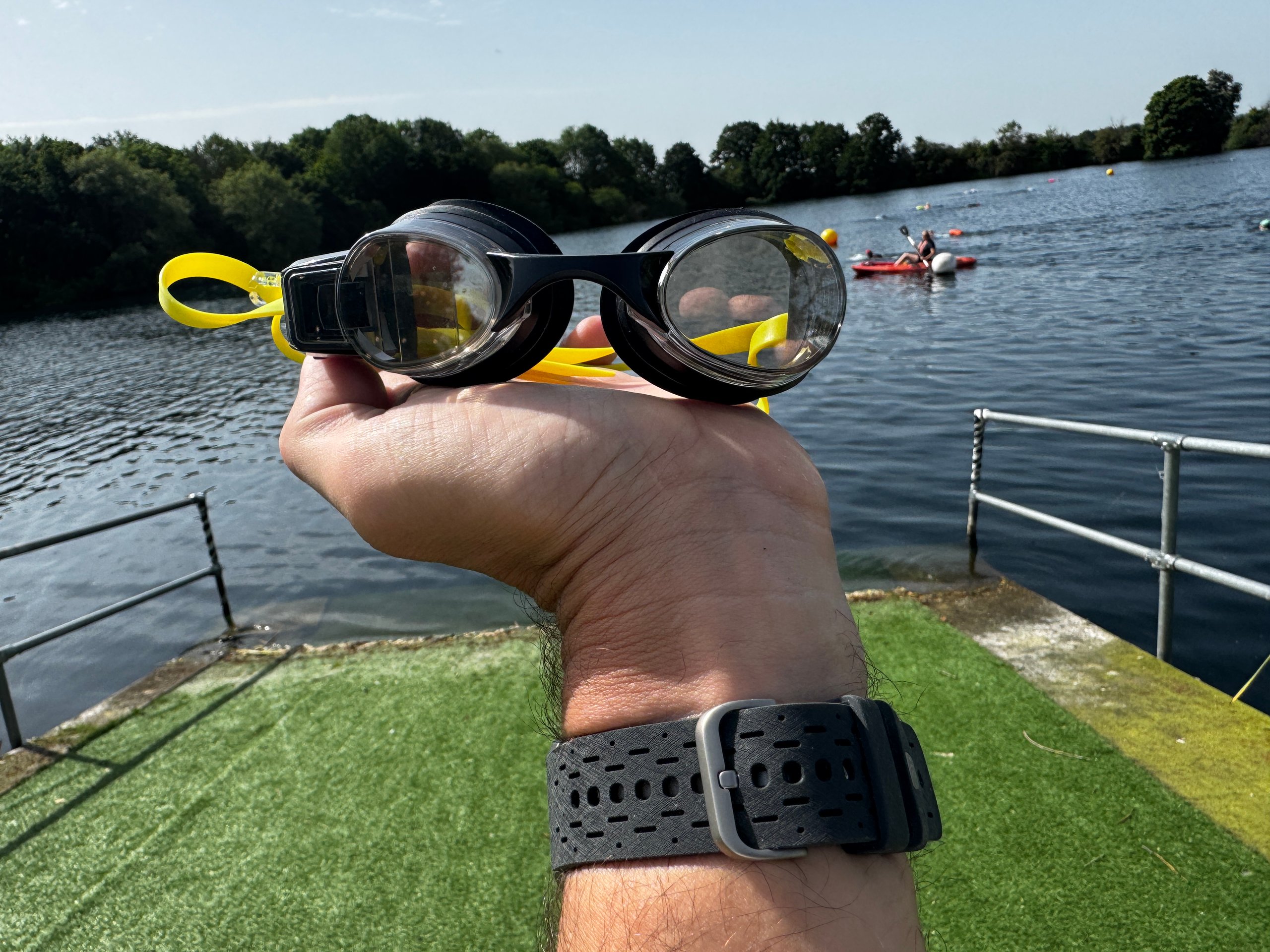
At Shepperton, I have the route and turn angles drilled into my arms and brain. Knowing where to sight for, setting off, and only then confirming the heading helped me trust the compass to hold direction between sightings. In the unfamiliar winter lake, with far less confidence in buoy positions, I still had to sight relatively frequently, and various multicoloured swim hats made me think twice about whether or not one was a buoy.
The overall practical effect was still positive. One performance example was when a swimmer passed me at a faster but similar speed, yet I beat them to every buoy because I held my direction better (or their speed was very erratic). Coming into the turn, it was quite insightful how much time the other person must be losing.
The sighting reminder alert in open-water mode was a sensible reminder that you can’t rely on the goggles for direction 100%!
I had the brightness set to maximum, which seemed fine to me, either peering into the murky depths or the brightly lit tiles of the outdoor pool. Fit held well during 40-60-minute sessions, with a good water seal each time. I did tweak the nose bridge piece width for fit, but a comfier fit was a leakier fit, so I chose the no-leaks option with very mild discomfort on the nose side of my right eye socket. I need to check on long-term seal durability under repeated use; it’s obviously going to deteriorate at some point, and I assume (but don’t know) that replacement seals are available.
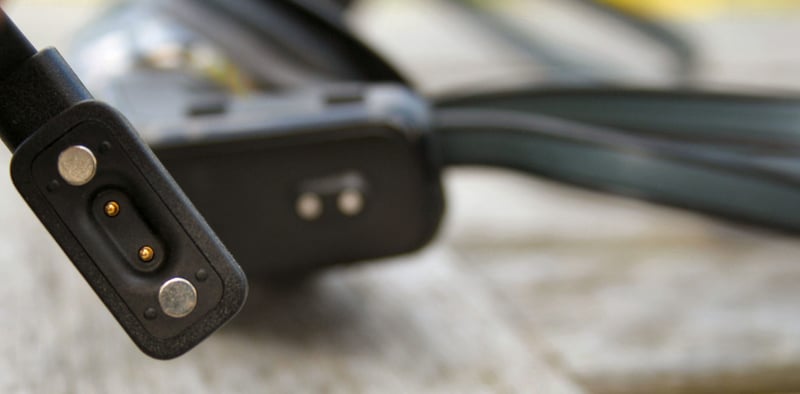
The goggles contain no GPS receiver of their own. FORM states that paired Garmin and Apple Watch devices provide GPS-powered pace, distance and heart rate in open water during the swim. In previous-generation goggle testing, these metrics did work, though I need to report back on that for this particular model. HoloSwim 3 Pro takes the opposite approach with a built-in GPS receiver: see the first public open-water GPS track recorded by swim goggles for how that compares in practice.
Sea swimming – not tested. No plans.
Racing
I’ve not used the LT in a race. I might give that a go later in the summer at an age group tri qualifier at Eton Dorney.
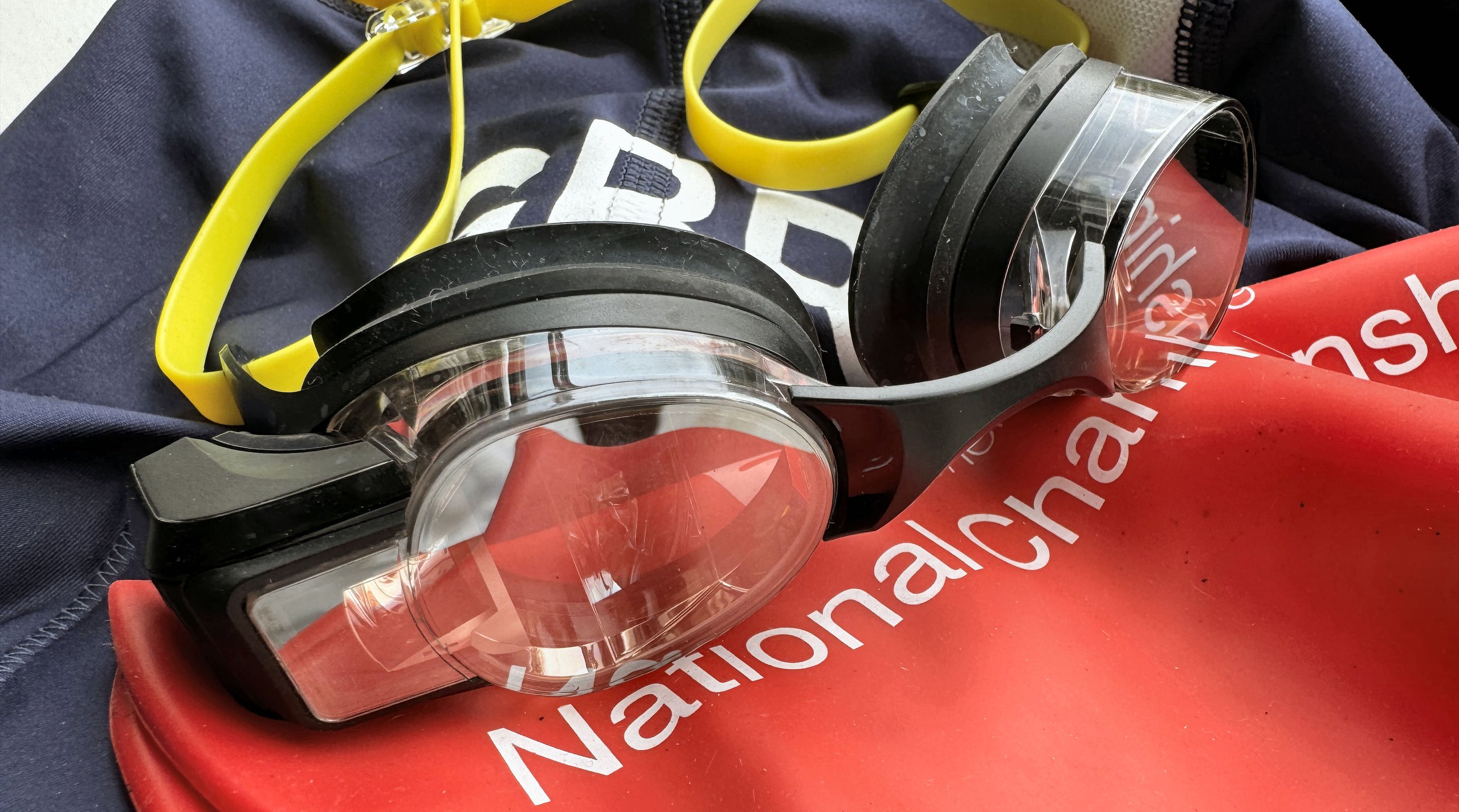
Here are my non-race-tested opinions.
The goggle profile and reduced peripheral vision make mass race starts riskier, with slightly less awareness of what others around you are about to do. For swimmers in the pack, the risk while swimming is also a material one. If, like me, your cunning plan is to start at the back and stay there (or, conversely, be right out front), then the risk of increased contact with others isn’t relevant, and the sight-time-saving benefits will kick in.
Thus, for an Ironman with staggered or small-group starts, the case for the Smart Swim 2 with HR-based pacing becomes stronger. For shorter races, I reckon front- or back-of-the-pack swimmers benefit to some degree.
Comparison Within the FORM Range
LT ($149) versus Smart Swim 2 ($199): the difference is $50 and one feature, the integrated HR sensor. If you do not train in heart rate zones, the LT is the correct choice. If you do, $50 is a modest premium for a meaningful capability. If you change your mind, you can buy a Polar Verity SENSE HR puck for a little over $50, but the integrated HR sensor works better in practical terms than in terms of accuracy.
LT versus Smart Swim 2 PRO ($259): the PRO adds Gorilla Glass lenses and an anti-fog kit. The glass matters only if you accumulate lens scratches through heavy use or careless storage. If you generally look after your kit like me, the plastic lens will be fine. The $110 premium over the LT is hard to justify, if money is no object…go for it.
Assessment of FORM Scoring Metrics
FORM’s app is well-designed and looks good and clear.
Headcoach Metrics
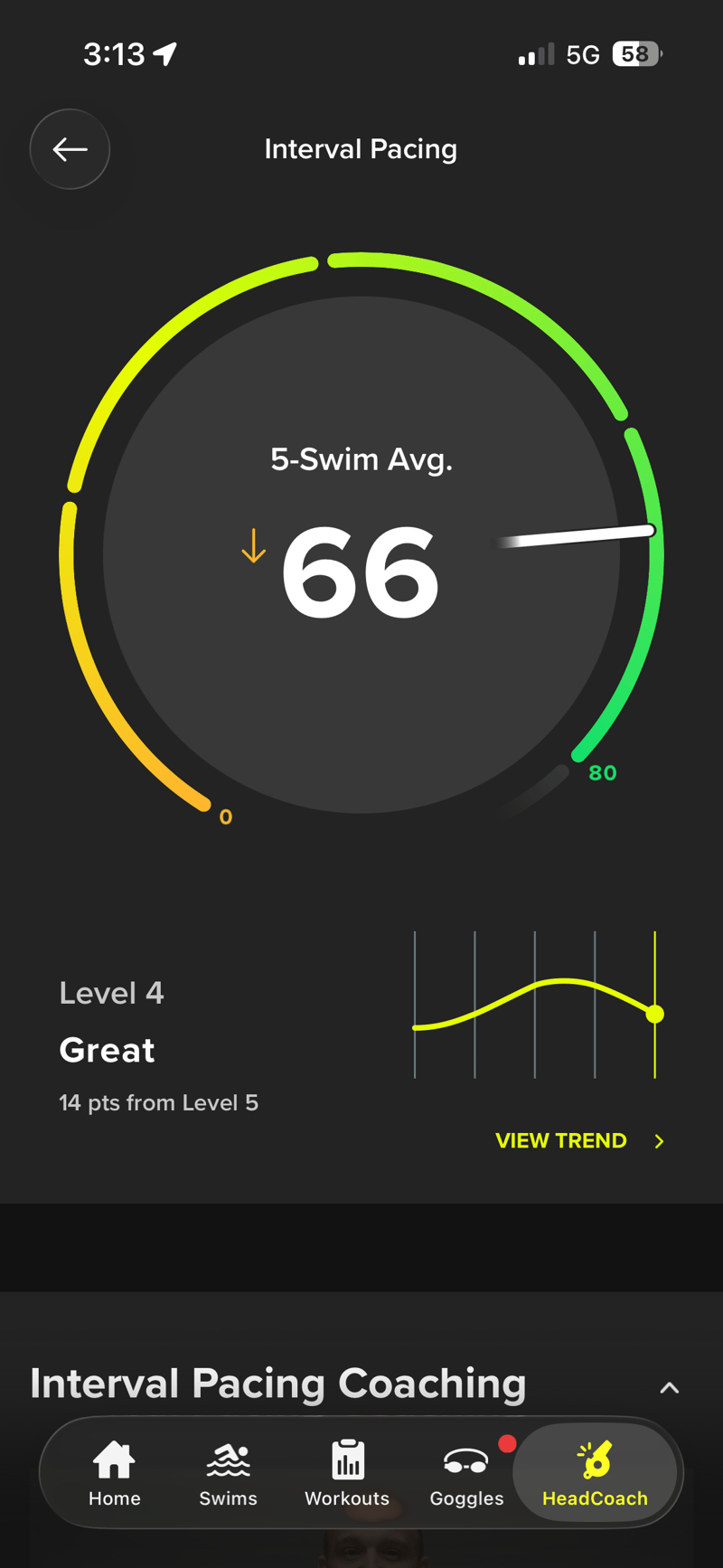
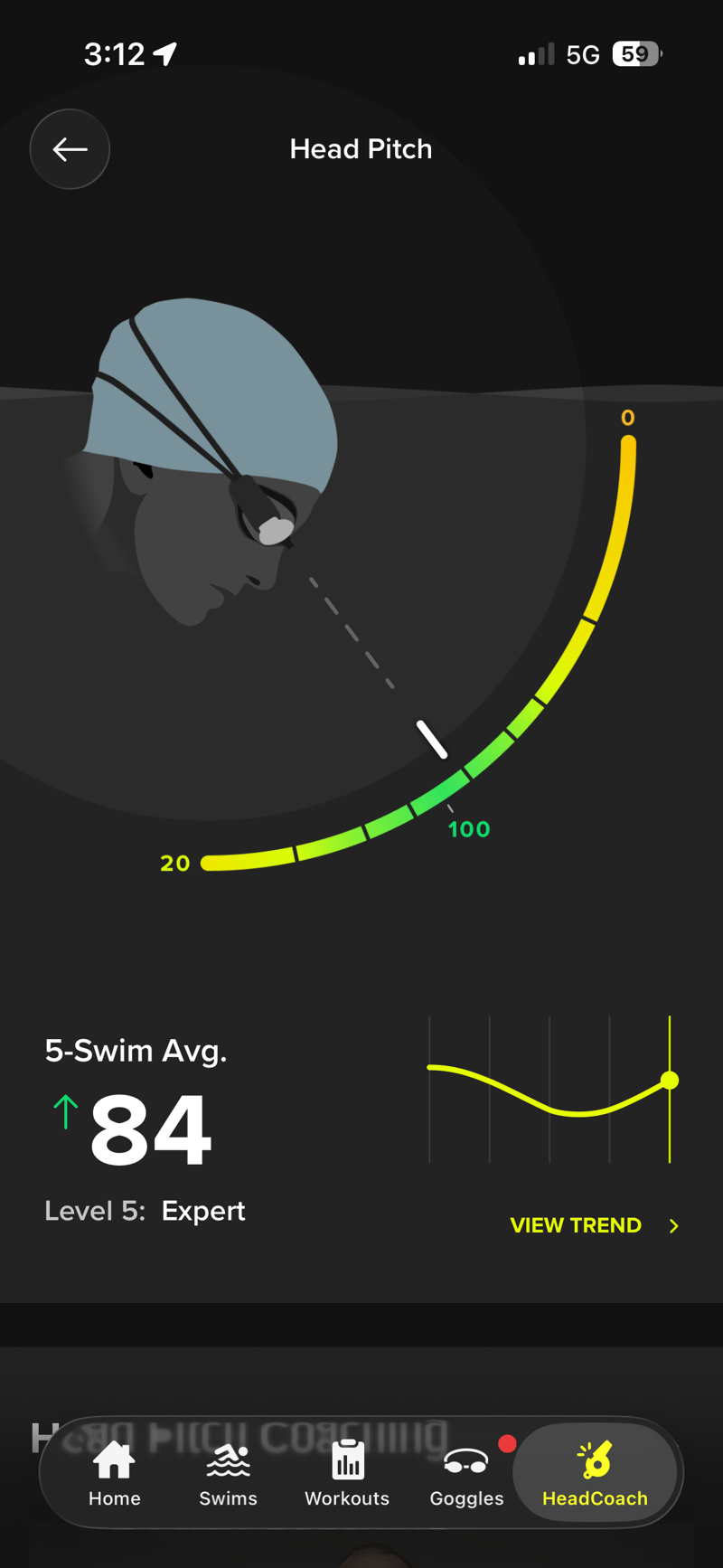
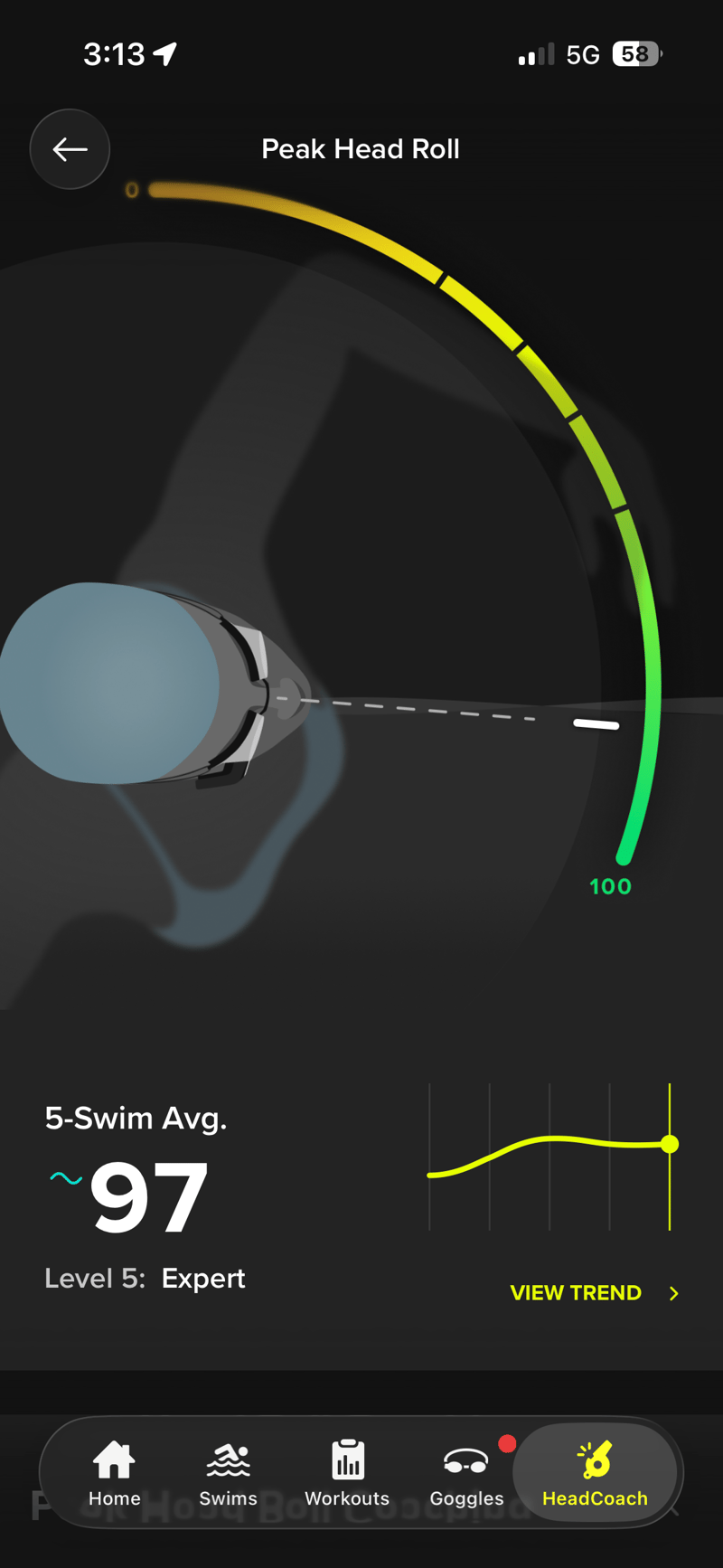
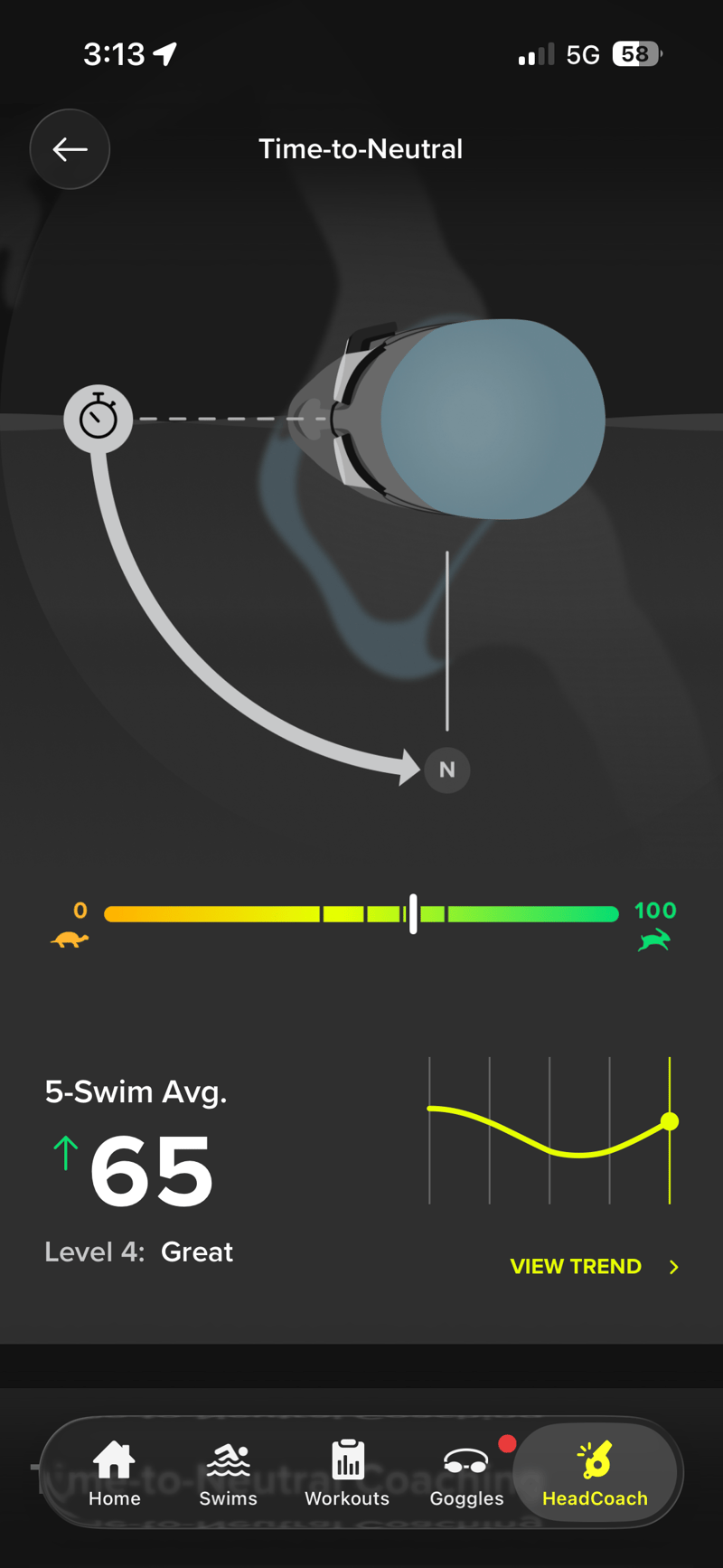
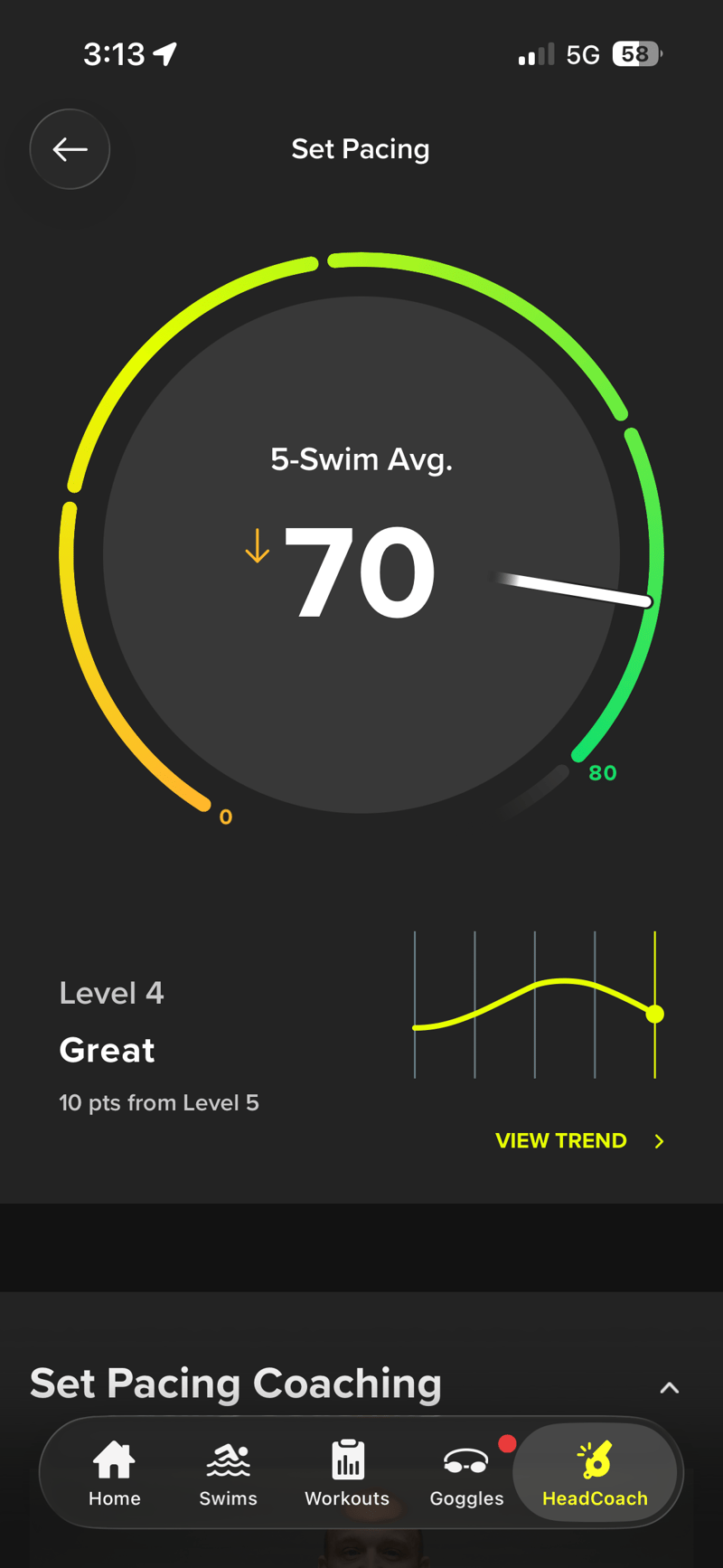
These are the scores the app gave me for my head coach metrics, along with my assessment of their score. There is a 0-100% score for each level, with 5 being the best.
- Head Pitch: measures the angle your head is tilted up or down while your face is in the water. Optimal is 30-37 degrees. Level 5 at 84%. Probably correct.
- Peak Head Roll: measures the maximum angle your head rolls to the side to take a breath. Level 5 at 97%. I don’t believe this. My right-side breathing is far from perfect, and I look slightly back, but the metric only measures the degree of turn, not whether I look back. The metric misses something and feels wrong.
- Time-to-Neutral: measures the time it takes to return your head to neutral after a breath. Level 4 at 65%. Probably fair. IDK.
- Interval Pacing: how consistently you hold pace length to length within an interval. Level 4 at 70%. Probably fair at my current level. I would expect this to improve with volume, as I think I’m normally a consistent pacer.
- Set Pacing: how well you hold the target pace across multiple intervals within a set. Level 4 at 66%. Probably fair.
General comment: the value is in improvement over time. Head position is certainly important, but other aspects of form are probably more important and cannot be captured by a head-based sensor.
Potential Improvements
The product is good. What I would like to see improved is this
- Configurable averaging of the heading metric to make it move more smoothly
- Higher resolution, colour display, e.g. microLED panels
- Smaller, redesigned lens with improved peripheral vision,
The first must be easy. The other two represent a completely redesigned product.
Alternatives
There is currently no mainstream direct competitor offering the same AR in-goggle display experience.
The closest alternative to stroke-technique analysis is the Swim Smooth GURU, a subscription app compatible with Garmin and Apple Watches. Its Stroke Insights feature covers many aspects of technique —rather than just head position—such as hand entry angle, pull-through position, and body rotation, which FORM’s temple-mounted accelerometer cannot measure. I tested it several years ago, and it was excellent at the time – it’s improved since! However, its use is only for post-swim and trend analysis tracking. FORM adds the in-swim component.
A Garmin Swim 2 or a Forerunner 970-equivalent wrist unit covers lap counting, pace, and stroke rate at a lower price, but requires stopping at the wall to read the data. Fine between sets, but the watch is only a logger while you are swimming unless you set up alerts.
The core value of FORM goggles lies specifically in the live display; if in-swim data is not a priority, a wrist watch is the more cost-effective option.
Verdict
The FORM Smart Swim 2 LT is the right buy for two swimmers:
- The pool swimmer who wants structured pacing data without stopping at the wall, and
- The open-water swimmer who veers and wants a practical tool to go straighter.
If you will get value from training or racing by HR, get the Swim 2 model, though you can add HR to the LT version later.
For someone returning to regular training or self-coaching without club support, it delivers real value to a performance swimmer at a price that makes the financial risk of a forced replacement due to loss, damage, or wear and tear reasonable.
Reduced peripheral vision is worth taking seriously if you race in packs in open water – I wouldn’t do it if that were me. But I’m at the back and make my time up later!
SwimStraight works best for me on a familiar course – fine-tuning my performance by swimming straighter and sighting less. In unfamiliar waters, it is a general aid as well as a performance one, and it does not replace sighting practice. For a competent sighter on a known route, it reduces how often they need to sight, which compounds over any distance and is worth having at this price.
It’s a good product and great value, I like it.
FORM Smart Swim 2 LT price: where to buy
The FORM Smart Swim 2 LT has a recommended price of $149. Check the price in your market.
Quick answers
Does the FORM Smart Swim 2 LT work with Garmin watches?
Yes. Paired Garmin and Apple Watch devices provide GPS-powered pace and distance in open water during the swim. Stroke metrics and length counting work independently in the pool without any watch pairing.
Can I add heart rate monitoring to the LT later?
A Polar Verity Sense can be clipped to the goggle strap, as worked on earlier FORM models. It is workable but occupies the single BLE channel, which blocks simultaneous Garmin GPS pairing.
Is the FORM Smart Swim 2 LT legal in triathlon races?
Yes. FORM goggles have been approved for race use by World Triathlon, USA Triathlon, British Triathlon, and PTO supertri since October 2023.
Last Updated on 3 October 2026 by tfk the5krunner
Small things I always use
- Garmin 90-degree charging adapter: Charges your Garmin from any USB-C cable. Essential when travelling. I use one.
- Body Glide: The blue anti-chafe stick swimmers and runners carry. I use it.
- Speedo earplugs: Fewer ear infections and no cold-water dizziness. I use them.
- Dryrobe Advance: My winter changing robe for open-water swims. I use one. A cheaper option is the AONYIYI changing robe.
- Maurten: Race fuel that stays easy on the stomach. I use them.
- Garmin charging puck: The quickest way to top up before a session. I use one.
- Injinji: Toe socks that stop rubbing, so you run more. I use them.
- Ultimate toe protectors: Stop black toenails on long runs. They work. I use them.
- Compressport R2 v2 calf sleeves: My calf sleeves of choice. I use them.
- Cellucor C4: My pre-workout before hard sessions.
- TPU tubes: Schwalbe Aerothan, Tubolito and Pirelli SmarTube. Light, tiny spares. I use all three.
- G8 insoles: Adjustable insoles that are good. I use them.
- Cycplus Cube: A 97g electric pump that gets a road tyre rideable in two minutes. I carry one. 5% off with code THE5KRUNNER.
Watches and sensors
- Polar H10: My daily driver for waking HRV.
- Polar Verity Sense: My backup arm-worn HR sensor.
- Nomad bedside charger: Charges my iPhone and Apple Watch overnight. I use it, and many of their bands.
- Train.Red: The best muscle oxygen sensor I’ve used.
- Tymewear: Accurate heart rate and reliable ventilatory zones. I use it to pace endurance rides over an hour.
- Garmin Forerunner 970: A pro-grade triathlon watch. I use this.
- Apple Watch Ultra 4: My daily smartwatch. No phone needed on rides.
- Garmin Fenix 9 Pro: I’ve just bought one.
On the bike
- Continental GP5000 for everyday riding, and Aero 111 on the front for special occasions.
- Helmets: Specialized S-Works Evade 3 for road riding, and Rudy Project Wing for TT-style races. I use both.
- Ravemen FR300: A front light that mounts under your Garmin or Wahoo. I use one.
- Wahoo TRACKR Radar: I use it on one bike and Varia on the other. They perform the same.
- Garmin Varia RTL515: Radar that warns you of cars from behind. I use this model.
- Wahoo ELEMNT Roam 3: The bike computer that’s easy to use. I use mine on most rides.
- Favero Assioma Pro RS2: Accurate power pedals that swap easily between bikes. I use this model.
Home and indoor training
- NPE Runn: Makes my basic treadmill smart, sending more accurate speed and distance to my watch and Zwift. I use it.
- Google Wifi: Keeps Zwift connected in my pain cave. I use it.
- Apple TV 4K: Zwift on the big screen. I use two.
- Google Nest Doorbell (wired, 2nd gen): My video doorbell, running in both Google Home and Apple Home. I use it.
Health, recovery and sleep
- FreeStyle Libre 3 Plus: Shows how my blood sugar responds to diet.
- hDrop: Measures my sweat loss in summer and indoors.
- Fourth Frontier Zone: Checks my heart under load in hard sessions.
- Oura Ring 5: My partner’s recovery tracker of choice.
- Kineon MOVE+: Red light therapy for niggles. It works.
- Eight Sleep: A cooling mattress cover my partner and I use nightly.
Reader-Powered Content

This content is not sponsored. It’s mostly me behind the labour of love, which is this site, and I appreciate everyone who supports it.
Support the site: Follow (free, fewer ads) · Subscribe (paid, ad-free) · Buy Me A Coffee ❤️
Written by real people, with AI assistance. Fact-checked and verified for originality. See the Editorial Policy. FTC: Affiliate Disclosure — some links pay commission. As an Amazon Associate, I earn from qualifying purchases.
tfk is the founder and author of the5krunner, an independent endurance sports technology publication. With 20 years of hands-on testing of GPS watches and wearables, and competing in triathlons at an international age-group level, tfk provides in-depth expert analysis of fitness technology for serious athletes and endurance sport competitors. ID

I bought the first gen some years ago and have upgraded each new iteration. I pool and ocean swim and I love them. I never see other swimmers with them. I like the goggles for Ocean as I go 400-600 metres one way and turn around and come back. In the pool I am able to know my number of laps, which I forget. I got the LTs as I thought the HR would come off my Apple Watch or Garmin Fenix 8 Pro. I did notice with Ocean swimming mode it picks up heart rate from your watch. By the way I saw your article on Garmin pool swimming, and yes they have never got laps or data right. I love the look of my Garmin but the AWU 3 is accurate. Thanks for you website, I love it.
@Damien Hatfield I’m still on Gen1 (and still love it), but I wonder if 2LT is an upgrade worth considering. Since you owned the whole set, what’s your opinion on Gen 1 vs 2LT?