Body Rocket is heading for liquidation. It deserved better.
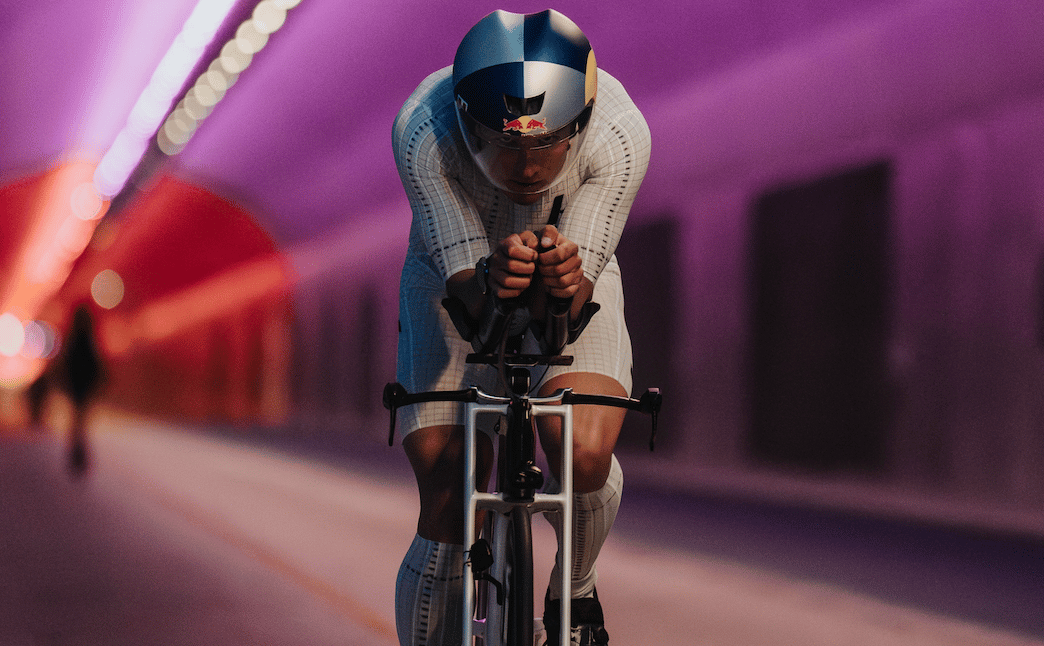
I was invited to Silverstone to test the Body Rocket system. A full day, wind tunnel access, and the chance to get some real data on my own riding position. A keen amateur’s dream. I never went. The diary never cleared, and, to be honest, I had doubts about whether the company would still be around for too many years.
This week, those doubts were sadly confirmed. Body Rocket founder and CEO Eric DeGolier told Cycling Weekly that the Brighton-based company has run out of funding and is selling its assets, including UK and US patents, through auctioneers, with offers closing on 18 June. The company was £312,379 in deficit in its accounts to August 2025. Eight years of work, ending at auction.
It is worth being clear about what is being lost, because the engineering was genuinely impressive.
What Body Rocket actually built
Body Rocket’s system took a different approach to every other on-bike aero sensor on the market. Devices like the AeroPod and Notio estimate CdA by combining wind speed data with power output, then back-calculating drag after accounting for rolling resistance and drivetrain losses. Errors compound across each of those estimates. Body Rocket measured drag directly by placing sensors on the handlebars, seatpost, and pedals to capture the horizontal forces at each rider-contact point. The sum of those forces is aerodynamic drag. The University of Southampton validated the approach, finding an average variation of 0.3% between the device and tunnel measurements across a range of positions.
The power meter pedals, announced in January 2025, were similarly serious. (Super serious). Developed because existing power meters lacked the accuracy the aero system required and claimed ±0.1% accuracy at a 20Hz sample rate. They were validated at the Silverstone Sports Engineering Hub, which subsequently adopted them into its own pedalling-efficiency rig. For context, the gold standard Garmin Rally and Favero Assioma PRO RS both claim ±1% accuracy – although perhaps the phrase ‘gold standard’ is inappropriate? Body Rocket’s claim was not a marketing figure that slipped past scrutiny. Priced at £1,500 and promising June 2025 delivery, they never shipped. I am not aware of any reviewers who tested them.
None of this reflects on the quality of the work. The difficulty was structural.
A thin market
The consumer market for on-bike aero measurement is narrow. It sits between two groups: professional teams, who have budgets, staff, and controlled testing environments, and very committed amateurs, who have the motivation but represent a small fraction of the overall cycling population. Aerodynamics matter enormously; the physics are not in dispute, and many cyclists want to go faster. The problem is the size of the addressable market and the friction involved in acting on the data. Body Rocket’s system was primarily aimed at triathletes and time triallists, a segment well represented in our triathlon technology coverage, but a narrow one commercially.
I have used an AeroPod, the Darefore ride position sensor, and reviewed the Streamlines FORMA position sensor. All of them work to varying degrees of usefulness. None of them has broken through into the mainstream. The conditions for a meaningful aero test are demanding: low wind, consistent road surface, stable power output, repeated runs in each direction. Most training days do not offer that combination, and most riders do not have the time or patience to wait for the right day at the right location. You get a number. The numbers shift with wind direction changes or a car gets in the way. You go home less certain than when you left – a wind tunnel is easier but expensive
The actionability problem
The parallel I keep returning to is smart running insoles. Several companies have produced insoles that measure ground contact time, loading rates and left-right balance with genuine accuracy. I used to get quite excited by them. The data is real. The problem is actionability. If an insole tells you your ground contact time is too long, what do you do? A few drills may help at the margins. Mostly, ground contact time falls when you run faster, which is the goal rather than the method. The measurement is valid. The trainability…less so.
Aero data has a similar problem. Position is a big variable in a cyclist’s overall CdA, accounting for more than any aspect of the bike. The FORMA and Darefore sensors measure one aspect of position well. But holding an aggressive aero position under fatigue requires either sustained training in that position or accepting that your tested position and your raced position will diverge. Measuring the gap is useful. Closing it is the hard part, and no sensor closes it for you.
Body Rocket’s direct-measurement approach was more technically ambitious than anything else in this space. The company attracted serious attention: Kristian Blummenfelt and Gustav Iden used a prototype in the build-up to the 2024 Paris Olympics, and Alex Dowsett was an early development partner. The crowdfunding raised more than £250,000 in 2020. Pre-orders opened in late 2024 at around £3,000 a system. The products never shipped AFAIK.
“We privately funded through investors and ran out of funding in the commercialisation process, between refining the technology and then making that a commercial product,” DeGolier told Cycling Weekly. “It’s been my work for the last eight years. I’m incredibly proud of the work that we’ve done and how far we’ve gone, and also very disappointed for everybody involved.”
The patents and the direct-measurement IP go to auction alongside the office furniture on 18 June. If another company with deeper pockets and a clearer route to the professional team market acquires them, the approach may yet find its moment. The technology was not the problem.
Quick answers
What was Body Rocket?
Body Rocket was a Brighton-based British cycling technology start-up, founded in 2018 by engineer and former Paralympic athlete Eric DeGolier. The company developed what it described as the world’s first real-time, direct drag-force aero measurement system for cyclists and triathletes. Unlike competing aero sensors, which estimate CdA by back-calculating from power and wind-speed data, Body Rocket measured aerodynamic drag directly via sensors on the handlebars, seatpost, and pedals. The approach was validated against wind tunnel measurements at the University of Southampton, with an average variation of 0.3%. The company never reached full commercial availability and is heading for liquidation in June 2026.
What products did Body Rocket make?
Body Rocket developed two main products. The first was the Body Rocket System: a set of sensors at the handlebar, seatpost and pedals paired with an out-front airspeed sensor, delivering live CdA data to a Garmin head unit via the company’s AI platform, BRIAiN. Pre-orders opened in late 2024 at around £3,000. The second was a standalone, dual-sided power-meter pedal, announced in January 2025 and priced at £1,500. The pedals claimed ±0.1% accuracy at a 20Hz sample rate, validated at the Silverstone Sports Engineering Hub, which adopted them into its own pedalling-efficiency rig. SPD-SL compatible only, 185g per pedal, 40-hour battery life. Neither product shipped to consumers.
Why did Body Rocket fail?
DeGolier told Cycling Weekly the company simply ran out of funding during the commercialisation process, between finalising the technology and bringing it to market as a consumer product. The company was £312,379 in deficit in its accounts to August 2025. Beyond the funding gap, the addressable market for on-bike aero sensors has proven consistently narrow: professional teams have the budgets but their own testing infrastructure. At the same time, consumer demand has not materialised at scale. Competing products, including the AeroPod, Notio and Aerosensor, have occupied the same niche for years without achieving mainstream adoption. Body Rocket’s system was more technically sophisticated and, correspondingly, harder to manufacture and price affordably.
Last Updated on 28 June 2026 by the5krunner
My favourite kit and nutrition
- Garmin Fenix 9 Pro — I’ve just bought one.
- Injinji – Runners protect your toes. Avoid discomfort and minor injury. Run more. Run faster. I use them.
- Garmin 90-degree charging adapter — A small keyring adapter you can use anywhere. Essential when away. I use one.
- Garmin charging puck — the fastest and most reliable way to top up your Garmin before a session. I use one.
- Ravemen FR300 — Front light that mounts directly under your Garmin or Wahoo head unit. Keeps your bars clean and your beam pointed where it matters. I use one.
- Body Glide – The blue anti-chafe stick that all swimmers and many runners use. I use it.
- Maurten — The race nutrition trusted by elite athletes. Gels and drink mixes engineered to be easy on the stomach. I use them.
- Garmin Varia RTL515 — A radar rear light that alerts you to vehicles approaching from behind. Pairs with your Edge or Wahoo. I use this model.
- Favero Assioma Pro RS2 — The power-meter pedals most serious cyclists choose. Accurate, easy to move between bikes. I use this model.
- Garmin Forerunner 970 — A serious choice for a pro-grade triathlon watch. I use this.
- Polar H10 — My daily driver for accurate, waking HRV readings.
- Wahoo ELEMNT Roam 3 — The bike computer that has the feature Garmin lacks: usability. I use mine on most rides.
Reader-Powered Content

This content is not sponsored. It’s mostly me behind the labour of love, which is this site, and I appreciate everyone who supports it.
Support the site: Follow (free, fewer ads) · Subscribe (paid, ad-free) · Buy Me A Coffee ❤️
All articles are written by real people, fact-checked, and verified for originality. See the Editorial Policy. FTC: Affiliate Disclosure — some links pay commission. As an Amazon Associate, I earn from qualifying purchases.
tfk is the founder and author of the5krunner, an independent endurance sports technology publication. With 20 years of hands-on testing of GPS watches and wearables, and competing in triathlons at an international age-group level, tfk provides in-depth expert analysis of fitness technology for serious athletes and endurance sport competitors. ID
