Amazfit Balance 3 Hyrox Sim Test 16x (4+1) with hDrop, Accuracy vs Polar, Whoop MG
If you’ve just come back from a product presentation about the Hyrox features of the Amazfit Balance 3, and you have a Balance 3 with you, and it’s Thursday, where Thursday or Friday is often your Hyrox Sim day. What do you do?
Well, you know you’re probably going to sweat.
Handily, I’ve also had the hDrop sweat sensor for a while. So it seemed like a good day to do a bit of gym work, a bit of running and a bit of testing. For the hDrop, today was just a run-through of the motions to make sure all the bits of data were going in the right place, as it isn’t super easy to use (I’m hoping the usefulness of the data will compensate). I’m also off for the Dartmoor Classic bike ride this weekend, and it’s going to be hot, so that long and fairly hard ride will be a good time to test sweat analysis.
My regular Hyrox sim has been going on for over a year now. I may have lost a bit of motivation in some aspects of my triathlon training, but throwing in the complexity and difficulty of Hyrox has given my mojo a new lease of life. I didn’t have the sleds available again today, so I improvised with a similarish exercise. I also aimed to spend about 5 minutes at each of the 16 stations, with the first 4 minutes relatively easy, then ramping up for the last minute. Nothing too rigid, but that was the general principle. A few of the other guys in the girls are Hyrox training too, and that was one of the suggested sessions that also appears on the Amazfit Balance 3, so, hey, why not?
hDrop
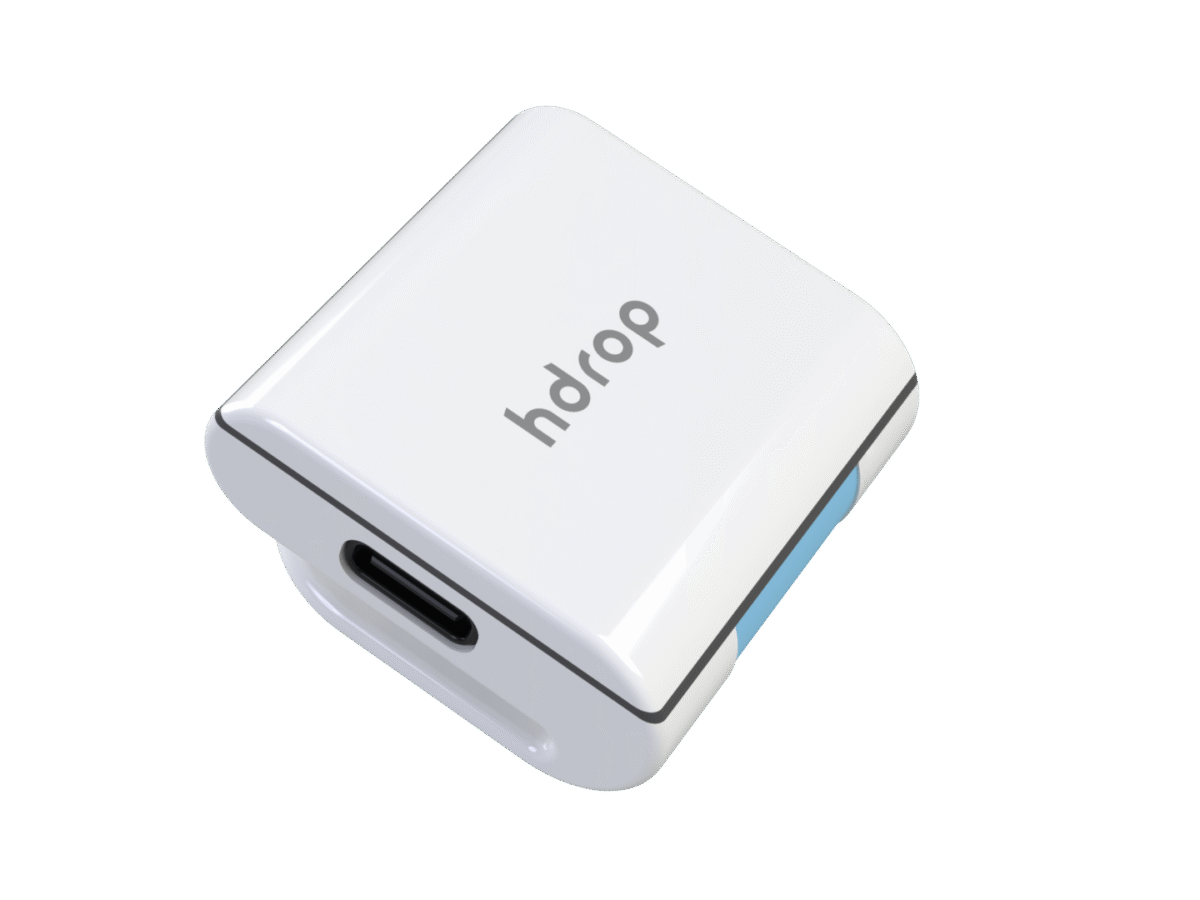
hDrop is a retro-looking arm-worn sensor that measures sweat and sodium loss. It has its own app but is also compatible with Garmin Connect IQ (as a data field) and, more recently, natively with Wahoo ELEMNT. Handily, it clips nicely onto my Polar SENSE strap, so it is super convenient to wear. A word of warning: if you get one, make sure it’s on whichever strap you use really tightly, and ensure that if it slips out, it can only slip upwards; otherwise, it will slip down and you’ll lose it.
I’ve had some problems setting it up. Every use requires you to start the smartphone app running. Then you have to manually hand off the single BLE connection to your in-sport device. In this case, I planned to use my Garmin Forerunner 970, but the Connect IQ data field wouldn’t have any of it. hDrop still cached the session results on the pod so that I can show you the stats in a minute. Good lessons learnt for the weekend, and the real test.
This was my second calibration test, but the first time I’d got some decent results for a proper workout.
Sweat and Sodium Sweat Sensor
Garmin and Wahoo Compatible
 +other retailers
Amazfit Balance 3
After meeting with the brand earlier this week, it’s clear they are making a significant investment in the Hyrox capabilities of their ecosystem. It’s already pretty impressive, and there is definitely more to come. One example (see below) is that the Zepp app has Hyrox-specific analysis screens. It’s very difficult for any generic competitor like Garmin or Coros to do anything like this without a serious strategic commitment – those two brands (and others) have made various tactical moves to support hybrid training (ie Hyrox) by introducing a few features or sports profiles here and there, but the scale of what Amazfit is embarking on seems to be too detailed and specific for Garmin, Coros, Whoop or the others to want to replicate. They could. But I don’t think they will. Actually, Garmin might. We already know they are eyeing up some novel technologies and features for strength training down the line.
Today’s announcement of the Helio Strap PRO and its partner motion sensor demonstrates that Amazfit aims to provide deeper insights into Hyrox performance and training than any other vendor.
I wrote a piece earlier in the week questioning if Amazfit’s jump into Hyrox was a Hail Mary move. After meeting the Amazfit guys, it was pretty clear, taking the metaphor further, that they’re basically sending the entire team into the end zone. They really do seem to be going for it.
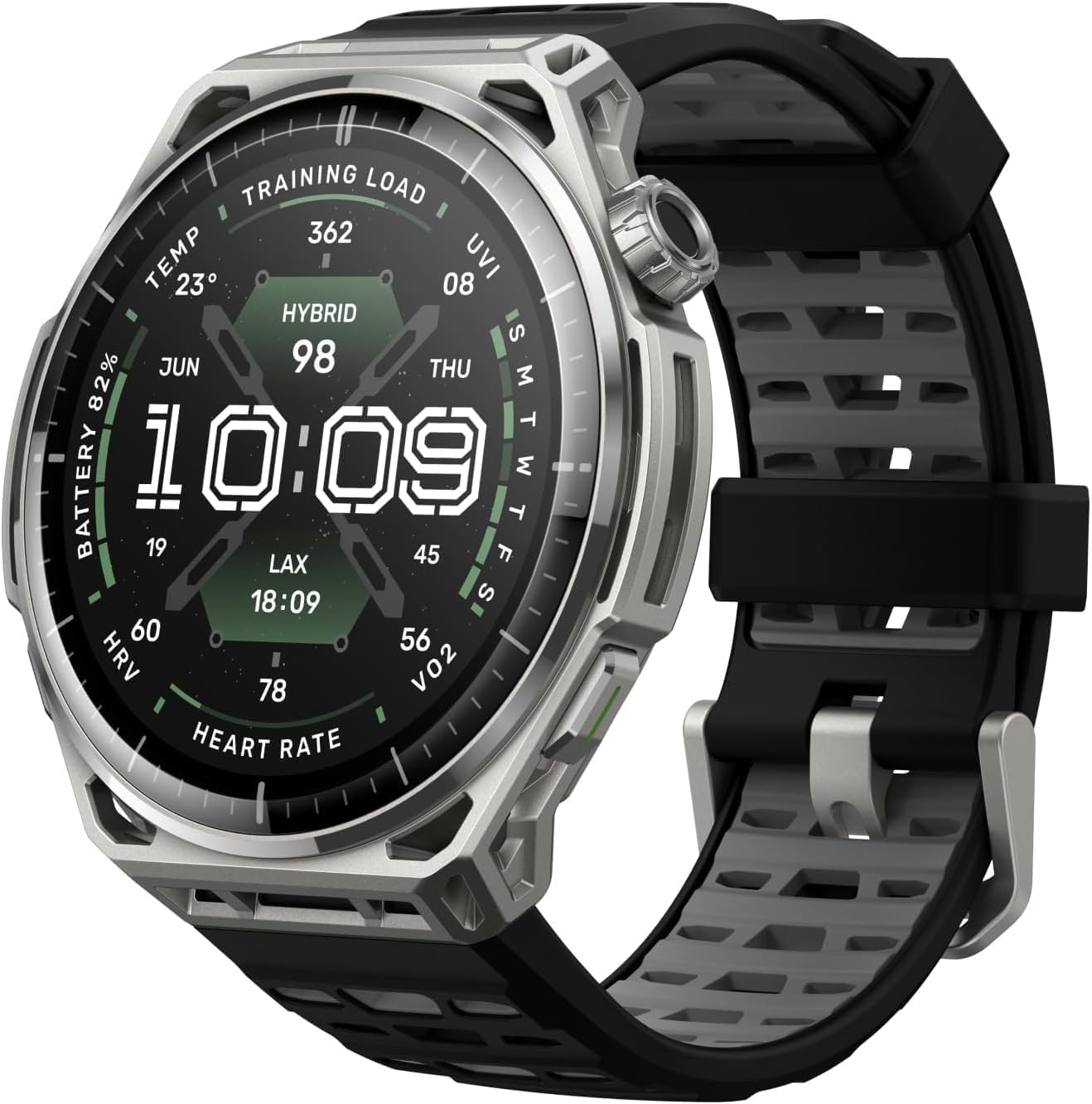
I digress. The bottom line is that the Balance 3 is on my wrist. I like the look of it, but it’s a Marmite thing, and there are definitely several on the Amazfit subreddit who don’t like it. It’s quite big, which is great for its readable and quite pretty display (watchface), but with bigness comes weight. At 62g, it’s in the Goldilocks zone, certainly not too heavy but not featherweight by any stretch. That weight spread over the footprint feels fine on my wrist. However, my concern is whether the size and weight cause any additional movement and might affect heart rate accuracy. I’m normally an awful candidate for heart rate accuracy, but I have had some excellent results this year from Amazfit’s BioSense 6 sensor. Balance 3 has the same sensor, but the package it’s in might mean it performs differently.
Also, on another day, the large case size, the stainless steel case (or titanium on the more expensive one), and how they are integrated with the antenna might make GPS reception better… or worse. My testing of the accuracy of previous Amazfit watches has generally been pretty good, but there was an exception. Again, that GPS testing is for another day.

Amazfit Balance 3 Photo
One last thing before we get to the results.
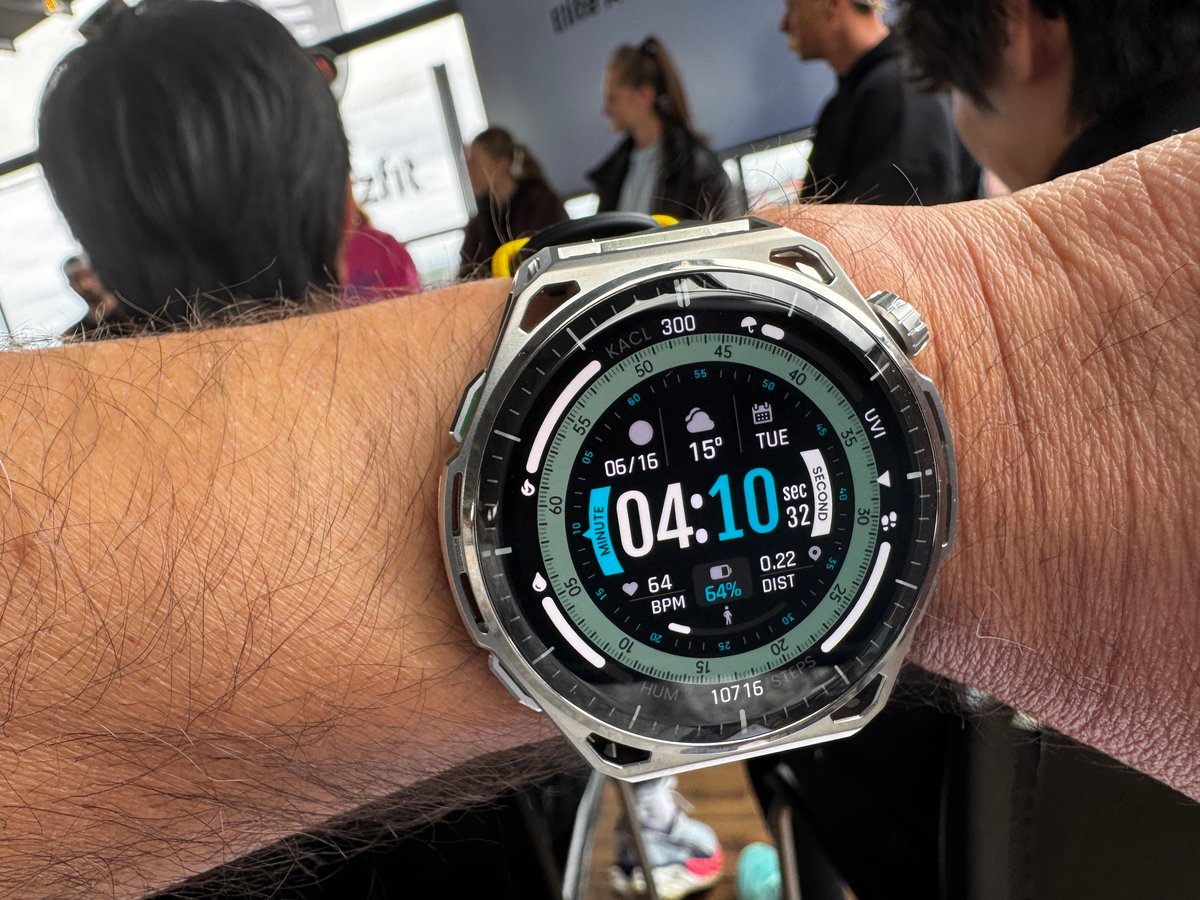
This is a shot of the Balance 3 with the focus on the important bit. The tech! In the background are two reigning world Hyrox champions, plus the amazing lady who has won every pro race this year, and Paralympian and general all-around nice guy David Wetherill, whom I loved chatting to quite a bit. I never quite understand why brands pay elite athletes small fortunes in sponsorship (well, I do). But I’d probably be more interested in the sporting performances of regular people who comment here (I do Google a few of you who leave your names publicly). I suppose I’m interested in the people and things I have a connection with.
Test Results
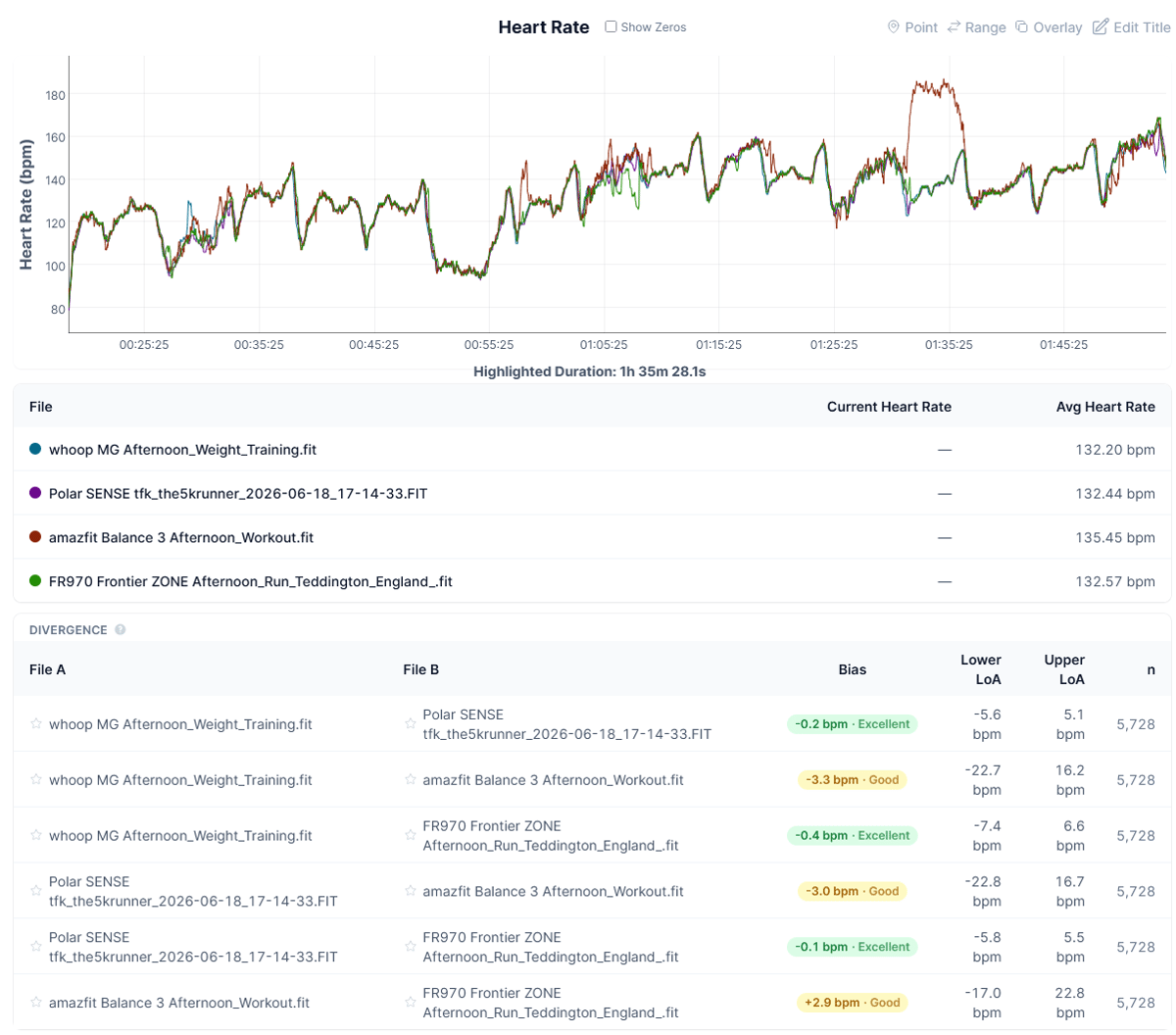
I put the heart rate tracks through the (beta) DCR Analyzer and here are the AI summaries of the data. Generally better than expected, but what’s going on with the stats?
As usual, the stats aren’t always that helpful. It’s great to quantify things and be super-scientific, but I think it’s better to understand what’s going on and what might be scenarios causing the issues the stats highlight.
- References (Polar Sense & FR970) agree excellently: bias -0.1 bpm, tight LoA (-5.8 to +5.5 bpm).
- Whoop: Excellent accuracy vs references (bias -0.2/-0.4 bpm, narrow LoA).
- Amazfit Balance 3: Good but +2.9–3.3 bpm higher bias vs references, wider LoA (~±20 bpm).
So you can clearly see from the chart that Balance 3 messed up a section. It looks like cadence lock on Run 6. Even excluding that, the stats probably would have said Balance 3 was excellent. But you can see for yourself that there were a few other minor issues with under- and over-reporting. Probably not something that would throw the TRIMP/CTL/ATL/TSB stats out (Amazfit do use them), but something to watch nevertheless.
Once again, Whoop MG is pretty accurate, as are most devices worn on the biceps.
The Fourth Frontier Zone was doing well today. Now I’ve figured out that I have to pair it with a watch to get per-second readings, rather than export the supposedly raw data from the web interface, which only updates infrequently. It’s a shame it doesn’t also sync to their ecosystem when I record to a third party (it probably does; I probably pressed the button incorrectly, but hey, it should just work properly by default).
Sweat Test Results
Thank you for reading this far. This is an unusual section, so hopefully you’ll find something more interesting here than normal. I did.
I made a half-hearted attempt to weigh myself naked before and after the session without drinking anything in between (those photos are for subscribers only 😉 ). I didn’t do it properly, but my calculations arrived at a 2.5kg weight loss, meaning I sweated 2.5 litres of water. It was hot. I was definitely sweating quite a bit, but this was more than I expected.
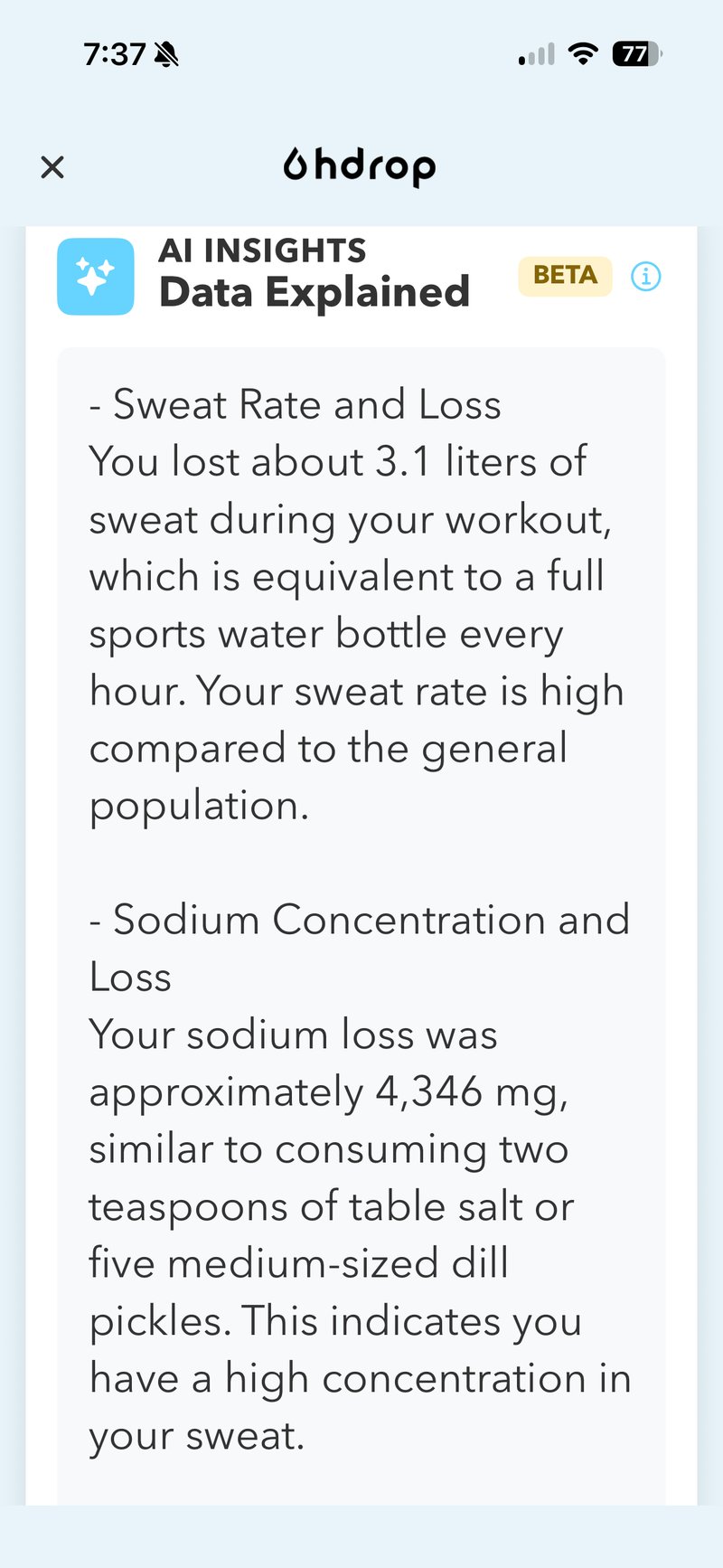
The hDrop app said I had underestimated; in fact, there was a cumulative loss of 3.1 litres of fluid. The errors in my measurements (this wasn’t a proper test) could probably bring the figure out towards 3 litres at a stretch, but I think the hDrop came in too high. It was a calibration test for it too, so it’s good to know we are both in a similarly sensible ballpark.
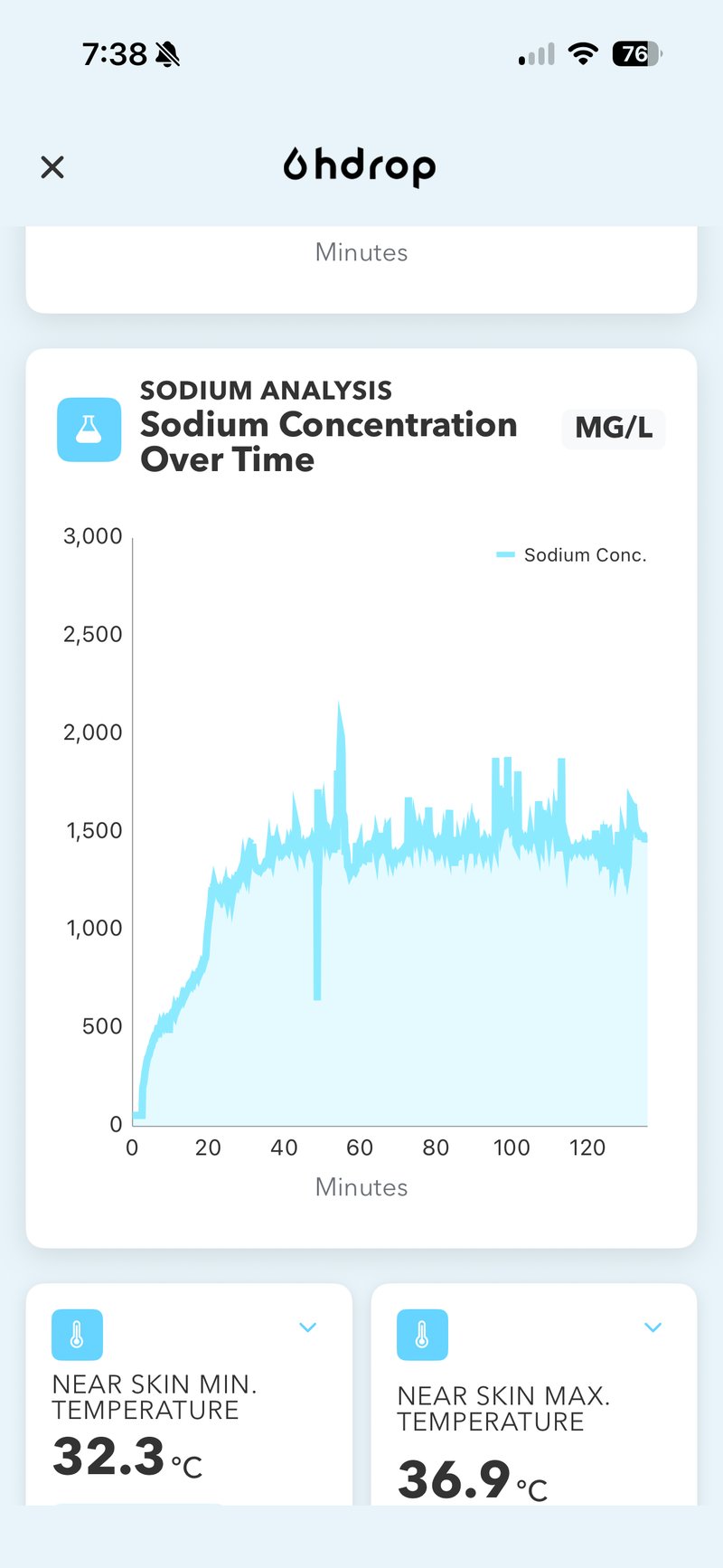
The app’s AI told me I sweat a lot, and it’s salty. I already knew that, but it’s good to have that confirmed. Let’s see how the AI feedback performs test after test. If it keeps telling me I have salty sweat, the novelty and usefulness will certainly wear off.
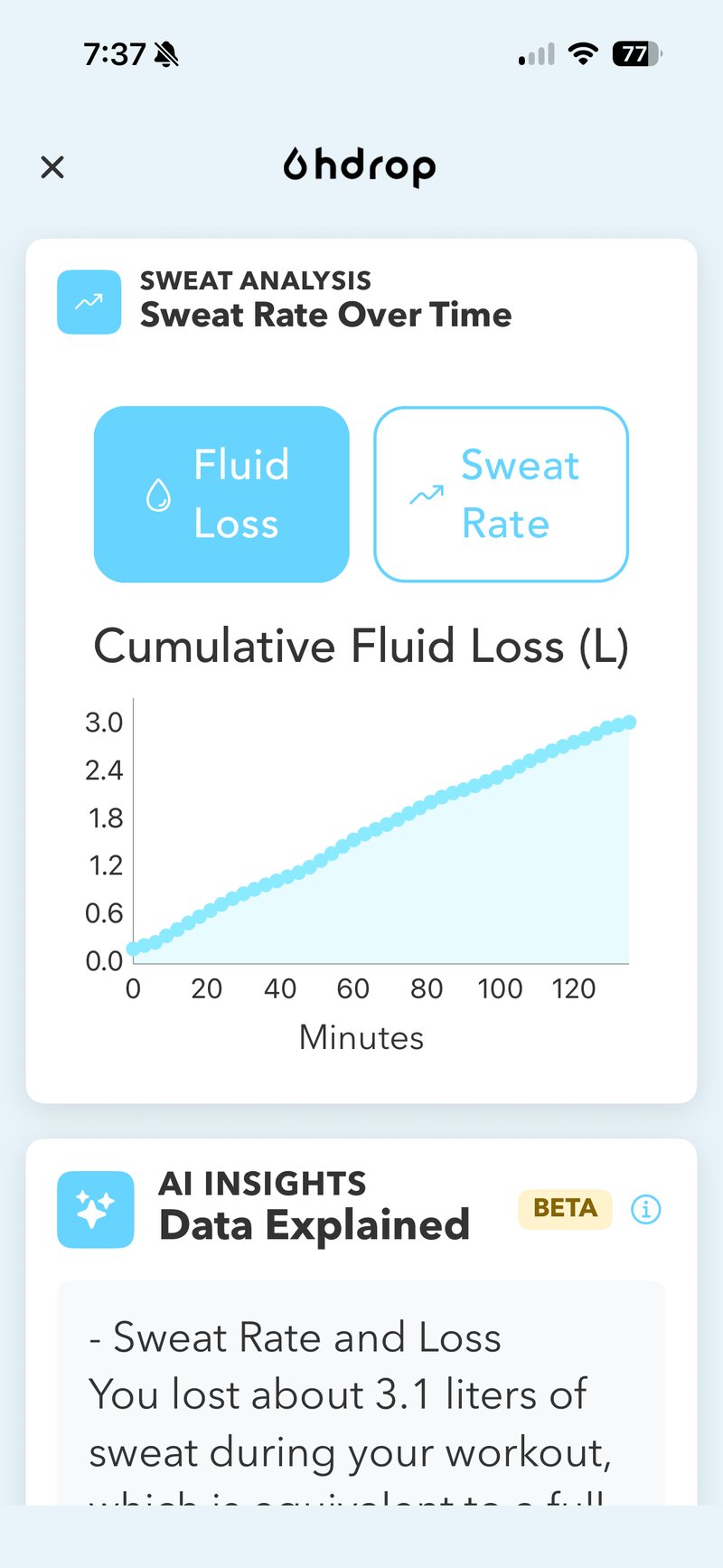
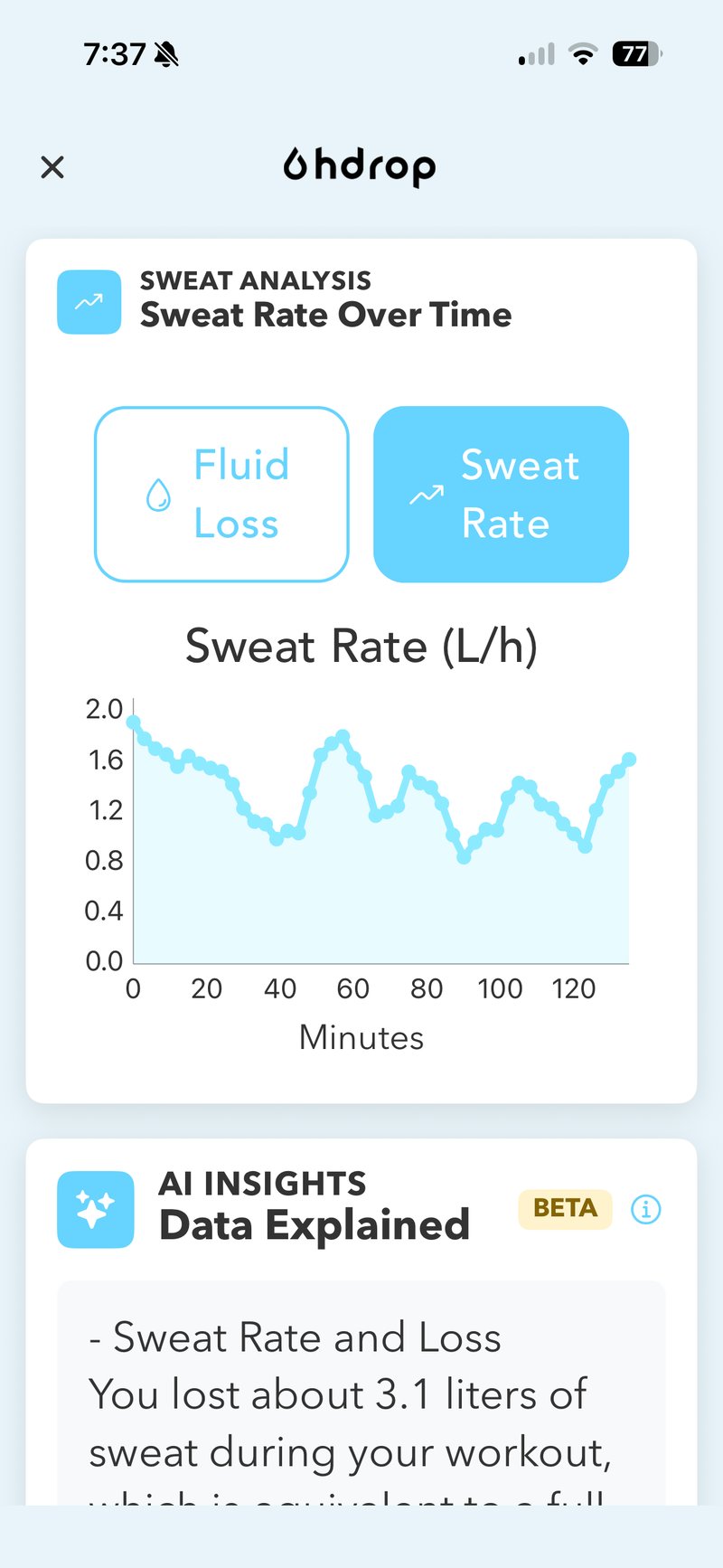
The sweat rate chart over time looks interesting. High at the start and then up and down a bit. The high at the start could be because I ran to the gym and it was hot outside, but I don’t remember running that fast or sweating at all; evaporation would explain that, I suppose. Then the ups and downs could correspond to variations in the intensity of the various test components, but there aren’t enough of the sweat peaks, so I’m not quite sure what the explanation is. If I had to hazard a guess, it would be that the first peak is linked to burpee broad jumps, the third to running a bit faster and the fourth, obviously, to the wall balls. I was pretty damp and rank by the end.
The Zepp App: Some Hyrox Screens
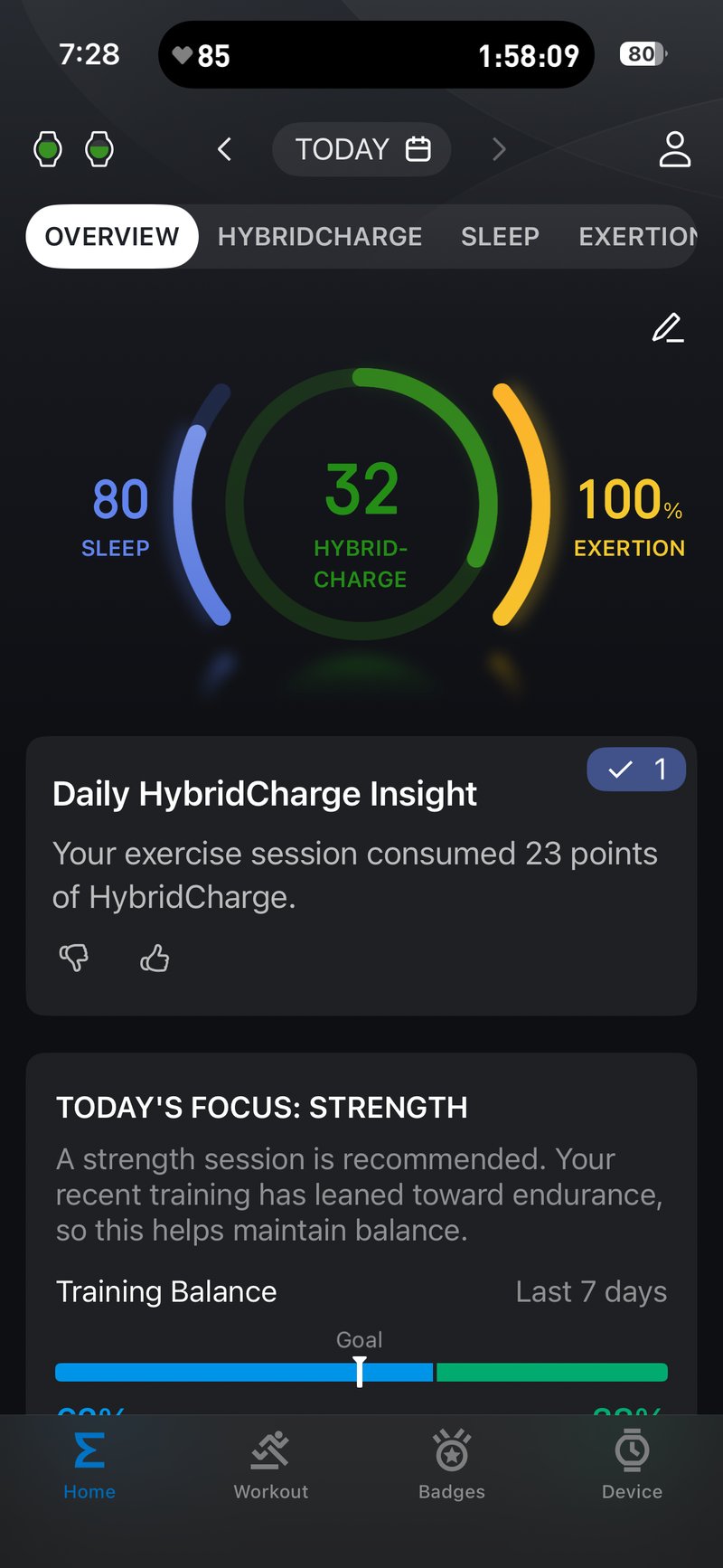
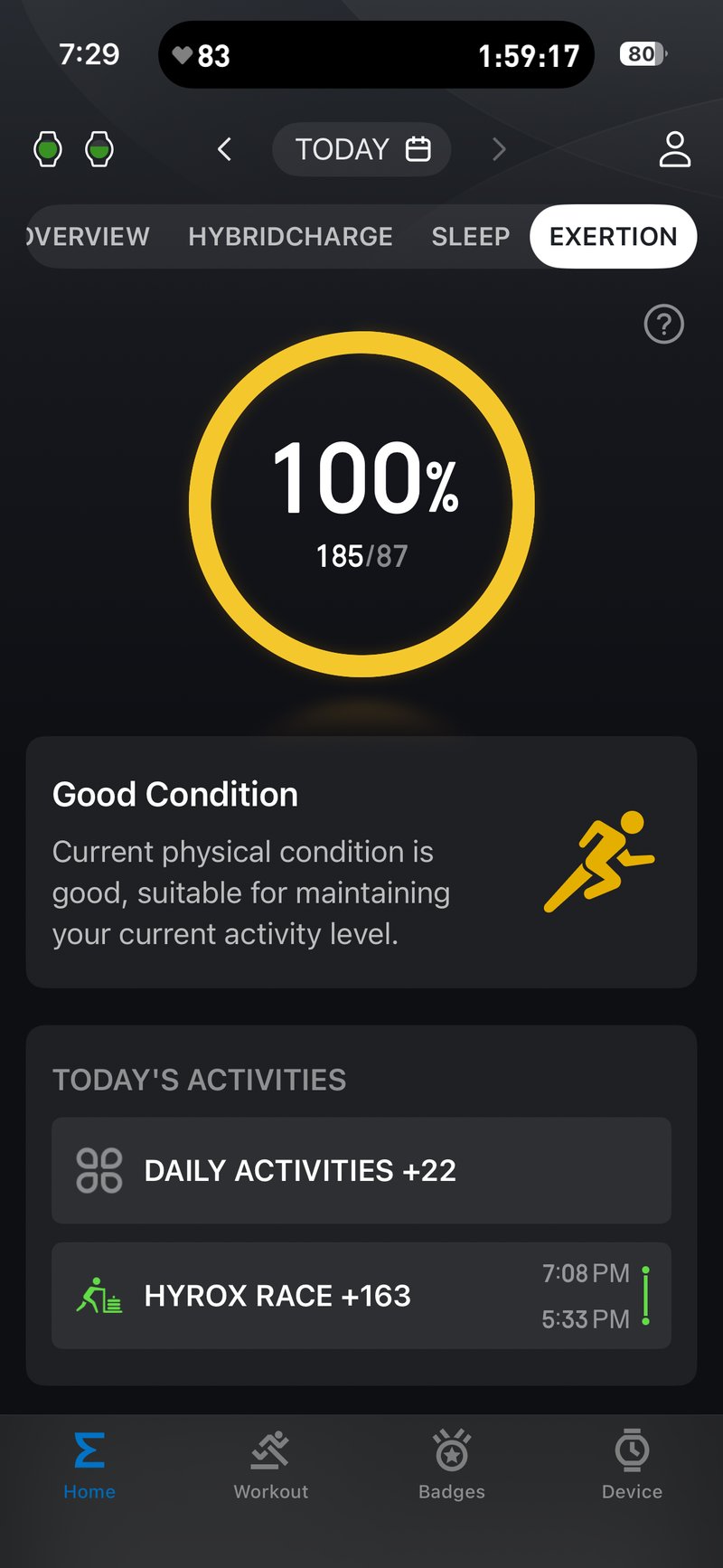
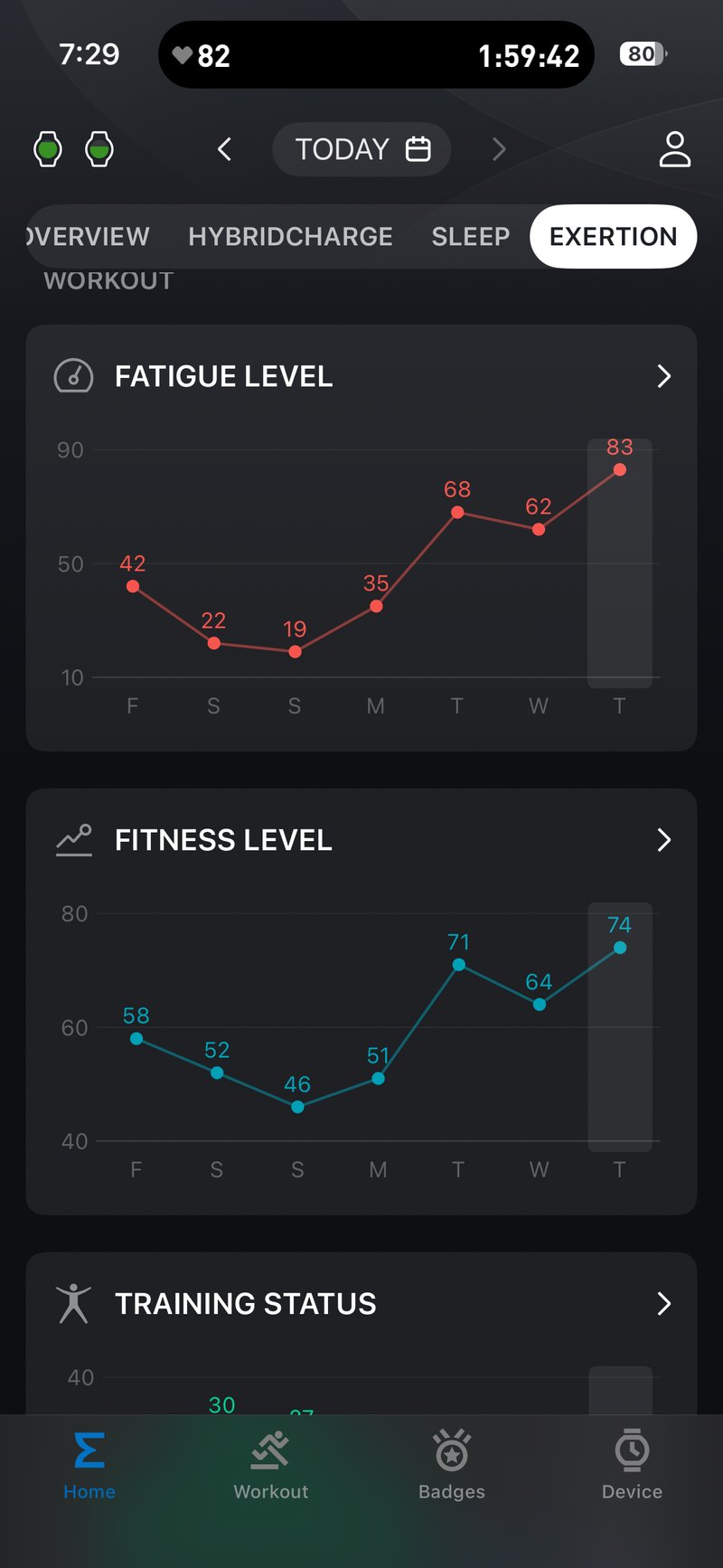
Here you can see what I was talking about earlier. The level of detail in the HYROX breakdown just isn’t something that Garmin would add to Connect; even the HR time series chart lets you toggle the stations/segments at the top (cool). A third party could and link their own app, of course.
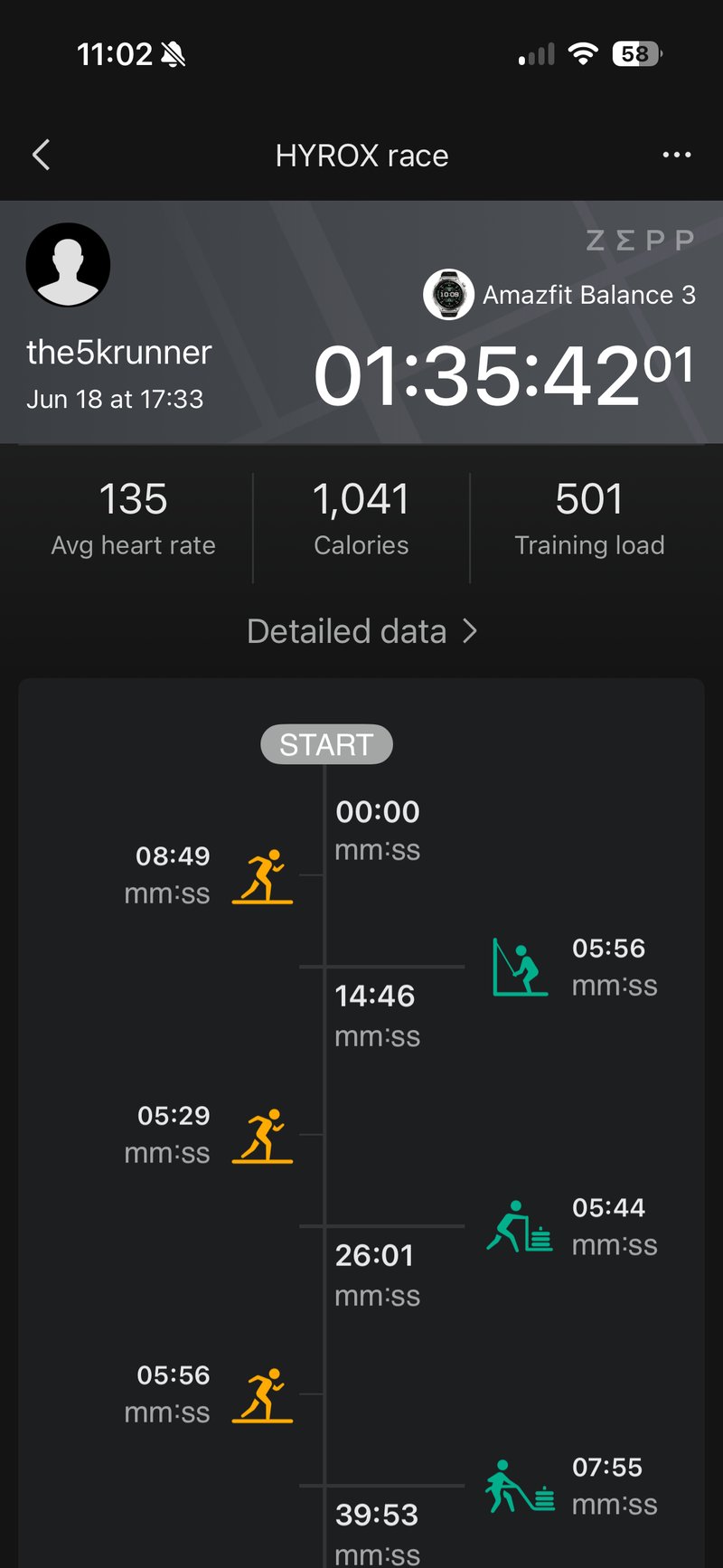
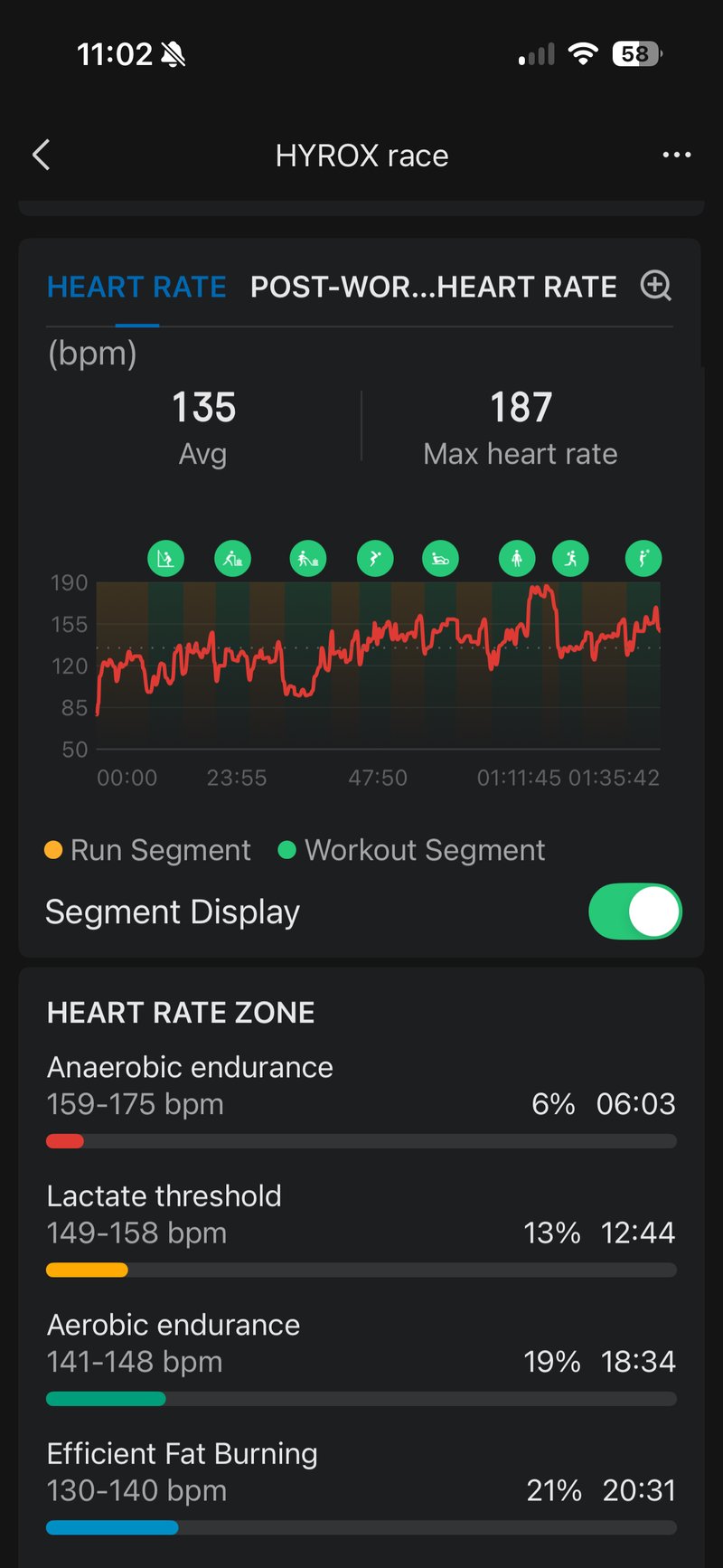
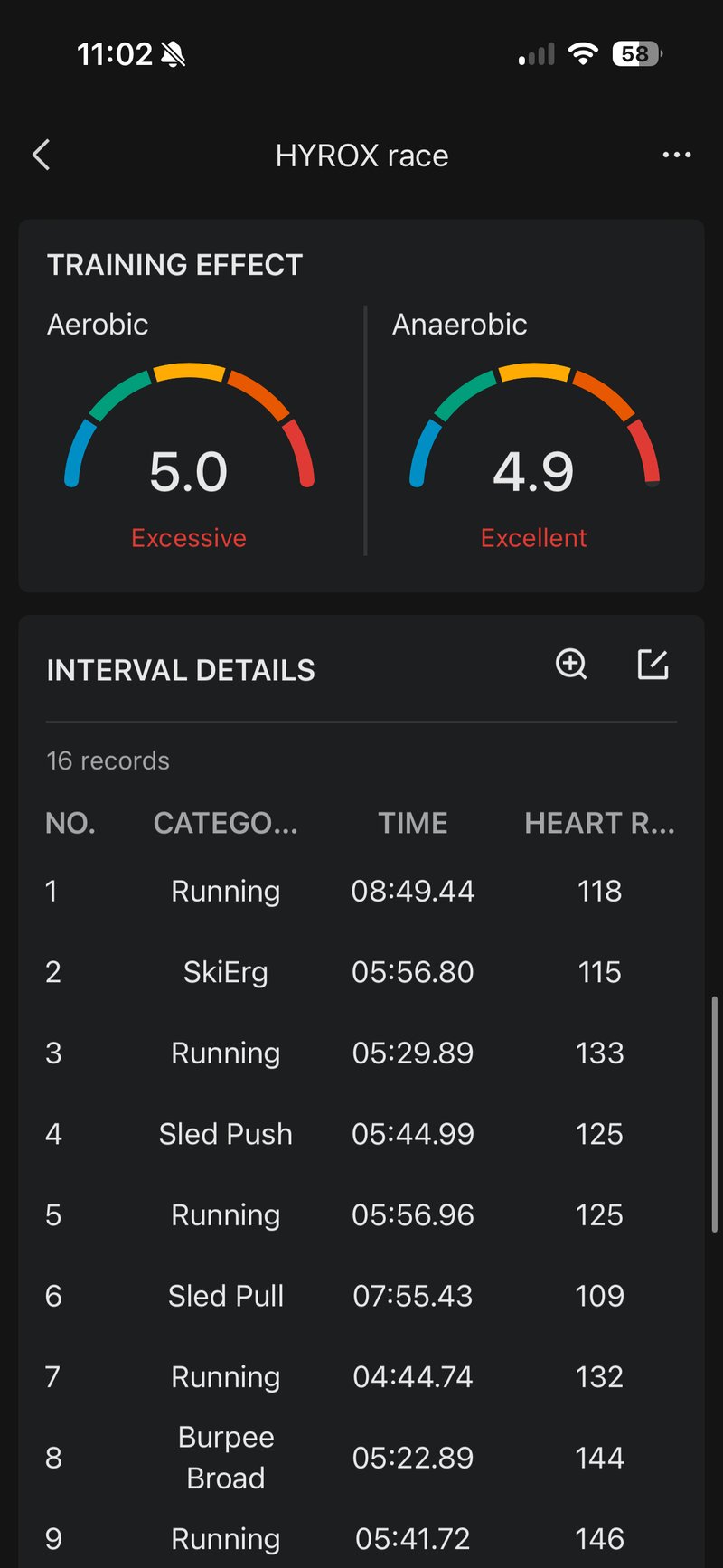
Note: Data includes faffing, non-standard reps/distances, and forgetting to press the button.
Also, the lactate threshold-based zones finally seem to have understood me and settled on 161 bpm, so the zone splits, and hence TRIMP/CTL/ATL/TSB will be right (ish).
The aerobic and anaerobic training effects don’t look right, though. This definitely was not a maximal aerobic workout for me. Probably on the anaerobic side, it could be close to the truth. I worked quite hard. I thought I’d see a muscular strain score somewhere.
Then I’ll mention Hybrid Charge as well. This is a multifactorial version of Garmin’s Body Battery (equally made up, just structured differently), but interesting in that it adds a component for muscular strain. It seems to be a fair high-level summary: 80% sleep last night (yep), 100% exertion (well, not quite, but it was up there,) and 28 Hybrid Charge (I could probably run 5k now if I had to… but I don’t have to and I won’t).
I’m unsure what it is telling me, ‘Today’s focus: Strength’. That’s what I did (ish). It’s done. Why is it suggesting a workout? I would expect to see its goal (as shown), as well as my compliance for this sim (not shown).
Take Out
The Amazfit HYROX ecosystem is incomplete but already impressive in scope. The execution is decent, too, for what is already there.
I’m looking forward to testing out the new Helio Strap Pro with its motion sensor, but also finding out if the wrist strap is actually any different from the previous one (I have that info inbound, even the European marketing people wouldn’t comment until they had the specs!).
hDrop seems interesting but a little tricky to get working. I’m not entirely sure what I’ll do when it’s all fired up, and giving me another useful data point. I already sometimes get my Core Temp data, TymeWear ventilatory data, Train Red SmO2 data, power, heart rate, and, of course, speed info all bombarding me at once. Is one more going to help? I have often felt that I might be underfueled and underhydrated. I guess I can find out now. I’ve previously used NIX, but the form factor and ecosystem support of hDrop fit better with what I need, so I’ll probably use it for an extended period while it’s hot.
Quick answers
Does the Amazfit Balance 3 support HYROX simulation workouts natively?
Yes. The Balance 3 includes a HYROX-specific workout mode, and the Zepp app provides station-by-station analysis with heart rate segmentation by exercise.
How accurate is the Amazfit Balance 3 heart rate sensor during mixed-intensity HYROX sessions?
In testing against the Polar Verity Sense and Garmin Forerunner 970, the Balance 3 ran approximately 3 bpm high on average with wider limits of agreement (roughly ±20 bpm), and showed one cadence lock incident on a running segment.
What is hDrop, and how does it work with Garmin and Wahoo devices?
hDrop is a wrist-worn sweat sensor that measures fluid loss and sodium concentration. It connects via BLE and is compatible with Garmin Connect IQ as a data field and with Wahoo ELEMNT. Each session requires a manual handoff from the smartphone app to the sport device.
Last Updated on 6 July 2026 by the5krunner
My favourite kit and nutrition
- Garmin Fenix 9 Pro — I’ve just bought one.
- Injinji – Runners protect your toes. Avoid discomfort and minor injury. Run more. Run faster. I use them.
- Garmin 90-degree charging adapter — A small keyring adapter you can use anywhere. Essential when away. I use one.
- Garmin charging puck — the fastest and most reliable way to top up your Garmin before a session. I use one.
- Ravemen FR300 — Front light that mounts directly under your Garmin or Wahoo head unit. Keeps your bars clean and your beam pointed where it matters. I use one.
- Body Glide – The blue anti-chafe stick that all swimmers and many runners use. I use it.
- Maurten — The race nutrition trusted by elite athletes. Gels and drink mixes engineered to be easy on the stomach. I use them.
- Garmin Varia RTL515 — A radar rear light that alerts you to vehicles approaching from behind. Pairs with your Edge or Wahoo. I use this model.
- Favero Assioma Pro RS2 — The power-meter pedals most serious cyclists choose. Accurate, easy to move between bikes. I use this model.
- Garmin Forerunner 970 — A serious choice for a pro-grade triathlon watch. I use this.
- Polar H10 — My daily driver for accurate, waking HRV readings.
- Wahoo ELEMNT Roam 3 — The bike computer that has the feature Garmin lacks: usability. I use mine on most rides.
Reader-Powered Content

This content is not sponsored. It’s mostly me behind the labour of love, which is this site, and I appreciate everyone who supports it.
Support the site: Follow (free, fewer ads) · Subscribe (paid, ad-free) · Buy Me A Coffee ❤️
All articles are written by real people, fact-checked, and verified for originality. See the Editorial Policy. FTC: Affiliate Disclosure — some links pay commission. As an Amazon Associate, I earn from qualifying purchases.
tfk is the founder and author of the5krunner, an independent endurance sports technology publication. With 20 years of hands-on testing of GPS watches and wearables, and competing in triathlons at an international age-group level, tfk provides in-depth expert analysis of fitness technology for serious athletes and endurance sport competitors. ID

Interesting! One question: is hDrop somehow compatible with an Amazfit wearable and or the ZeppApp? Or have you to use different sources to get the results and can you merge all in one evaluation?
We have a saying in Germany: Too many cooks spoil the broth…
hDrop has its own app and afaik isn compatible with amazfit