hDrop sweat sensor calibration: why the fluid loss numbers run high
The hDrop sweat sensor has appeared in three articles on this site. In each one, I flagged that the fluid loss figure looked too high. Today I ran a proper calibration test during a HYROX half sim, i.e., a controlled pre- and post-weigh-in with no fluid consumed. The result confirmed what I suspected.
Pre-workout nude weight 73 kg, post-workout 71.5 kg. Weight loss 1.50 kg, equal to 1.50 litres over approximately 100 minutes. hDrop measured 2.055 litres: a 37 per cent overestimate.
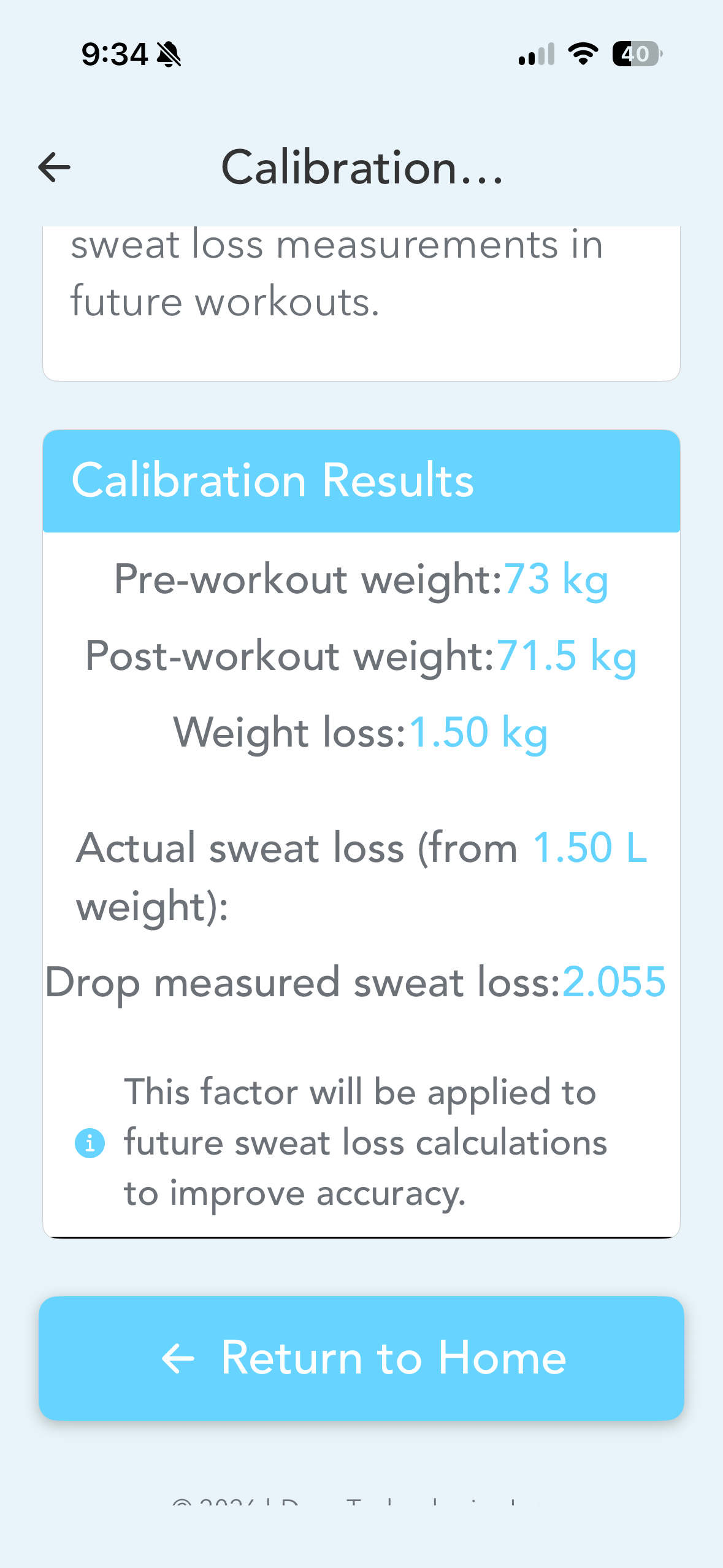
Three tests, same direction
- Stockholm HYROX sim, June: body weight change roughly 2.5 kg, hDrop said 3.1 litres. Weigh-in check was not rigorous.
- Dartmoor Classic: 108 km, 26°C, four hours. hDrop recorded 6.63 litres, I felt high by one to two bottles. Sweat rate did not drop during a 30-minute shaded stop. No controlled weigh-in.
- Today: controlled conditions, zero fluid intake, clean weigh-in. Overestimate: 37 per cent.
Only today’s session had a proper weigh-in.
Why does the error happen?
Local-to-whole-body conversion. hDrop measures sweat at one site, the upper arm, and applies a fixed ratio to estimate total body fluid loss. That ratio shifts with intensity, temperature, clothing, acclimatisation, and individual sweat distribution. A ratio calibrated for moderate cycling under lab conditions will yield a different result during a high-intensity gym session.
Indoor pooling. hDrop’s electrodes need liquid sweat to function. Outdoors, sweat evaporates, and skin stays relatively dry between production cycles. In a low-airflow gym, sweat pools and keeps the electrodes saturated, so the algorithm reads a higher local rate than the body-mass change supports. Body-mass change is the best practical field estimate of whole-body sweat loss because it also captures evaporated fluid.
Sweat rate and direction of error. Precision Fuel and Hydration’s independent lab test found hDrop underestimated the sweat rate on a moderate cycling protocol. At higher rates in humid conditions, the error can flip. hDrop added an adaptive calibration feature in July 2025 for athletes losing more than 1.5 L/h. Today’s rate was around 0.9 L/h, below that threshold, so indoor pooling and the local-to-whole-body ratio are the more likely drivers here.
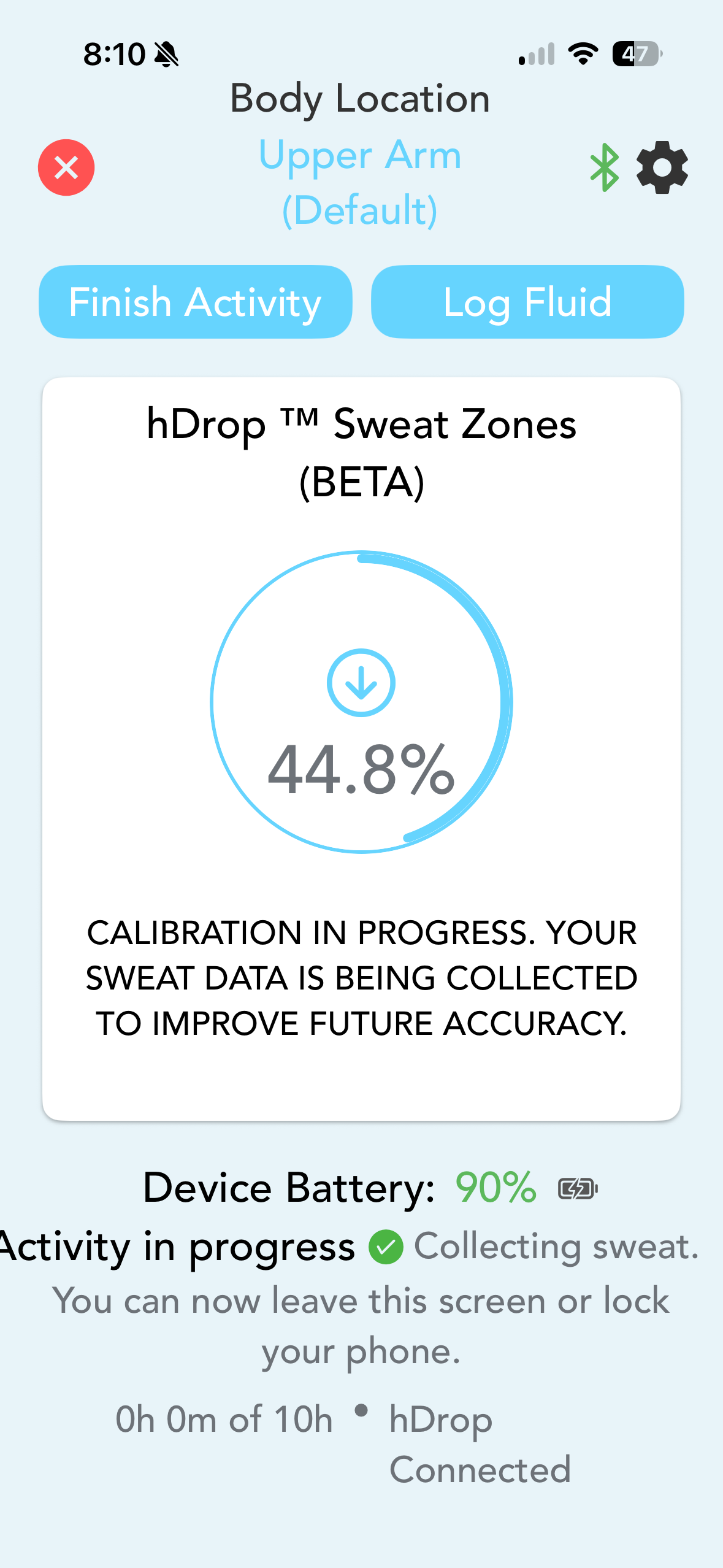
The correction factor
In my case, I divide the hDrop figure by 1.37. Applied illustratively to Dartmoor, 6.63 ÷ 1.37 gives approximately 4.8 litres: consistent with drinking 3.7 litres and finishing slightly dehydrated. The correction will vary with environment and intensity.
What the device gets right
Sodium likely held up better. At Dartmoor, concentration plateaued at 57 to 65 mmol/L and held there for the final two hours. Electrode-based ion concentration measurements are more direct than scaled whole-body fluid estimates.
Calibration
hDrop states no calibration is required. Three sessions say otherwise, at least for this athlete in these conditions (n=1).
The errors documented in this article were caused by a workflow issue now explained in the full hDrop Gen 2 review, where post-correction accuracy across three sessions came in at 0 to 6 per cent. For the full review, I will use the calibrated values. Further reading: Precision Fuel and Hydration’s independent hDrop test and hDrop’s science page.
Take Out
The measured sweat rate still exceeded my intuition of how much I sweat. A calibrated hDrop will certainly flag when I’m underhydrated by a whole bottle or more. Half a bottle out makes little practical difference, and I feel errors in measurement won’t exceed that sort of level.
The app workflow before each session is fiddly, but livable for periodic long, hot rides where hydration matters.
If you wear a biceps strap such as the Polar Verity Sense, hDrop clips on for dual use.
In summary: flawed but handy, calibration required.
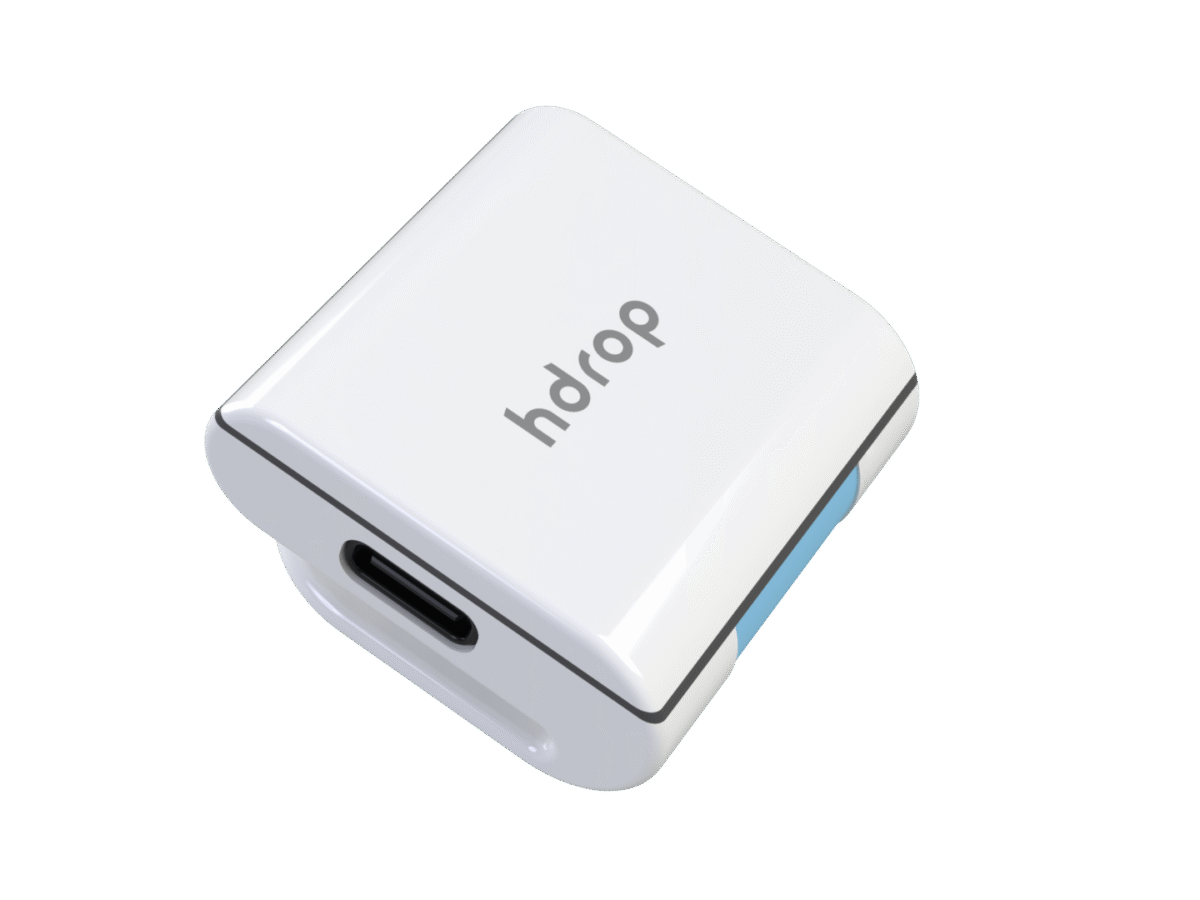
Sweat and Sodium Sweat Sensor
Garmin and Wahoo Compatible
 +other retailers
Quick answers
Does hDrop need to be calibrated?
hDrop says no. Three sessions here all showed overestimation, with the one controlled test returning 37 per cent. A nude weigh-in before and after a session with zero fluid intake gives a provisional personal divisor and makes the fluid-loss figure meaningful.
Why does hDrop overestimate fluid loss indoors?
The conductivity electrodes need liquid sweat. Outdoors, sweat evaporates and skin stays drier. In a low-airflow gym, sweat pools and keeps the electrodes saturated, likely causing the algorithm to read a higher local rate than actual whole-body loss warrants. Body-mass change captures evaporated fluid too, which is why it returns a lower total.
How do you calculate sweat loss from body weight?
Weigh naked before the session. Exercise with no fluid intake. Weigh naked immediately after. The kilogram difference approximates litres lost. If you did drink, add that volume to the weight loss figure.
Is the hDrop sodium data more reliable than the fluid loss data?
Based on these sessions, yes. The electrode measures ion concentration directly at the skin, a more direct problem than scaling a local sweat rate to whole-body fluid loss. Sodium is not subject to the same pooling and evaporation effects.
What is a normal sweat sodium concentration?
Most endurance athletes fall between 20 and 80 mmol/L, with the majority between 30 and 60 mmol/L. The 57 to 65 mmol/L recorded at Dartmoor sits at the higher end of moderate and points to a sodium-dense electrolyte strategy for long hot sessions.
Last Updated on 6 July 2026 by the5krunner
My favourite kit and nutrition
- Garmin Fenix 9 Pro — I’ve just bought one.
- Injinji – Runners protect your toes. Avoid discomfort and minor injury. Run more. Run faster. I use them.
- Garmin 90-degree charging adapter — A small keyring adapter you can use anywhere. Essential when away. I use one.
- Garmin charging puck — the fastest and most reliable way to top up your Garmin before a session. I use one.
- Ravemen FR300 — Front light that mounts directly under your Garmin or Wahoo head unit. Keeps your bars clean and your beam pointed where it matters. I use one.
- Body Glide – The blue anti-chafe stick that all swimmers and many runners use. I use it.
- Maurten — The race nutrition trusted by elite athletes. Gels and drink mixes engineered to be easy on the stomach. I use them.
- Garmin Varia RTL515 — A radar rear light that alerts you to vehicles approaching from behind. Pairs with your Edge or Wahoo. I use this model.
- Favero Assioma Pro RS2 — The power-meter pedals most serious cyclists choose. Accurate, easy to move between bikes. I use this model.
- Garmin Forerunner 970 — A serious choice for a pro-grade triathlon watch. I use this.
- Polar H10 — My daily driver for accurate, waking HRV readings.
- Wahoo ELEMNT Roam 3 — The bike computer that has the feature Garmin lacks: usability. I use mine on most rides.
Reader-Powered Content

This content is not sponsored. It’s mostly me behind the labour of love, which is this site, and I appreciate everyone who supports it.
Support the site: Follow (free, fewer ads) · Subscribe (paid, ad-free) · Buy Me A Coffee ❤️
All articles are written by real people, fact-checked, and verified for originality. See the Editorial Policy. FTC: Affiliate Disclosure — some links pay commission. As an Amazon Associate, I earn from qualifying purchases.
tfk is the founder and author of the5krunner, an independent endurance sports technology publication. With 20 years of hands-on testing of GPS watches and wearables, and competing in triathlons at an international age-group level, tfk provides in-depth expert analysis of fitness technology for serious athletes and endurance sport competitors. ID

Just thinking, do you need to towel dry before the post workout weigh-in, so you’re not weighing moisture you’ve actually sweated but is still sitting on your body.
I don’t know that it would be a significant fraction of the 0.5l though?
i made sure I wasn’t covered in sweat but even if you were I dont think it would amount to much weight
Mine became really accurate after calibration. Let’s see how yours behaves now!
did you recheck/ and what was the differences with a calibrated device on inside vs outside exercises? I basically plan to use the outside calibration all the time but the indoor use will surely be at risk of pooling?
I checked both indoor and outdoor after calibration and the error was within less than 10% on both. More than enough for me to track trends.