Amazfit Balance 3 Cycling Accuracy – how not to test
Last weekend was the annual Dartmoor Classic ride. A great weekend with some good friends and a bit of two-wheeled fun. And, for good measure, an abject lesson in how not to test GPS devices.
If you’ve come here to read about the new Amazfit Balance 3, it did pretty well. Better than I expected, but not perfect.
The Test
The Dartmoor Classic has rides at three distances, all starting at Newton Abbot racecourse in the early hours of Sunday morning, closest to the longest day of the year. If you time your journey to the South West of England just right, you drive past Stonehenge and can see the Druids celebrating the solstice. At least I did a few years ago when the solstice date aligned with my travel plans.
The Dartmoor Classic is a big event with maybe a couple of thousand entrants in total. As such, riders are released in groups and led slowly through the town to the start/finish point several miles from the racecourse. The race is well organised; there’s normally a decent Lycra jersey designed well enough to reuse and to publicise the event. Other than the medal and an excellent halfway refreshment stop, there are no other freebies. Marshalling is pretty good, though there are a few hairy bends that are dangerous at speed, some gravel sections left on the road, and a few very narrow lanes made more dangerous by oncoming traffic.
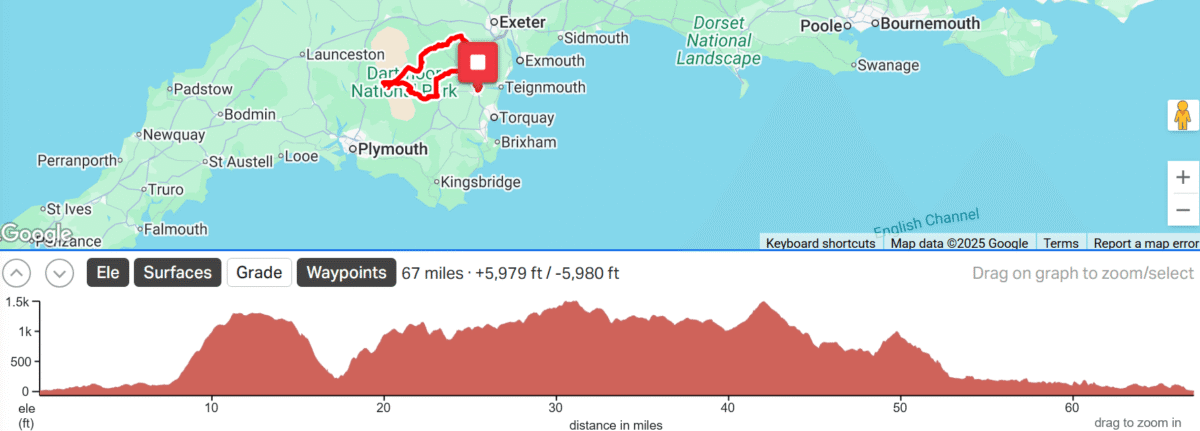
This year, we signed up for the Grande route, but because of the heat and other time pressures, defaulted to the shorter Medio route: 108 km with approximately 1,800 m of elevation gain. It was hot and dry this year, with no wind, in sharp contrast to the monsoon the previous year.
Sunday was hot. It must have been 26 degrees Celsius, so you don’t feel too hot on the bike most of the time when moving, but you’ll sweat a bit and definitely need to hydrate properly. Handily, I was on stage 2 of testing the hDrop sweat and sodium sensor, this time linking it to the Wahoo Bolt 3, which has recently opened up to sweat/sodium sensors and a ventilatory threshold sensor from TymeWear.
Devices On Test
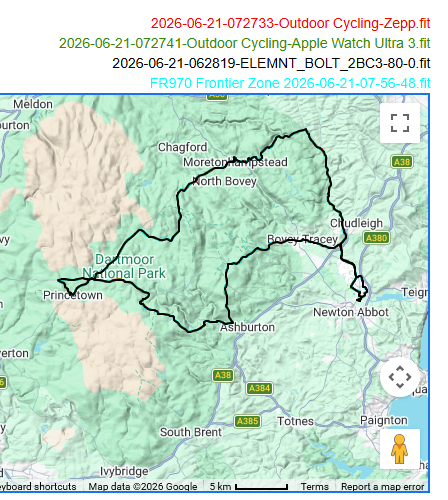
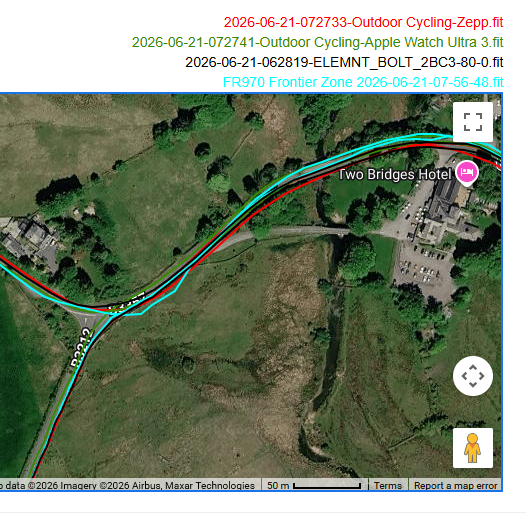
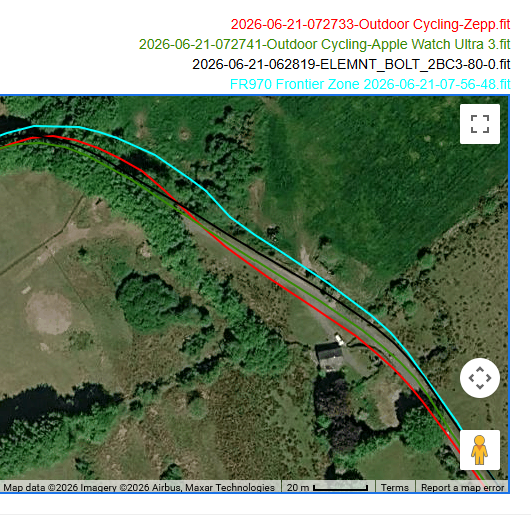
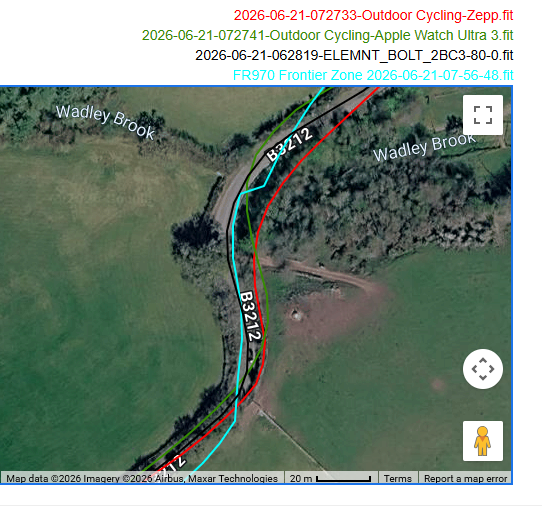
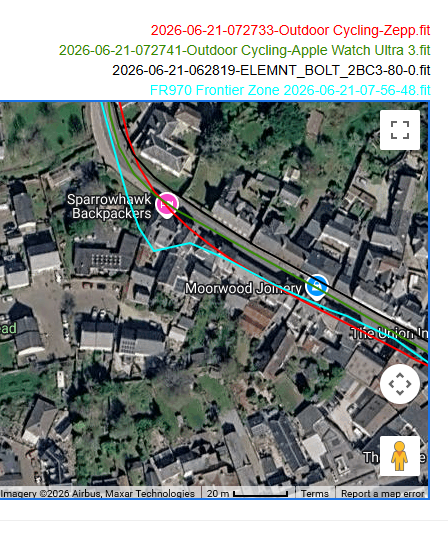
Other than the hDrop and Wahoo Bolt 3, there were: Whoop MG on the biceps, Frontier Zone chest strap paired to Forerunner 970, the Amazfit Balance 3 (the large HYROX watch), and the Apple Watch Ultra 3. A good combo. Purely for testing purposes, I wore the FR970 incorrectly on the inside of my forearm. This should give an ideal location for picking up the HR signal from the chest strap. However, the GPS antenna will be oriented 180 degrees out of position. Essentially, the FR970 will skew towards picking up reflected GPS signals from the road; if it does that for 100% of the signals, then everything could be OK, but… err… it won’t. So the GPS track will be wrong, and you’ll see how wrong it is. To be clear, it doesn’t matter which wrist you wear a sportswatch on for GPS reception, but it does matter whether you wear it on the inside of your wrist or hold it in some other weird position. It was designed to be worn on the outside of your wrist.
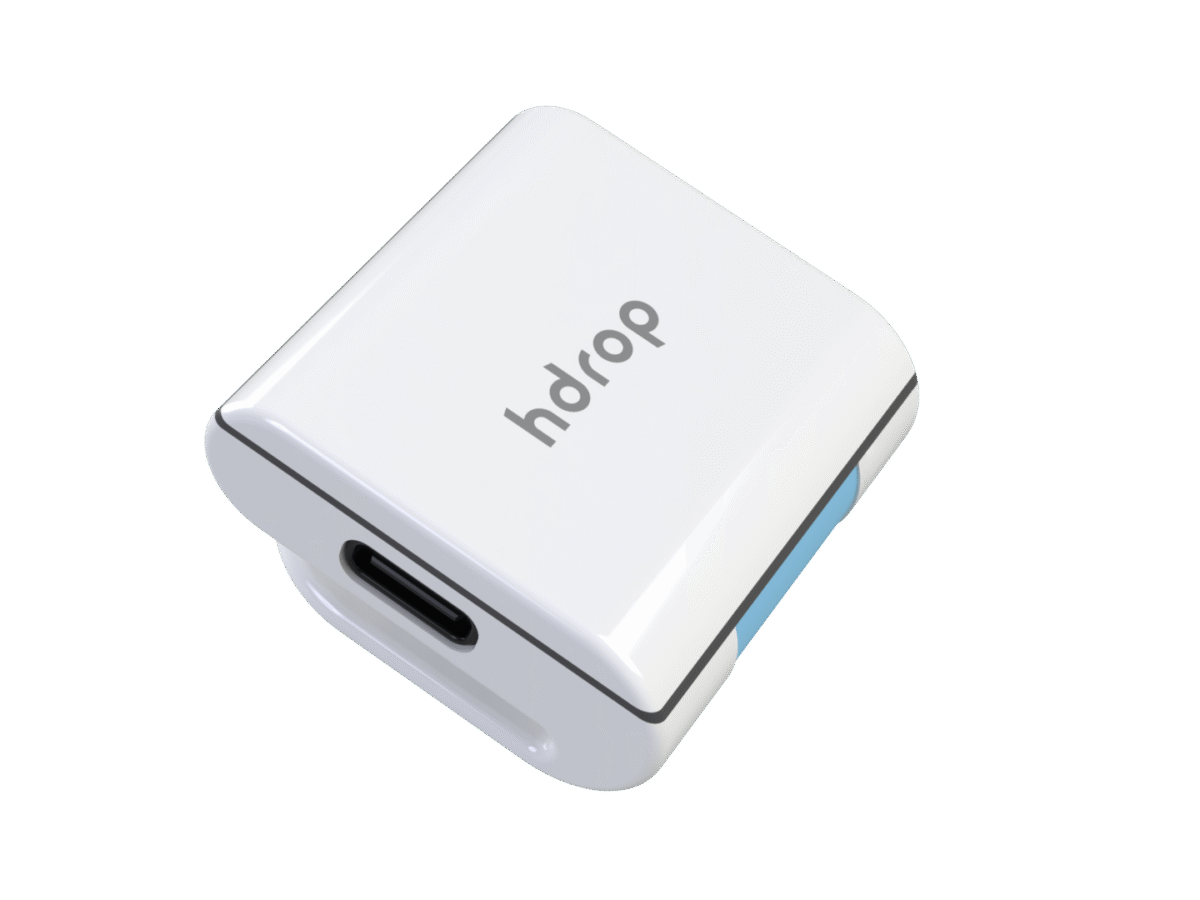
Sweat and Sodium Sweat Sensor
Garmin and Wahoo Compatible
 +other retailers
What I Expected to See
I expected the hot weather to improve the accuracy of optical PPG sensors by bringing blood flow closer to the skin surface in more dilated veins.
I expected the relatively bumpy route to negatively affect HR accuracy on the optical PPG devices, and I expected GPS to be excellent across all devices, as the route was generally open to the sky, albeit with some sections through trees.
As for the hDrop sweat sensor, I expected it to be working overtime in the heat. Like me.
HR Accuracy
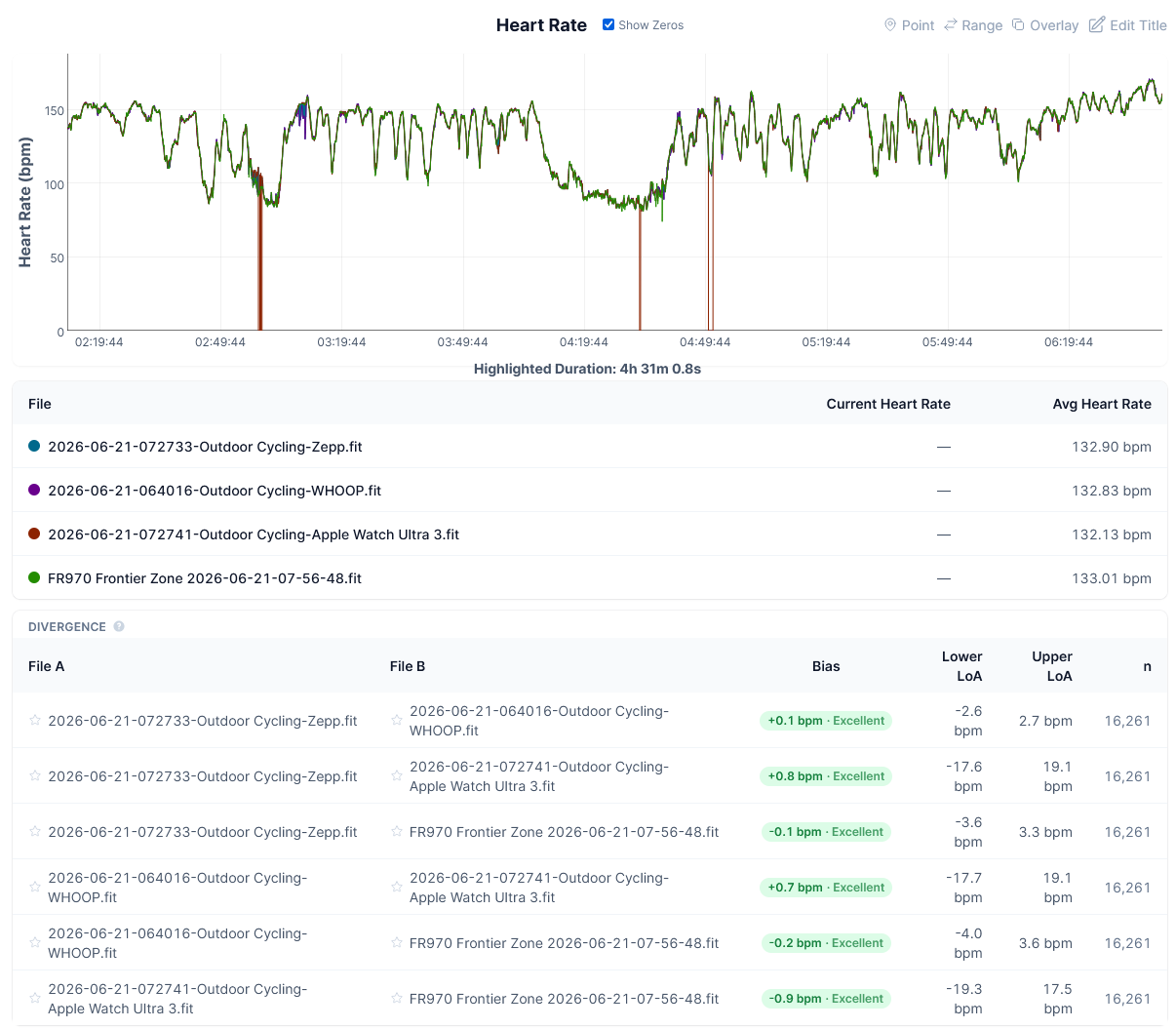
All devices showed excellent heart rate accuracy compared to the chest strap (Frontier Zone).
- Zepp (Amazfit Balance 3): Bias -0.1 bpm, tight LoA (-3.6 to 3.4).
- WHOOP: Bias -0.2 bpm, tight LoA (-4.0 to 3.6).
- Apple Watch Ultra 3: Bias -0.8 bpm, wider LoA (~±18 bpm).
Averages: Frontier 132.5, Zepp 132.4, WHOOP 132.3, Apple 131.7 bpm.
Apart from the very occasional AWU3 dropout, there is nothing at all to report here. I didn’t expect the results to be quite this good. The Amazfit Balance 3 and the Frontier Zone chest strap produced near-identical readings and tracked closely over an extended period. As you can see from the chart below, there appears to be surprisingly good subjective agreement, supporting the LoA stats.
GPS Accuracy
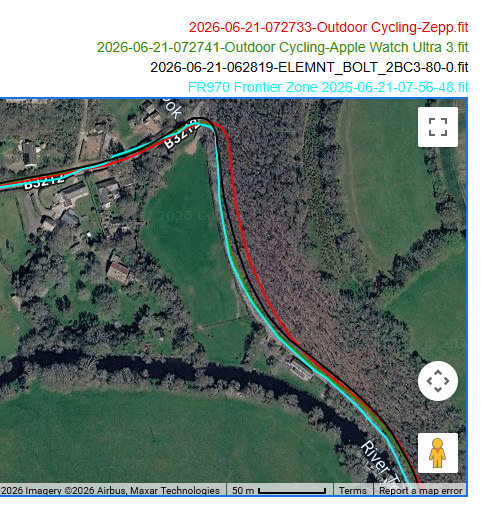
Overall, GPS accuracy was fairly good for both the Bolt and the Amazfit Balance 3, but the Apple Watch Ultra 3 was probably the best. The Amazfit wasn’t far behind, but you can see the Forerunner 970 struggled because it was worn incorrectly. The accuracy isn’t that bad, but it’s clearly far from optimal. The Balance 3 deviated slightly off route by a few more metres than I would like on some corners and under some trees, and on some of the faster, winding descents with tree cover, the Zepp/Amazfit track drifts off the road. Just about acceptable, but it could be better. On the numerous open moorland sections, the Balance 3 and all devices performed well. Where the Amazfit’s GPS track did differ, it seemed skewed to the South or West, suggesting a systemic issue on the day.
hDrop – Sweat and Sodium Analysis
Pairing hDrop with Wahoo requires starting the workout on the smartphone app, then handing off the Bluetooth connection to the Elemnt. This isn’t great, but the sensor superficially appears to provide good data in the hDrop app.
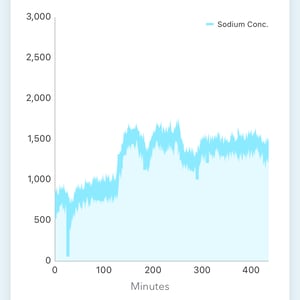
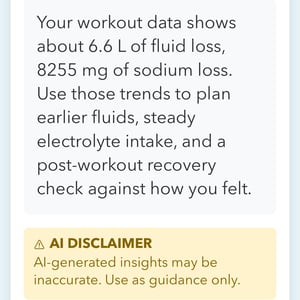
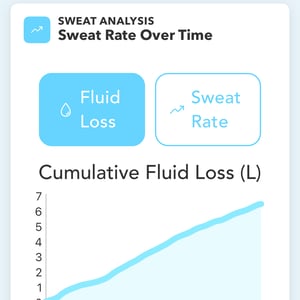
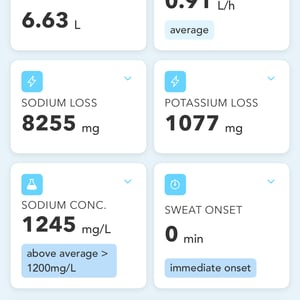
The Bolt was configured to show cumulative fluid and sodium losses. One oddity I noticed right at the start was that the Bolt said almost immediately that I had lost 1 litre of fluid. I’m not sure why, since the cumulative sweat level ended up being different in the hDrop app. Nor could I see the sweat data in the post-workout Wahoo stats or in the FIT file. It seems to be display-only data shown live and then synced to the proprietary app.
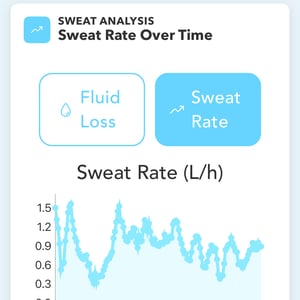
Fluid loss result: The 6.63 L of water loss seems on the high side of plausible by one or two bottles, but I’ll withhold a verdict on true accuracy until I properly calibrate the sensor and run more tests. The cumulative rate of sweat loss is consistent at about 1 L/hour, but, oddly, the rate didn’t drop when I sat in the shade at the food stop for at least 30 minutes. I would have expected the sweat rate to fall significantly during a stop that long, so either the sensor has a meaningful lag in responding to reduced sweat rate, or the 6.63 L total is overstated. Usefully, the hDrop app shows sweat rate over time and cumulative fluid loss, both useful metrics.
Sodium result: The sensor recorded two hours of inactivity before the ride started, so the low early readings are irrelevant. Once sweating is established, sodium concentration rises steadily to a plateau of roughly 1,300 to 1,500 mg/L (57 to 65 mmol/L). It broadly holds there for the remainder of the recording, which is the credible steady-state signal. Skin temperature peaked at 37.6°C, consistent with sustained hot-weather effort. That plateau figure puts me in the moderate-to-high sodium-loss category, and the stability of the reading over the last two hours of riding gives reasonable confidence in the sensor’s likely accuracy. I used Maurten Drink Mix 320, which contains some salt, and added 2 scoops of Bulk Electrolyte Plus per bottle, each delivering 502 mg Na, 302 mg K, 114 mg Mg per serving.
Ride Stats
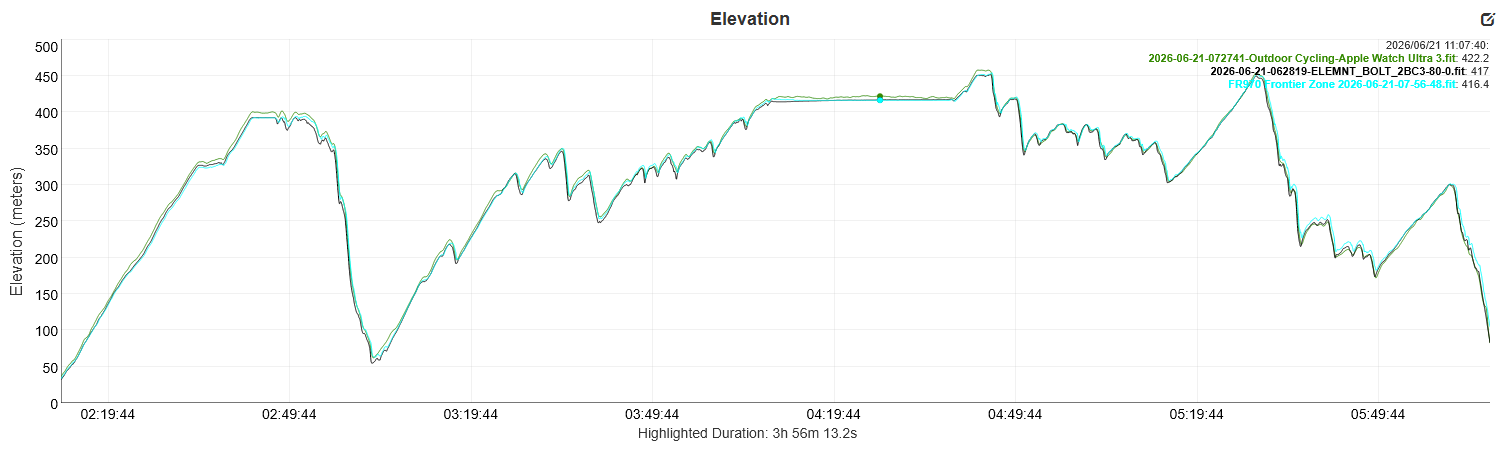
The Medio route: 108 km, approximately 1,800 m of ascent. Distance figures were consistent across all devices to within 1 km.
| Device | Distance | Ascent |
|---|---|---|
| Wahoo Bolt 3 | 107.96 km | 1,869 m |
| Garmin FR970 / Frontier Zone | 109.08 km | 1,763 m |
| Amazfit Balance 3 (Zepp) | 108.03 km | — |
| Apple Watch Ultra 3 | 108.54 km | 1,813 m |
| Whoop MG | — | — |
Ascent varied more: the Bolt recorded the highest at 1,869 m, the FR970 the lowest at 1,763 m, a 106 m gap likely reflecting differences in barometric altimeter calibration at the start of recording.
Conclusions
For a larger-format watch, the Amazfit Balance 3’s HR and GPS accuracy were very good and better than expected. The HR result, in particular, was close to chest-strap quality over a 108 km ride in 26°C heat, which is meaningful for anyone considering it as a training and racing tool.
The test of wearing the Forerunner 970 on the inside of the wrist demonstrably produced poorer GPS tracks, a useful reminder that watch orientation matters even if wrist choice does not.
On the hDrop, the setup workflow needs improving, and the fluid loss figure requires calibration before it can be trusted. The sodium plateau reading is the most credible output from this test and points towards a more targeted electrolyte strategy for future long hot rides.
Quick answers
Does the Amazfit Balance 3 work well as a cycling HR monitor?
In this test, it matched the Frontier Zone chest strap to within 0.1 bpm bias over 108 km in 26°C heat, with limits of agreement of -3.6 to 3.4 bpm. That is chest-strap-quality performance for a wrist-worn optical sensor.
Does it matter which wrist you wear a GPS watch on?
Wrist choice makes no meaningful difference to GPS reception. Wearing the watch on the inside of the wrist does, as this test demonstrated with the Forerunner 970.
What is the hDrop sensor, and what did it show?
hDrop is a wearable sweat and sodium sensor that pairs to compatible bike computers. On this ride, it recorded a steady-state sodium concentration of 57 to 65 mmol/L and an estimated fluid loss of 6.63 L, though the fluid figure requires further calibration before it can be treated as accurate.
Last Updated on 3 August 2026 by the5krunner
My favourite kit and nutrition
- Garmin Fenix 9 Pro — I’ve just bought one.
- Injinji – Runners protect your toes. Avoid discomfort and minor injury. Run more. Run faster. I use them.
- Garmin 90-degree charging adapter — A small keyring adapter you can use anywhere. Essential when away. I use one.
- Garmin charging puck — the fastest and most reliable way to top up your Garmin before a session. I use one.
- Ravemen FR300 — Front light that mounts directly under your Garmin or Wahoo head unit. Keeps your bars clean and your beam pointed where it matters. I use one.
- Body Glide – The blue anti-chafe stick that all swimmers and many runners use. I use it.
- Maurten — The race nutrition trusted by elite athletes. Gels and drink mixes engineered to be easy on the stomach. I use them.
- Garmin Varia RTL515 — A radar rear light that alerts you to vehicles approaching from behind. Pairs with your Edge or Wahoo. I use this model.
- Favero Assioma Pro RS2 — The power-meter pedals most serious cyclists choose. Accurate, easy to move between bikes. I use this model.
- Garmin Forerunner 970 — A serious choice for a pro-grade triathlon watch. I use this.
- Polar H10 — My daily driver for accurate, waking HRV readings.
- Wahoo ELEMNT Roam 3 — The bike computer that has the feature Garmin lacks: usability. I use mine on most rides.
Reader-Powered Content

This content is not sponsored. It’s mostly me behind the labour of love, which is this site, and I appreciate everyone who supports it.
Support the site: Follow (free, fewer ads) · Subscribe (paid, ad-free) · Buy Me A Coffee ❤️
All articles are written by real people, fact-checked, and verified for originality. See the Editorial Policy. FTC: Affiliate Disclosure — some links pay commission. As an Amazon Associate, I earn from qualifying purchases.
tfk is the founder and author of the5krunner, an independent endurance sports technology publication. With 20 years of hands-on testing of GPS watches and wearables, and competing in triathlons at an international age-group level, tfk provides in-depth expert analysis of fitness technology for serious athletes and endurance sport competitors. ID

Just a question (perhaps I missed it) why isn´t there the ascent for the B3 in your Distance/Ascent table?
Good question. the altitude graph is in the Zepp app. so the data either wasn’t exported to the FIT/TCX I used (or via Strava export tcx) or it wasnt imported into DCR’s analyzer tool (iuts beta) as maybe the data was malformed. Or some other reason