The Race 3S costs less than both top Garmin Forerunner models, and the Forerunner 970 is the most expensive and best by most measures. This article compares the 3 key models to see whether the compromises you might make are sensible.
Garmin Forerunner 970 does more than Suunto Race 3S in most areas of software: daily training guidance, safety, sensor support, music and payments. The Race 3S offers free worldwide maps and climb tools for less than a Forerunner 570, which has no maps at all, and it records dual-band GPS for 45 hours, more than twice as long as either Garmin.
This comparison covers what each watch does and what it’s like to own a watch from each company. Hardware figures are on the Race 3S, Forerunner 570 and Forerunner 970 specification pages, and the Race 3S launch report has price and availability.
What each watch does
| Feature | Suunto Race 3S | Forerunner 570 | Forerunner 970 |
|---|---|---|---|
| Offline maps | Free worldwide, with contour lines and place names | None | Yes, with turn-by-turn directions and round-trip routing |
| Climb tool | Climb Guidance | None | ClimbPro |
| Race pacing plan | Race Planner, arriving after launch | PacePro | PacePro |
| Daily training guidance | Training load and recovery, with ZoneSense through a chest strap | Training Readiness, Training Status, Daily Suggested Workouts | The same, plus Running Tolerance, Hill Score and Endurance Score |
| Coaching | Suunto AI Coach, paid after three free months | Garmin Coach plans, included | Garmin Coach plans, included |
| Live tracking and incident alerts | None listed | LiveTrack and incident detection | LiveTrack and incident detection |
| Music | Offline music, arriving after launch | Spotify, Amazon Music, Deezer, YouTube Music | Spotify, Amazon Music, Deezer, YouTube Music |
| Contactless payment | NFC, arriving after launch | Garmin Pay | Garmin Pay |
| Sensor support | Bluetooth | ANT+ and Bluetooth | ANT+ and Bluetooth |
| Sport app store | SuuntoPlus | Connect IQ | Connect IQ |
| Multi-band GPS battery | Up to 45 hours | Up to 14 hours | Up to 21 hours |
| Price | £435 / $599 | £459.99 / $549.99 | £649.99 / $749.99 |
Navigation
Suunto is clearly the best value.
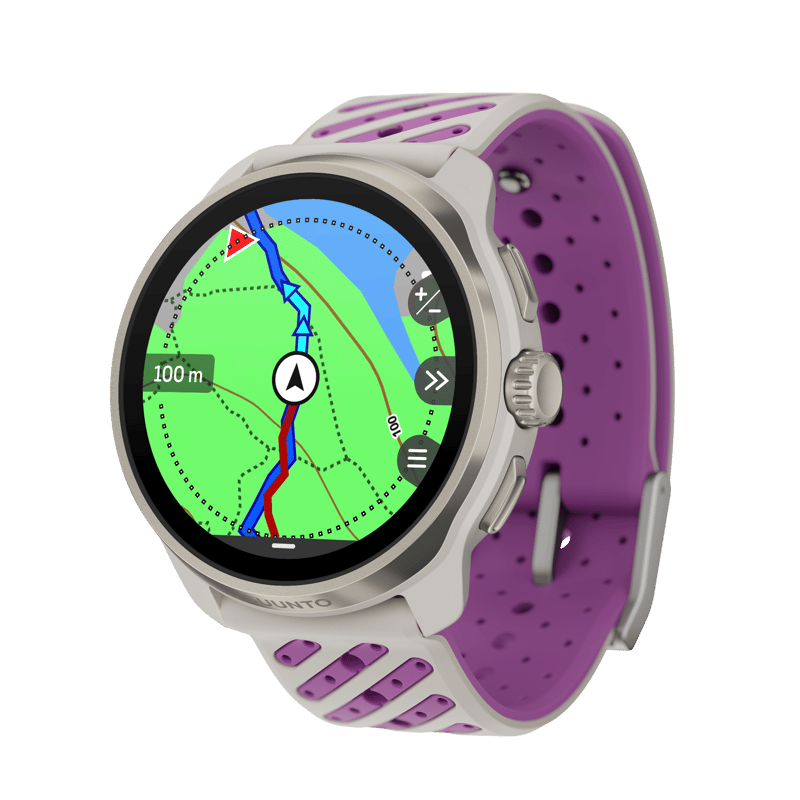
Race 3S and Forerunner 970 both carry full offline maps. Forerunner 570 has none and follows a course as a breadcrumb line on a blank screen.
Race 3S maps are free worldwide and show contour lines and place names. Climb Guidance shows each climb and descent on a loaded route. Suunto has also announced Race Planner, a pacing plan built from the route, the weather and a goal time, for a later update.
Pay top dollar and the Forerunner 970 matches that with ClimbPro and goes even further. It gives turn-by-turn directions, creates round-trip routes on the watch, and shows upcoming course points with Up Ahead. PacePro already does the pacing job that Race Planner promises, on both Garmins.
Garmin’s navigation experience is deeper and richer, but it costs £649.99. The Race 3S gives trail runners maps and climb tools for £25 less than a Forerunner 570, which has neither.
Training and coaching
Garmin is clearly the most comprehensive offering, but how correct are its recommendations and determinations for high-level athletes? A: Debatable.
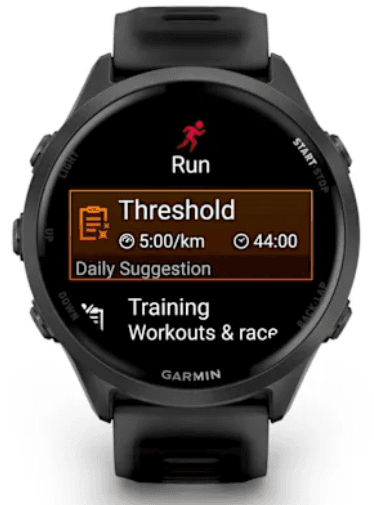
Garmin tells an athlete more about their training than any other brand, and it includes the tools with the watch. Both Forerunners include Training Readiness, Training Status, Daily Suggested Workouts, Race Predictor, Garmin Coach plans and wrist-based running power. Forerunner 970 adds Running Tolerance, Hill Score, Endurance Score and Real-Time Stamina.
The weakness is interpretation. Garmin reports a readiness figure, recovery time, and load status, but rarely gives a satisfying answer to the question an athlete is asking: how hard to train today. But its menus are deep, sometimes cumbersome, and often hard for newcomers to the ecosystem to use.
Suunto’s approach is leaner. Race 3S covers training load, recovery and zones by heart rate, pace and power. ZoneSense reads intensity from heart rate variability through a chest strap (real-time ‘true’ zones), and EnergySense tracks effort live. The Suunto app is very good by most measures and up there with the best of the other sports watch brands.
Suunto AI Coach is Suunto’s attempt to match the usefulness and ease of use Garmin lacks. It answers questions in plain language and builds workouts, plans and routes by conversation. It costs extra after three free months. Garmin’s paid tier is Connect+, and I still find it hard to justify for most athletes.
Sensors, safety and apps
Both Forerunners connect to sensors over ANT+ and Bluetooth. They work natively with Varia radar and Rally power meters, and Forerunner 570 controls smart trainers. An athlete can run a watch, a chest strap, a bike computer, power pedals and an indoor trainer inside one Garmin system, and no rival can match that.
Race 3S connects over Bluetooth only. That covers most current heart rate straps, footpods and power meters, and a SuuntoPlus app adds Varia radar support. Bluetooth is all a runner needs, and the same for most cyclists. ANT+ days of dominance have passed.
Garmin includes LiveTrack and incident detection, which share a live location and alert a contact after an incident. Suunto has no equivalent.
SuuntoPlus is the only third-party store that materially competes with Connect IQ for sport apps. It has tens of apps and gains new ones weekly from the community. Connect IQ remains far larger.
Music, payments and voice
Garmin’s store supports music from Spotify, Amazon Music, Deezer, and YouTube Music; pays via Garmin Pay; and takes calls through a phone. Forerunner 970 adds an ECG app and voice commands.
Race 3S has none of these at launch. Suunto says offline music arrives in a software update, with no streaming service confirmed, and NFC is also due after launch.
The companies behind the watches
A watch comes with a company, and the differences between Garmin and Suunto apply to every model each one sells. The brand comparison lays it all out.
| Ownership | Suunto | Garmin |
|---|---|---|
| Warranty | 2 years worldwide | 1 year in the US, 2 years in the UK and EU by consumer law |
| Battery replacement | Suunto runs a battery service | No battery service on the whole |
| Subscriptions | None for the watch, maps or apps. AI Coach is a paid extra | None for core metrics. Some new features need Connect+ |
| Third-party services | Syncs with Strava, TrainingPeaks and others | Works with more services than any other brand, and owns TrainingPeaks, Firstbeat and MYLAPS |
| Updates for older watches | July 2026 features went only to the newest models | No written promise, but Fenix 9 features are confirmed for both Forerunners |
| Support | No phone support, and live chat on weekdays only | Support has got worse in my recent experience |
Garmin’s advantage is reach. One account carries an athlete’s history from watch to watch, and almost every coach, club and training platform already works with it. Garmin bought TrainingPeaks in July 2026, so a Suunto athlete who syncs to TrainingPeaks now feeds a competitor-owned platform.
Suunto’s advantage is the ownership deal. The warranty is twice as long in the United States, worn batteries can be replaced, and the maps and apps are free. Suunto is also a far smaller company than Garmin, with a smaller research budget and fewer watches receiving each update.
Battery
Suunto is the clear winner here.
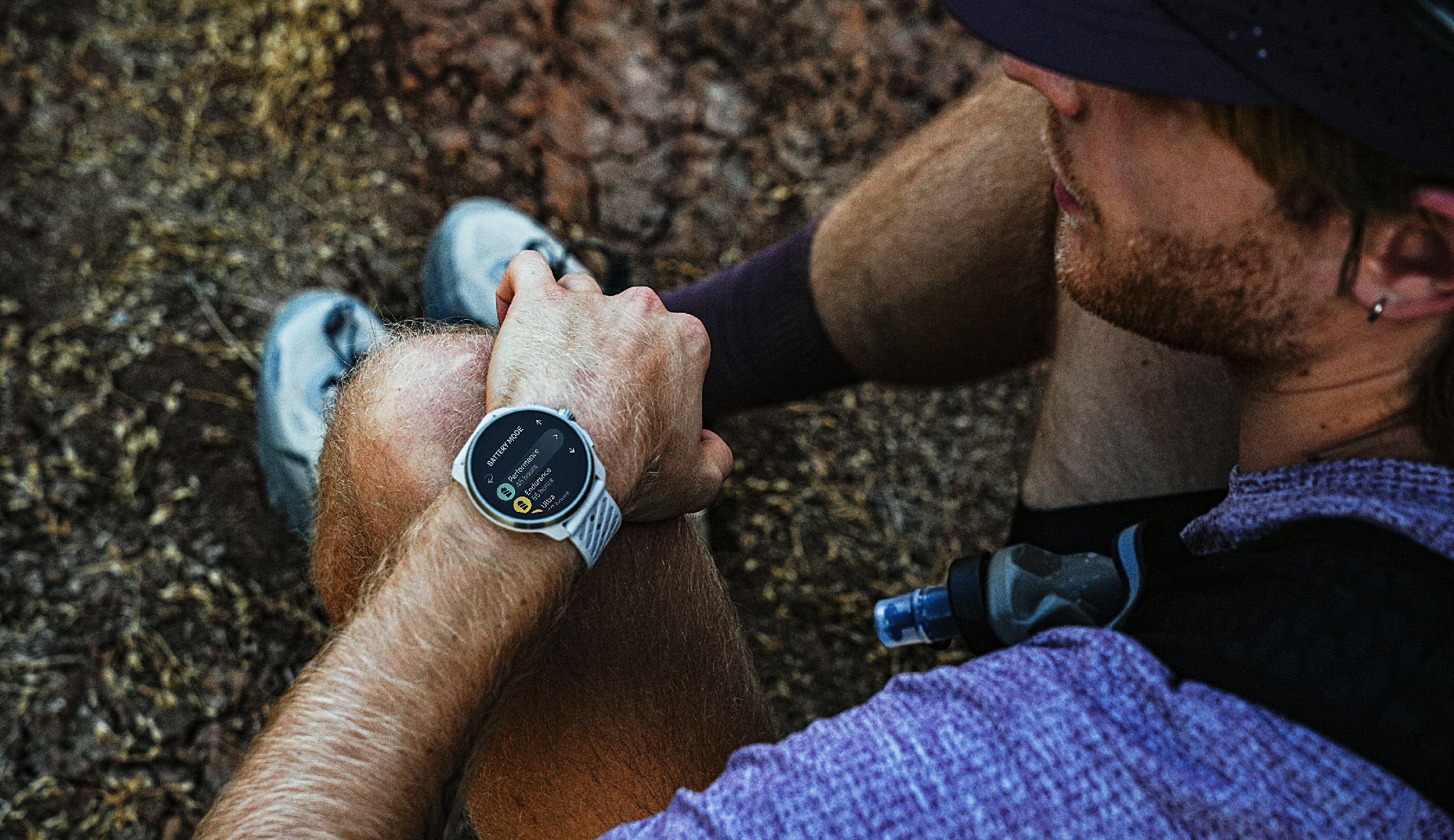
Battery life is the one hardware difference that changes what an athlete can do. Race 3S records 45 hours in its most accurate mode. Forerunner 970 manages 21 hours, and Forerunner 570 manages 14.
A 24-hour event is beyond Forerunner 570 at full accuracy and marginal for Forerunner 970. Race 3S covers both with room to spare, and it still has 40 hours with the always-on display enabled. In daily use, the three are closer: 12, 11, and 15 days.
Hardware in brief
The Race 3S and Forerunner 970 both have a sapphire lens and a titanium bezel, while the Forerunner 570 uses Gorilla Glass 3 and aluminium. The Garmins have larger 1.4-inch screens, a speaker, and a microphone, and the Forerunner 970 adds an LED torch brighter than the Race 3S’s screen flashlight. Forerunner 570 also comes in a 42mm size.
The Forerunner 970 scored 92% on my standard 10-mile GPS accuracy test, and it shares the Elevate Gen 5 heart rate sensor with the Forerunner 570. Suunto’s 2026 hardware scored 90% for GPS in Run 2. Race 3S accuracy is pending testing.
Which to buy
Choose Race 3S if
- You run trails or ultras and want maps, climb tools and long battery life.
- You want a watch with a 2-year warranty, battery service, and no map fees.
- You prefer a simpler watch and a conversational coach to Garmin’s dashboards.
Suunto Race 3S
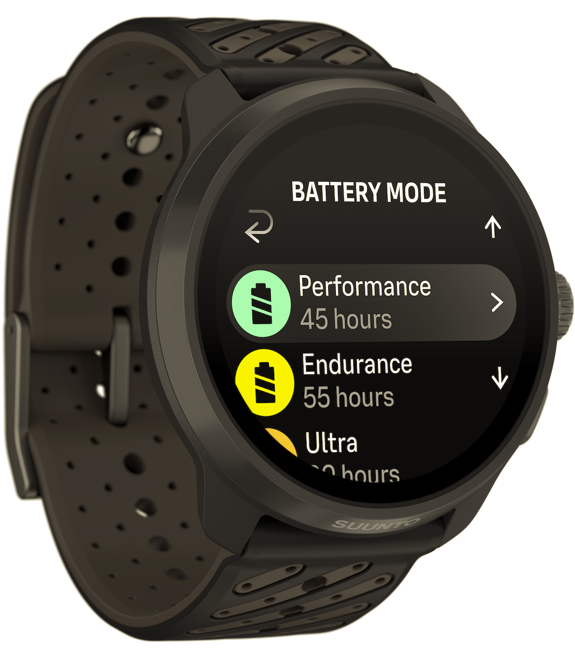
Titanium bezel, sapphire glass, 1.32" AMOLED (2,000 nits), 45h dual-band GPS.

Choose Forerunner 570 if
- You race on roads and want Garmin’s daily training guidance.
- You want music services, contactless payment and live tracking today.
- You use ANT+ sensors, or you want the 42mm size.
Choose Forerunner 970 if
- You want maps and the deepest training and triathlon features together.
- You already own Garmin sensors, a bike computer or a trainer.
- Your longest events finish inside 21 hours.
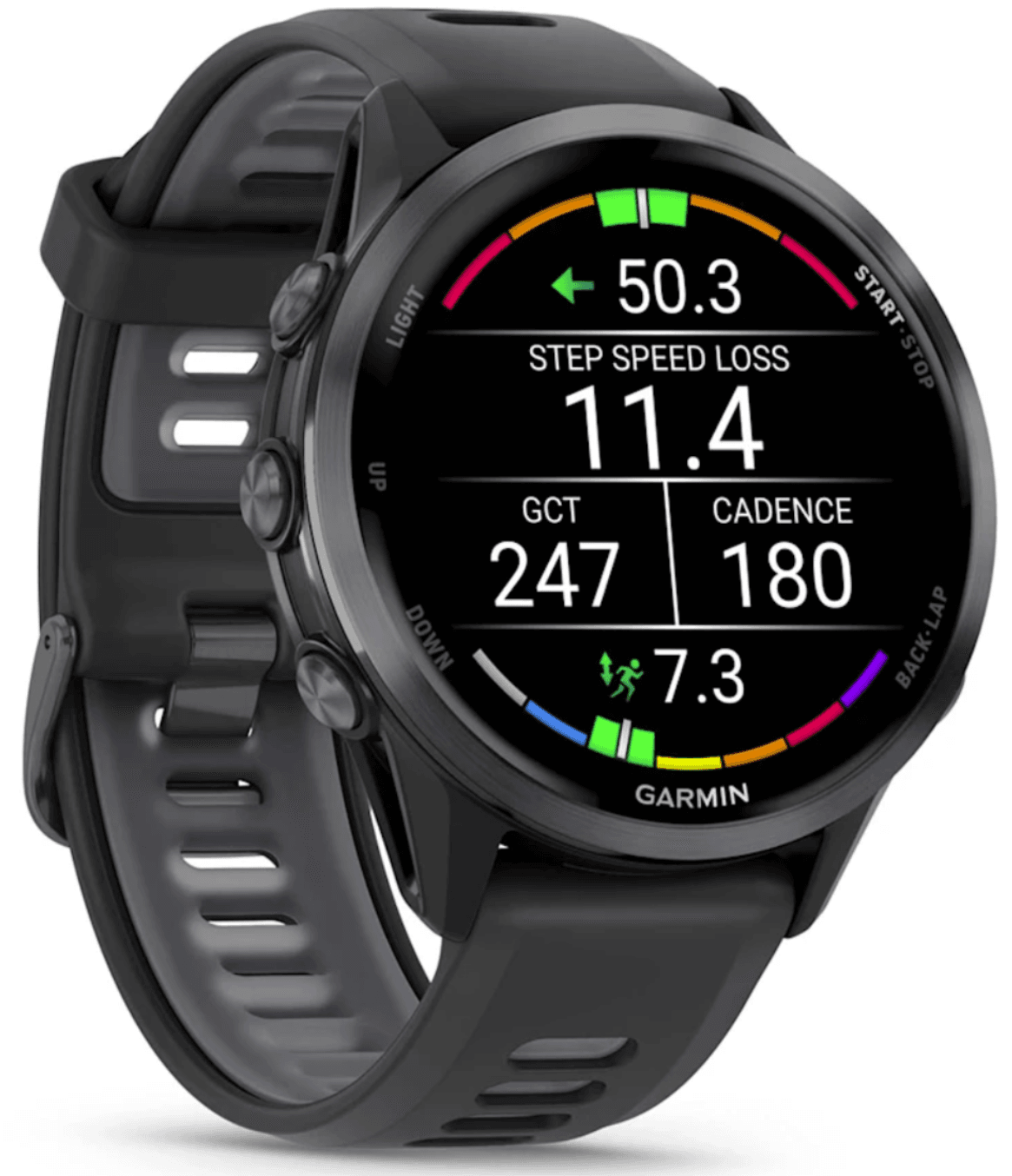
Garmin Forerunner 970
Premium GPS triathlon smartwatch. Features a bright AMOLED touch screen and a built-in LED flashlight.

The Forerunner 970 review and the Garmin Forerunner guide cover the Garmin side in depth. Race 3S vs COROS Apex 4 and Race 3S vs Race 2 vs Run 2 cover the other alternatives.
Quick answers
Is Suunto Race 3S better than Garmin Forerunner 970?
Forerunner 970 has more training guidance, ANT+ sensor support, live tracking, music services and Garmin Pay. Race 3S has more than twice the multi-band GPS battery life (45 hours vs 21), free worldwide maps, a 2-year warranty, and a price £215 lower.
Does Garmin Forerunner 570 have maps like Suunto Race 3S?
No. Forerunner 570 has no onboard maps and no ClimbPro. Race 3S has free worldwide offline maps with Climb Guidance and costs £25 less in the UK.
Which has the longest battery life?
Race 3S records up to 45 hours in multi-band GPS mode. The Forerunner 970 lasts 21 hours, and the Forerunner 570 lasts 14 hours. Forerunner 970 lasts the longest in daily use at 15 days.
Does Suunto Race 3S support ANT+ sensors?
No. Race 3S connects to sensors over Bluetooth. Both Forerunners support ANT+ and Bluetooth.
Does Suunto Race 3S have music and contactless payment?
Both arrive after launch. Suunto says offline music will come in a software update, and NFC is also coming later. Both Garmins have music services and Garmin Pay today.
Is Suunto or Garmin the better company to buy from?
Suunto gives a 2-year warranty worldwide, runs a battery replacement service and charges nothing for maps. Garmin works with more third-party services than any other brand and has the larger ecosystem of sensors and apps, with a 1-year warranty in the US and no battery service.
Last Updated on 15 October 2026 by tfk the5krunner
Small things I always use
- Garmin 90-degree charging adapter: Charges your Garmin from any USB-C cable. Essential when travelling. I use one.
- Body Glide: The blue anti-chafe stick swimmers and runners carry. I use it.
- Speedo earplugs: Fewer ear infections and no cold-water dizziness. I use them.
- Dryrobe Advance: My winter changing robe for open-water swims. I use one. A cheaper option is the AONYIYI changing robe.
- Maurten: Race fuel that stays easy on the stomach. I use them.
- Garmin charging puck: The quickest way to top up before a session. I use one.
- Injinji: Toe socks that stop rubbing, so you run more. I use them.
- Ultimate toe protectors: Stop black toenails on long runs. They work. I use them.
- Compressport R2 v2 calf sleeves: My calf sleeves of choice. I use them.
- Cellucor C4: My pre-workout before hard sessions.
- TPU tubes: Schwalbe Aerothan, Tubolito and Pirelli SmarTube. Light, tiny spares. I use all three.
- G8 insoles: Adjustable insoles that are good. I use them.
- Cycplus Cube: A 97g electric pump that gets a road tyre rideable in two minutes. I carry one. 5% off with code THE5KRUNNER.
Watches and sensors
- Polar H10: My daily driver for waking HRV.
- Polar Verity Sense: My backup arm-worn HR sensor.
- Nomad bedside charger: Charges my iPhone and Apple Watch overnight. I use it, and many of their bands.
- Train.Red: The best muscle oxygen sensor I’ve used.
- Tymewear: Accurate heart rate and reliable ventilatory zones. I use it to pace endurance rides over an hour.
- Garmin Forerunner 970: A pro-grade triathlon watch. I use this.
- Apple Watch Ultra 4: My daily smartwatch. No phone needed on rides.
- Garmin Fenix 9 Pro: I’ve just bought one.
On the bike
- Continental GP5000 for everyday riding, and Aero 111 on the front for special occasions.
- Helmets: Specialized S-Works Evade 3 for road riding, and Rudy Project Wing for TT-style races. I use both.
- Ravemen FR300: A front light that mounts under your Garmin or Wahoo. I use one.
- Wahoo TRACKR Radar: I use it on one bike and Varia on the other. They perform the same.
- Garmin Varia RTL515: Radar that warns you of cars from behind. I use this model.
- Wahoo ELEMNT Roam 3: The bike computer that’s easy to use. I use mine on most rides.
- Favero Assioma Pro RS2: Accurate power pedals that swap easily between bikes. I use this model.
Home and indoor training
- NPE Runn: Makes my basic treadmill smart, sending more accurate speed and distance to my watch and Zwift. I use it.
- Google Wifi: Keeps Zwift connected in my pain cave. I use it.
- Apple TV 4K: Zwift on the big screen. I use two.
- Google Nest Doorbell (wired, 2nd gen): My video doorbell, running in both Google Home and Apple Home. I use it.
Health, recovery and sleep
- FreeStyle Libre 3 Plus: Shows how my blood sugar responds to diet.
- hDrop: Measures my sweat loss in summer and indoors.
- Fourth Frontier Zone: Checks my heart under load in hard sessions.
- Oura Ring 5: My partner’s recovery tracker of choice.
- Kineon MOVE+: Red light therapy for niggles. It works.
- Eight Sleep: A cooling mattress cover my partner and I use nightly.
Reader-Powered Content

This content is not sponsored. It’s mostly me behind the labour of love, which is this site, and I appreciate everyone who supports it.
Support the site: Follow (free, fewer ads) · Subscribe (paid, ad-free) · Buy Me A Coffee ❤️
Written by real people, with AI assistance. Fact-checked and verified for originality. See the Editorial Policy. FTC: Affiliate Disclosure — some links pay commission. As an Amazon Associate, I earn from qualifying purchases.
tfk is the founder and author of the5krunner, an independent endurance sports technology publication. With 20 years of hands-on testing of GPS watches and wearables, and competing in triathlons at an international age-group level, tfk provides in-depth expert analysis of fitness technology for serious athletes and endurance sport competitors. ID
