Apple is developing a smart ring: details behind the rumour.
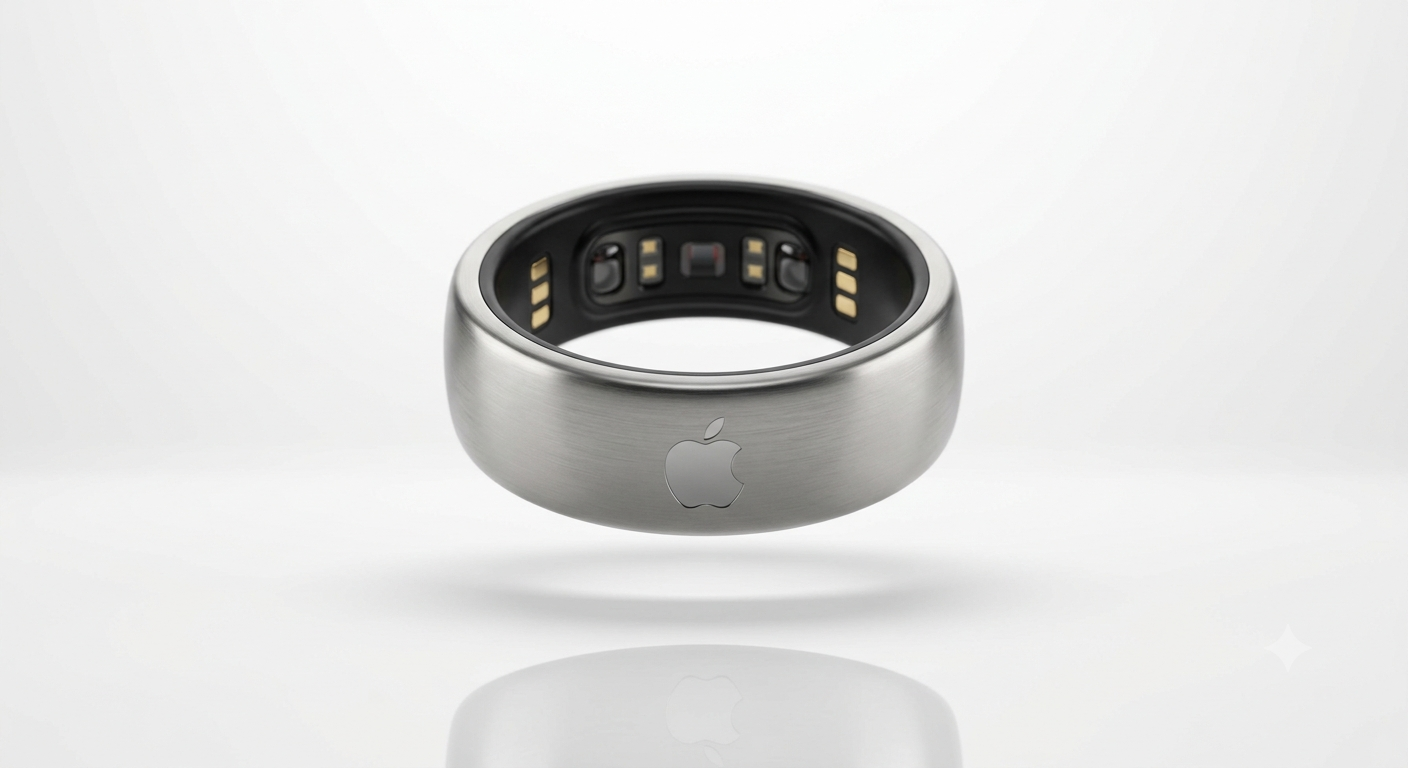
The source of the latest rumour is a single post on X. On 24 June, leaker and prototype collector Kosutami wrote: “iRing thing under development. What a surprise.” A follow-up confirmed the project is aimed at competing with the Oura Ring 5 and Samsung Galaxy Ring. That’s it. The main reason worth talking about this is that Kosutami has a good track record.
Apple iRing: The context
In October 2024, Bloomberg’s Mark Gurman reported that Apple had no plans for a smart ring, citing internal concern that a finger-worn tracker would cannibalise Apple Watch sales. Oura CEO Tom Hale said the same. Apple’s health division has since moved under new leadership, now led by Eddy Cue, who has reportedly pushed the company toward more aggressive health product ambitions. Whether that shift changed the ring calculation internally isn’t known, but the timing of the rumour’s return is oddly coincidental.
The cannibalisation argument has always been weaker than it sounds. A smart ring, likely priced at around $350, does not deter buyers from a significantly more expensive Apple Watch Ultra 3 or Watch 11. The ring buyer wants discreet, always-on sleep and recovery data without a screen. The watch buyer wants notifications, navigation, workout tracking and a display. These are different people, and Apple’s ecosystem history supports the argument that its wealthier customers routinely invest in multiple devices. A ring is another option.
The more credible cannibalisation risk sits elsewhere. A screenless fitness band, like Google’s Fitbit brand and the one Garmin is approaching with CIRQA, could pull a buyer away from an entry-level Apple Watch for fitness usage; there is cannibalisation in that scenario but the net revenue position is similar. A ring does not cannibalise in the same way. Few people wear a smart band and a smartwatch to capture the same wellness data. A ring and a watch make a reasonable, complementary pairing: the ring covers sleep and recovery, while the watch handles daytime training and is a smart companion to the iPhone.
Apple Watch unit sales fell an estimated 14% in 2025, and the overall wearables segment dropped around 7% from a revenue base of roughly $40 billion annually. Apple appears distracted from addressing this fall, focusing on shoring up its iPhone and Mac lines with credible AI tools and rebuilding Siri. A ring does not solve the Watch sales decline overnight, but it does open a new revenue stream in a category where Oura, Ultrahuman and Samsung have already proved the demand exists. At Apple’s scale, a successful ring would restructure the market.
Oura holds broad patents on smart-ring biometric sensing and has already pursued both Samsung and Ultrahuman in US courts. Any Apple ring enters that dispute immediately, with deeper pockets to fight it and deeper pockets to settle it.
Quick answers
Is the Apple iRing confirmed?
No. The sole source is a post on X from leaker Kosutami on 24 June 2026. No specifications, price or launch date exist. Apple has not commented.
Would an Apple smart ring cannibalise Apple Watch sales?
Probably not at the higher end. A $350 ring does not displace a $799 Ultra purchase. The risk is at the entry level, where a band competes more directly with a buyer who might otherwise choose an Apple Watch for wellness tracking alone.
When could an Apple smart ring launch?
Unknown. The project is described as under development, covering everything from early prototypes to near-final hardware. Apple has investigated smart rings for several years without shipping one. A 2027 launch at the earliest would be consistent with Apple’s pattern of entering a category only once it has proved itself commercially.
Last Updated on 29 June 2026 by the5krunner
My favourite kit and nutrition
- Injinji – Runners protect your toes. Avoid discomfort and minor injury. Run more. Run faster. I use them.
- Garmin 90-degree charging adapter — A small keyring adapter you can use anywhere. Essential when away. I use one.
- Garmin charging puck — the fastest and most reliable way to top up your Garmin before a session. I use one.
- Ravemen FR300 — Front light that mounts directly under your Garmin or Wahoo head unit. Keeps your bars clean and your beam pointed where it matters. I use one.
- Body Glide – The blue anti-chafe stick that all swimmers and many runners use. I use it.
- Maurten — The race nutrition trusted by elite athletes. Gels and drink mixes engineered to be easy on the stomach. I use them.
- Garmin Varia RTL515 — A radar rear light that alerts you to vehicles approaching from behind. Pairs with your Edge or Wahoo. I use this model.
- Favero Assioma Pro RS2 — The power-meter pedals most serious cyclists choose. Accurate, easy to move between bikes. I use this model.
- Garmin Forerunner 970 — A serious choice for a pro-grade triathlon watch. I use this.
- Polar H10 — My daily driver for accurate, waking HRV readings.
- Wahoo ELEMNT Roam 3 — The bike computer that has the feature Garmin lacks: usability. I use mine on most rides.
Reader-Powered Content

This content is not sponsored. It’s mostly me behind the labour of love, which is this site, and I appreciate everyone who supports it.
Support the site: Follow (free, fewer ads) · Subscribe (paid, ad-free) · Buy Me A Coffee ❤️
All articles are written by real people, fact-checked, and verified for originality. See the Editorial Policy. FTC: Affiliate Disclosure — some links pay commission. As an Amazon Associate, I earn from qualifying purchases.
tfk is the founder and author of the5krunner, an independent endurance sports technology publication. With 20 years of hands-on testing of GPS watches and wearables, and competing in triathlons at an international age-group level, tfk provides in-depth expert analysis of fitness technology for serious athletes and endurance sport competitors. ID

Could be a logical move and I really hope Apple will manage to get a battery life > 1 day for an upcoming ring. Battery life is Apple weakness all over the wearable sector.
its only a weakness because of design choices they make that give benefits elsewhere. there is no magic battery technology that Apple is unaware of.
for a ring, apple will almost certainly not need to realise the same types of beneifts of being always linked to the iPhone. thus 5-day battery on an iRing would be easy for them.