Oura Ring 5 vs Ring 4: Is It Worth It?
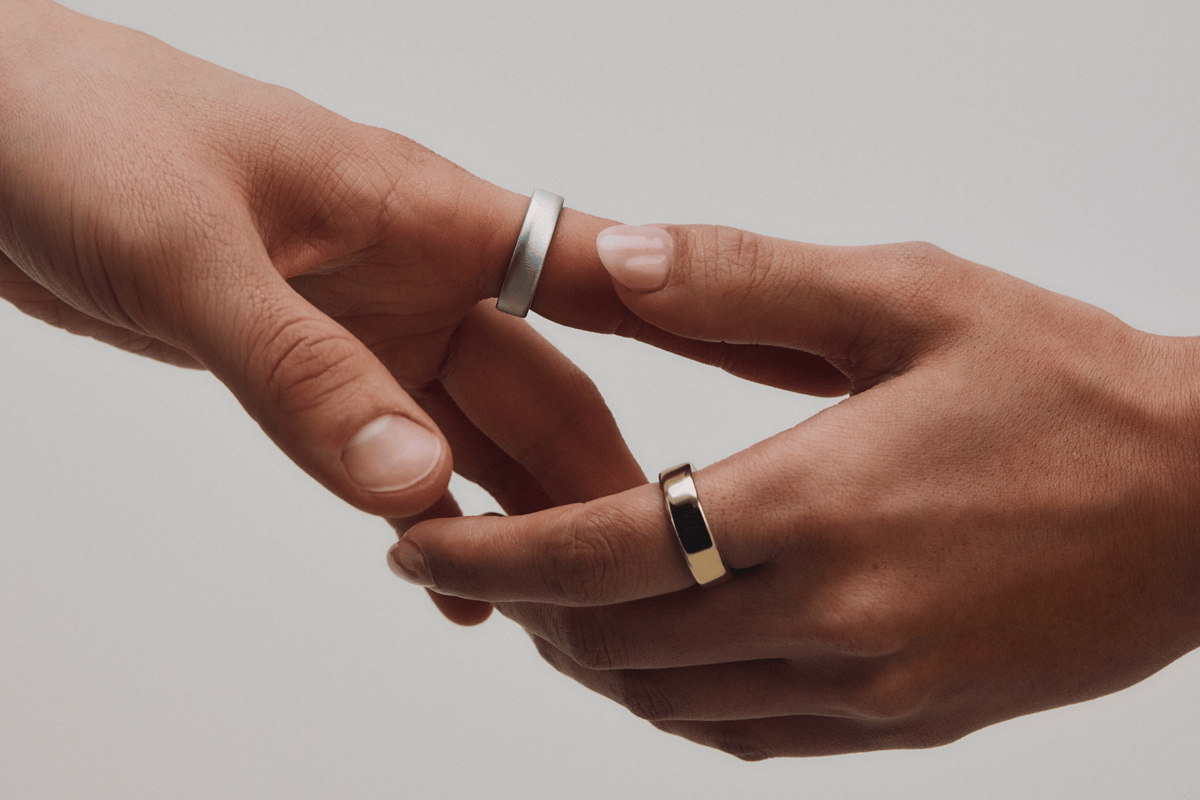
The Oura Ring 5, also known as the Gen 5 Oura Ring, is the smart ring the market has been waiting for. It marks a turning point. Oura has cut the hardware down to a genuinely normal size, the kind you would not think twice about wearing all day. Yet, the week-plus battery life and, by the company’s own account, the sensing accuracy make the brand the one to beat for most people choosing a smart ring. The Oura Ring 5 is the best in its class, and the reasons to buy it are simple: size, quality, and battery life.
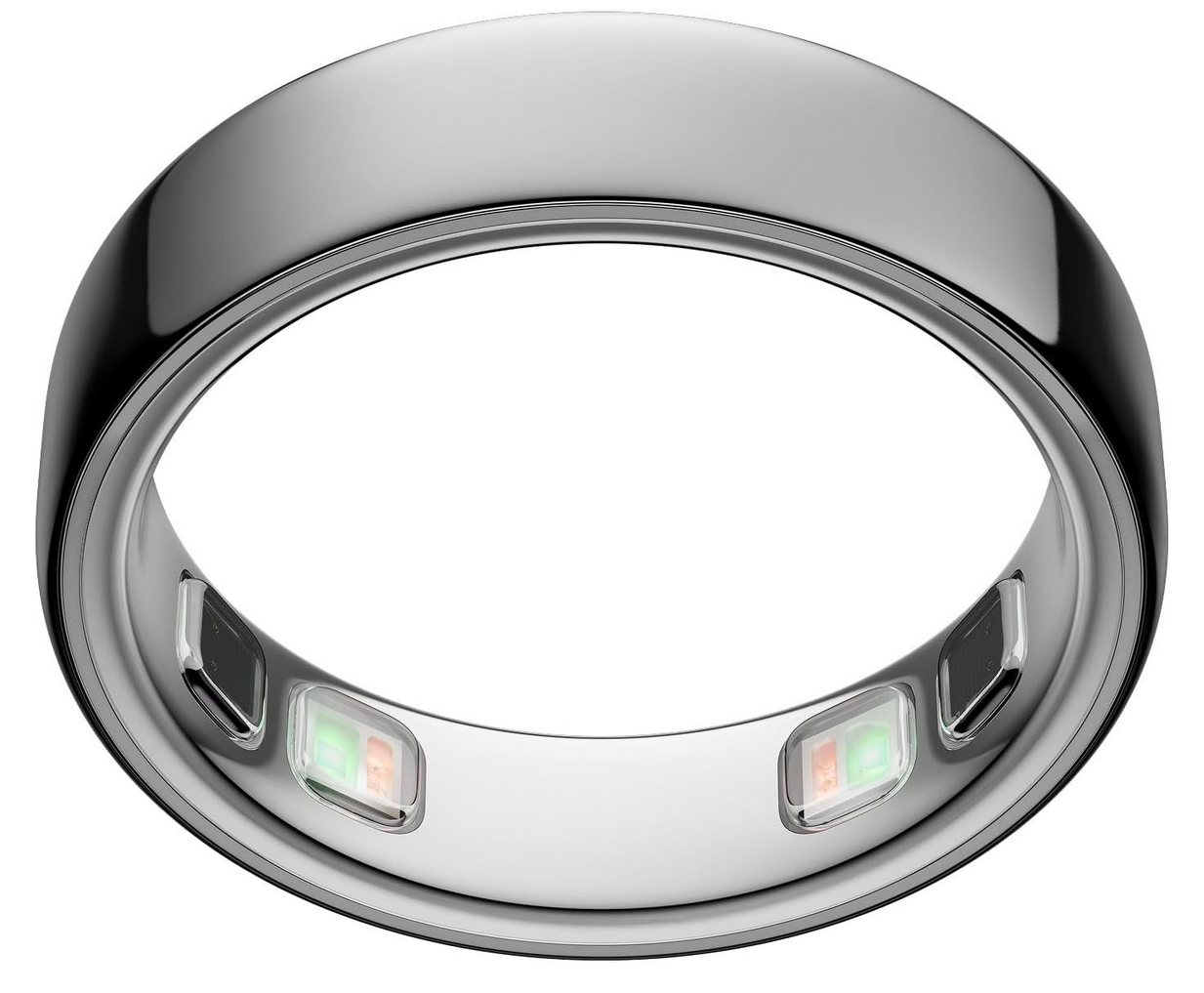

If that is all you need, you can stop reading. It’s only $/£50 more than Ring 4 and better in every respect. What follows is for anyone weighing the Ring 5 against a Ring 4 they already own or could buy for less, and for readers who want the fuller picture, including answers to the questions Oura’s own claims leave open.
Oura Ring 5 (Gen 5) vs Ring 4: the specifications
The headline change in this generation is primarily its physical form, from which almost everything else, like aesthetics, follows.
| Oura Ring 5 | Oura Ring 4 | |
| Width | 6.09mm | 7.90mm |
| Thickness | 2.28mm | 2.88mm |
| Weight | from 2 grams | 3.3 to 5.2 grams |
| Battery life | 6 to 9 days | 5 to 8 days |
| Size range | 6 to 13 | 4 to 15 |
| Build | titanium, 100m waterproof, tougher scratch-resistant coating | titanium, 100m waterproof |
| Sensors | same core set + redesigned layout | same core set |
| Price at launch | from £399 / $399 | £349 / $349 |
| Membership | £5.99 / $5.99 a month, required | £5.99 / $5.99 a month, required |
Oura describes the Ring 5 as 40 per cent smaller than the Ring 4 and the smallest smart ring on the market. I agree. The dimensions bear out the market leader’s direction of travel. For a device meant to be worn day and night, that reduction is the most useful change Oura has made since it moved to an all-titanium body. The longer battery life is a smaller gain, though a welcome one. The Ring 5 comes in six finishes: Silver and Black at £399 or $399, with Gold, Stealth, Brushed Silver and the new Deep Rose at £499 or $499.

Most of the new features also reach the Ring 4
Here is the point that decides the upgrade question, and the one Oura’s marketing does not lead with. The software launched alongside the Ring 5 is not exclusive to the Ring 5. The headline additions reach the Ring 4, and most reach the Gen 3 as well.
Health Radar, the new background-monitoring layer, brings two features at launch.
- Blood Pressure Signals tracks overnight blood pressure patterns and lets you log readings with an ordinary cuff.
- Nighttime Breathing gives a rolling 30-day view of breathing disturbances during sleep.
Both come to the Ring 4 and the Gen 3. So does Live Activity Tracking, which shows pace and distance in real time and pairs with a separate heart rate monitor.
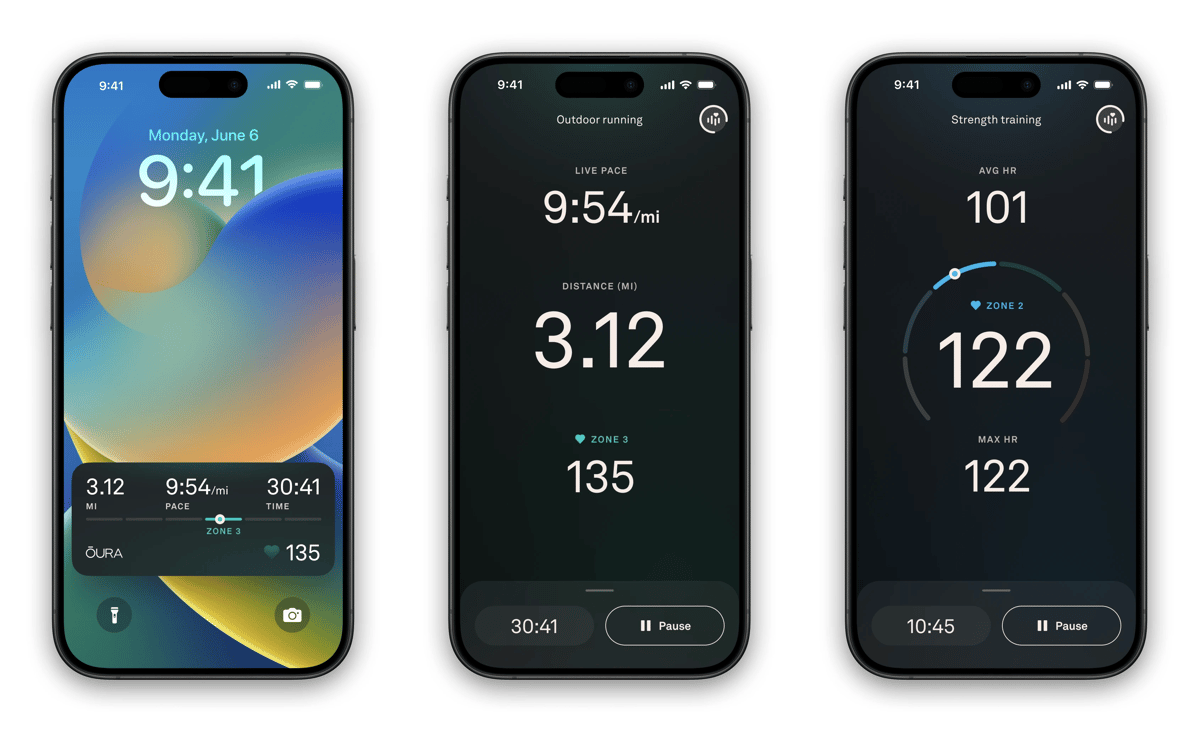
It is worth being precise about what Live Activity Tracking is, because it matters to runners and cyclists. Your app can now show live workout stats, but here’s the rub. Distance, speed, and, obviously, the visual display all require the phone to be with you. Even if you leave your smartphone at home, the ring’s auto-detection will still record your heart rate and other motion metrics. This is the first time Oura has offered live, in-session feedback, after years as a recovery and sleep device, and the new capabilities read as a statement of intent to advance its fitness competencies rather than as a finished tool.
The same applies to GLP-1 Insights, which logs weight-loss medication, doses and side effects, and to Locate, which helps you find a misplaced ring.
The care partnerships sit at the account level too: ResMed for routing people with disturbed breathing toward a sleep assessment, and Counsel Health for on-demand medical advice from licensed physicians, the latter for an extra fee on top of the membership. One caveat for readers outside the US: at launch, Health Radar and the Counsel Health service are available in English only in the United States, India, and the United Arab Emirates, so others will have to wait for a wider rollout.
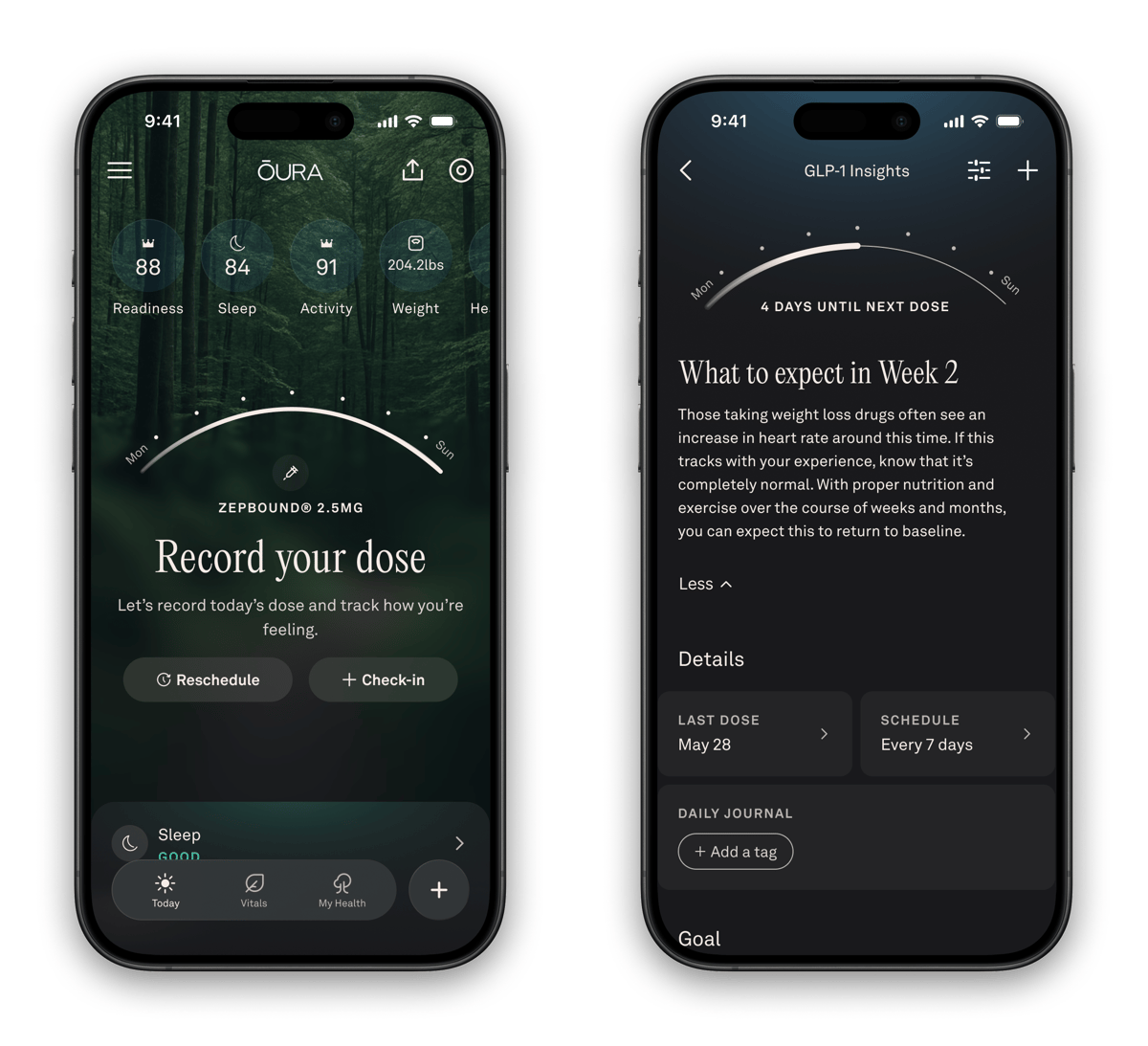
A Ring 4 owner with an active membership gains almost the entire 2026 feature set at no extra cost. What stays with the Ring 5 is the part bound to the hardware: the comfort and battery of the smaller body, and the activity detection, which Oura says is more accurate than on any previous ring because of the new sensor layout.
The accuracy question Oura does not answer directly
Oura puts heart-rate accuracy at 99 per cent against a medical ECG and sleep-staging accuracy at 95 per cent against a clinical sleep lab. Those are the company’s figures, not independent ones, and they describe the platform rather than this specific ring.
There is a detail worth watching. The Ring 4 reads the signal from your finger along 18 separate light paths. The Ring 5 uses 12. Oura has cut the number while making each path count for more, with LEDs around four times as powerful and lower-profile sensors that sit closer to the skin. The Ring 4 had a flat interior; the Ring 5 reintroduces low-profile domes for the first time since the Gen 3, less prominent than before but a deliberate return. It says the result is steadier, more accurate readings, rather than a compromise. On paper, that is a real engineering achievement: a smaller ring, fewer paths and, by Oura’s account, no loss of precision. That accuracy claim is the company’s own, not an independent one. Until the Ring 5 has been measured against a chest strap and a trusted reference in normal use, treat its accuracy as promised rather than proven.
What the Oura Ring 5 still cannot do
Some limits are set by the hardware and cannot be removed by a software update, so they are worth knowing before you buy.
- There is no screen. Every reading lives in the phone app, which is also why live workout metrics appear there.
- Blood pressure is a trend signal, not a medical reading. The ring flags patterns that may deserve attention. It does not give you a systolic and diastolic number to replace a cuff. It gives a nudge to go and see a medical professional rather than a diagnosis.
- The ring needs a paid membership. Without it, an Oura of either generation falls back to a limited set of basic scores.
- The finger size range is narrower than before, at 6-13. Some Ring 4 owners at the ends of the old 4-15 range will not find a Ring 5 that fits, and a new sizing kit will apply.
The bigger picture: why Oura keeps winning
The Ring 5 arrives from a position of unusual strength, and the reason is not only the product. Oura has built a legal moat around the smart ring that its rivals cannot easily cross.
Since 2024, the company has run a steady campaign through the US International Trade Commission. It won an import ban against Ultrahuman and turned RingConn, OMATE and Circular into licensees that now pay royalties to sell their rings. Further actions are live against Samsung, Zepp Health, Reebok and Noise. The core patents cover the curved battery and the internal architecture, the very things that let a ring be both small and capable. As I have argued before, this comes close to patenting the smart ring itself.
The strategy is shrewd. By licensing its inventions rather than blocking them outright, Oura appears to be defending its work rather than stifling competition. The effect on the market is the same either way. Anyone building a serious smart ring must either pay Oura or design around patents that are difficult to design around.
That is the context for the Ring 5. Oura was already the one to beat. It is now the one to beat as a genuinely small, normal-looking ring. Competitors want to make directly comparable products but face the technical challenge while boxed in by Oura’s IP. Set against a confidential US IPO filing in 2026, a valuation near $11bn and around five million paying members, the Ring 5 looks less like a product launch and more like a company consolidating a category it pioneered and built.
Only the largest players could change this. Apple and Google have the resources to mount a serious challenge, whether through their own hardware or by directly challenging Oura on patents. So far, none has moved decisively into rings, and until one does, Oura’s lead looks set to hold for the foreseeable future.
Should you buy the Oura Ring 5?
- If you own a Ring 4, upgrading is hard to justify. The features that matter are already coming to your ring. Buy the Ring 5 only if the size and comfort of your current ring genuinely bother you, if the extra day or two of battery counts, or if you want the sharper activity detection. None of these is trivial for something you wear constantly, but none is a capability you lack today.
- If you own a Gen 3, the case is stronger, since you are two generations behind on hardware. Even so, a discounted Ring 4 runs the same software and may be the wiser choice.
- If you are buying your first smart ring, the Oura Ring 5, the new Gen 5, is the one to own if the budget allows, on size and comfort alone. The Ring 4, now older and routinely discounted, runs the identical software and offers a wider choice of sizes for less money. If the Ring 4 falls far enough below the Ring 5, it becomes the value pick. The slimmer body is what the extra outlay buys.
The honest summary is that Oura has solved comfort, not capability. The intelligence now spreads freely across the range, so for most people, the real cost of an Oura is not the ring, but the membership that makes either one work, and that price has not changed.
Quick answers
What is the main difference between the Oura Ring 4 and Oura Ring 5?
The Oura Ring 5 is roughly 40 per cent smaller and lighter than the Ring 4, with a redesigned sensor system, longer battery life of 6 to 9 days, and a £50 price rise. Most of the new software features (Health Radar, Blood Pressure Signals, Live Activity Tracking) are available on both rings, so the differences are mainly physical.
How does the Oura Ring 5 size compare to the Ring 4?
The Oura Ring 5 measures 6.09mm wide and 2.28mm thick, against the Ring 4’s 7.90mm and 2.88mm. The Ring 5 weighs 2 grams, compared to 3.3 to 5.2 grams for the Ring 4. The size range is narrower at 6 to 13 (the Ring 4 was 4 to 15).
Do the new Oura Ring 5 features work on the Ring 4?
Yes, for the most part. Health Radar, Blood Pressure Signals, Nighttime Breathing, Live Activity Tracking, GLP-1 Insights, and Locate all reach the Ring 4, and most reach the Gen 3. The hardware-bound gains, chiefly the smaller size, longer battery life, and improved activity detection, stay with the Ring 5.
Does the Oura Ring 5 measure blood pressure properly?
No. It tracks blood pressure patterns overnight and flags possible strain, and you can log readings from an ordinary cuff. It does not give a clinical systolic and diastolic measurement.
Do you still need a subscription?
Yes. The Oura membership costs £5.99 or $5.99 a month on both the Ring 5 and the Ring 4, and the ring offers little without it. The Counsel Health care service costs extra again.
Is the Oura Ring 5 worth it over the Ring 4?
For a new buyer who wants the smallest, most comfortable ring, yes. For an existing Ring 4 owner, usually not, because the important software is coming to the Ring 4 anyway. The upgrade is about comfort and battery, not features.
What sizes does the Oura Ring 5 come in?
Sizes 6 to 13, a narrower range than the Ring 4’s 4 to 15. A new sizing kit applies, so order one before you buy if you are unsure of your fit.
Can you trade in an Oura Ring 4 for the Ring 5?
Oura does not run a permanent trade-in or upgrade programme. The company has offered short-term discounts to existing members in the past, but there is no standing option to swap a Ring 4 for a Ring 5 at a reduced price. Your best option is to sell the Ring 4 privately and use the proceeds against a new Ring 5.
Does the Oura Ring 5 use the same charger as the Ring 4?
No. The Ring 5 ships with its own size-specific charger and a USB-C cable. A separate Ring 5 charging case, priced at $99, holds up to five full charges and adds wireless charging. Ring 4 chargers and cases do not fit the Ring 5.
More Oura coverage on the5krunner: Oura files for IPO as sports-tech listings queue for limited funds, and Oura sues Amazfit, Reebok, and Noise over their rings.
Last Updated on 3 October 2026 by tfk the5krunner
Small things I always use
- Garmin 90-degree charging adapter: Charges your Garmin from any USB-C cable. Essential when travelling. I use one.
- Body Glide: The blue anti-chafe stick swimmers and runners carry. I use it.
- Speedo earplugs: Fewer ear infections and no cold-water dizziness. I use them.
- Dryrobe Advance: My winter changing robe for open-water swims. I use one. A cheaper option is the AONYIYI changing robe.
- Maurten: Race fuel that stays easy on the stomach. I use them.
- Garmin charging puck: The quickest way to top up before a session. I use one.
- Injinji: Toe socks that stop rubbing, so you run more. I use them.
- Ultimate toe protectors: Stop black toenails on long runs. They work. I use them.
- Compressport R2 v2 calf sleeves: My calf sleeves of choice. I use them.
- Cellucor C4: My pre-workout before hard sessions.
- TPU tubes: Schwalbe Aerothan, Tubolito and Pirelli SmarTube. Light, tiny spares. I use all three.
- G8 insoles: Adjustable insoles that are good. I use them.
- Cycplus Cube: A 97g electric pump that gets a road tyre rideable in two minutes. I carry one. 5% off with code THE5KRUNNER.
Watches and sensors
- Polar H10: My daily driver for waking HRV.
- Polar Verity Sense: My backup arm-worn HR sensor.
- Nomad bedside charger: Charges my iPhone and Apple Watch overnight. I use it, and many of their bands.
- Train.Red: The best muscle oxygen sensor I’ve used.
- Tymewear: Accurate heart rate and reliable ventilatory zones. I use it to pace endurance rides over an hour.
- Garmin Forerunner 970: A pro-grade triathlon watch. I use this.
- Apple Watch Ultra 4: My daily smartwatch. No phone needed on rides.
- Garmin Fenix 9 Pro: I’ve just bought one.
On the bike
- Continental GP5000 for everyday riding, and Aero 111 on the front for special occasions.
- Helmets: Specialized S-Works Evade 3 for road riding, and Rudy Project Wing for TT-style races. I use both.
- Ravemen FR300: A front light that mounts under your Garmin or Wahoo. I use one.
- Wahoo TRACKR Radar: I use it on one bike and Varia on the other. They perform the same.
- Garmin Varia RTL515: Radar that warns you of cars from behind. I use this model.
- Wahoo ELEMNT Roam 3: The bike computer that’s easy to use. I use mine on most rides.
- Favero Assioma Pro RS2: Accurate power pedals that swap easily between bikes. I use this model.
Home and indoor training
- NPE Runn: Makes my basic treadmill smart, sending more accurate speed and distance to my watch and Zwift. I use it.
- Google Wifi: Keeps Zwift connected in my pain cave. I use it.
- Apple TV 4K: Zwift on the big screen. I use two.
- Google Nest Doorbell (wired, 2nd gen): My video doorbell, running in both Google Home and Apple Home. I use it.
Health, recovery and sleep
- FreeStyle Libre 3 Plus: Shows how my blood sugar responds to diet.
- hDrop: Measures my sweat loss in summer and indoors.
- Fourth Frontier Zone: Checks my heart under load in hard sessions.
- Oura Ring 5: My partner’s recovery tracker of choice.
- Kineon MOVE+: Red light therapy for niggles. It works.
- Eight Sleep: A cooling mattress cover my partner and I use nightly.
Reader-Powered Content

This content is not sponsored. It’s mostly me behind the labour of love, which is this site, and I appreciate everyone who supports it.
Support the site: Follow (free, fewer ads) · Subscribe (paid, ad-free) · Buy Me A Coffee ❤️
Written by real people, with AI assistance. Fact-checked and verified for originality. See the Editorial Policy. FTC: Affiliate Disclosure — some links pay commission. As an Amazon Associate, I earn from qualifying purchases.
tfk is the founder and author of the5krunner, an independent endurance sports technology publication. With 20 years of hands-on testing of GPS watches and wearables, and competing in triathlons at an international age-group level, tfk provides in-depth expert analysis of fitness technology for serious athletes and endurance sport competitors. ID

I was a Oura subscriber until a few months ago. My 2 year old version 4 started to refuse charging and since the warranty had expired, Oura was only willing to give me a small discount on a replacement ring. I was a paid subscriber etc.
Frankly I didn’t find much of the information truly meaningful (sleep metrics were pretty good) and the app sends annoying notifications several times a day (option being fully on vs fully off). All that would be fine if the hardware lasted. Buyer beware of Oura.
One thing that never makes it into these comparisons: the numbers are not comparable across generations, so changing ring quietly resets what your own baseline means for a couple of weeks. Worth factoring in before September as well, when Oura on the Web retires and takes the instant CSV export with it. Whatever you decide, pull an export while the old one still works. I build Vitra, a desktop app for keeping that history locally, so I am not neutral here.