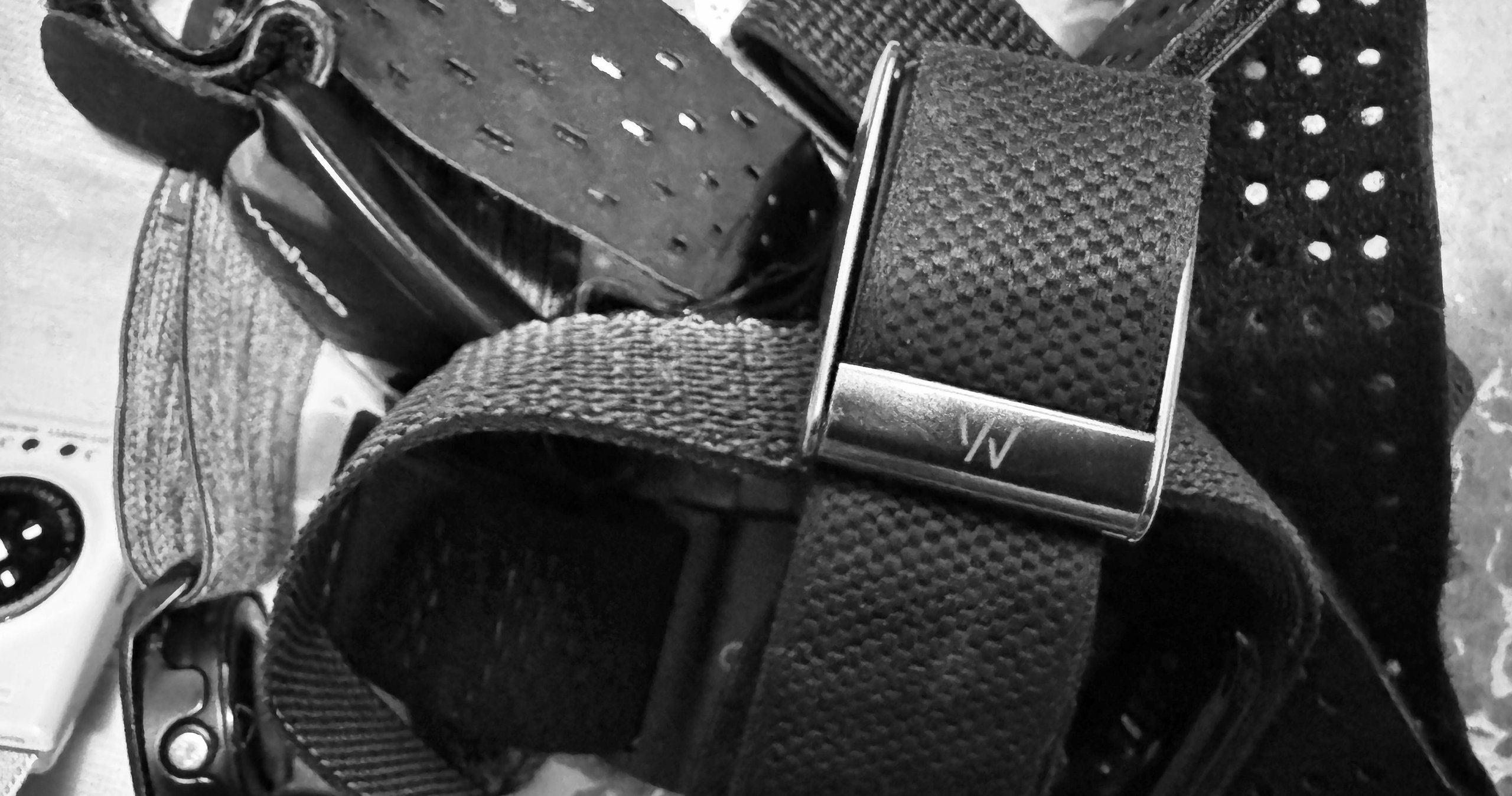
The CIRQA and Whoop Killers: are new bands about to spoil the screenless wearable party?
Killing a killer that has not shipped sounds absurd. It’s not. Garmin CIRQA is days or weeks from launch and is expected to be the most credible Whoop competitor yet, and brands watching from the sidelines aren’t waiting to see how it performs. They are watching the category’s economics.
Whoop surpassed an estimated $1bn in revenue in 2025, with band sales up 103% and a reported 2.5 million subscribers. Polar LOOP shipped. The Amazfit Helio Strap has shipped, and Zepp’s CEO has confirmed its Gen 2.0 successor. Fitbit AIR shipped at $99 sans subs. If Apple launched a band in September, every brand above $200 would pause its roadmap that afternoon.
In January, I scored the field, i.e. the chance of us seeing them deliver a supposed Whoop Killer.
- Garmin 90%,
- Oura and Ultrahuman 5%,
- Apple 0%,
- Samsung 2%.
This article argues that January-me was wrong about nearly everyone (except Garmin!). The case here is deliberately one-sided: only the positive argument, for eight brands. The counterarguments are your job. Get cracking.
Listen to the discussion
The barriers are gone.
The screenless recovery band has no hardware moat. The sensor module is a commodity, the algorithms increasingly ship bundled with it, and a lighter band may track sport on the wrist better than the brand’s own watch because less mass means less movement artefact. Supply chain complexities are solved; third-party manufacturers quote you by Friday. Whoop’s trade dress lawsuits are a speed bump for any company that diligently researches patents before deftly engineering a workaround. Even distribution risk can be straightforward: launch directly and, through your existing Amazon storefront, bring in retail partners once the product proves itself. Sorted.
The price corridor is already known: $99 at the floor, set by Fitbit AIR, and around $400 at the ceiling, set by Whoop’s first-year cost. Three business models sit on the shelf: free, subscription, and hybrid. Simple to understand but hard to get right.
Only one barrier remains. The app. A recovery band is 95% software, and building credible HRV baselines, sleep staging and readiness modelling is a tricky but surmountable task. Tricky is what keeps the cheap clones out. Every one of these eight already runs a mature platform.
Ultrahuman
This fast mover in wearables already sells the business model that this category is converging on. The Ring AIR is subscription-free at purchase, with paid PowerPlugs layered on top for those who want more: the hybrid template, proven at scale. The recovery, sleep, and HRV algorithms exist today; the customer base is exactly Whoop’s; and the marketing already targets the same athlete. The only new engineering is a larger optical module on a strap, and that module is off-the-shelf, with algorithms included. Ultrahuman has launched several rings, blood biomarker panels, CGM M1 and a home air monitor in recent years. A band is the smallest product gap left on its list.
Huawei
TruSense is among the best optical sensor platforms tested here on the GT Runner 2 and the GT 6 Pro, and the Health app already runs 24/7 recovery, sleep and readiness metrics for millions. The manufacturing scale is in-house. The home market alone justifies the product: a $79 band sold in volume across China, with a customer appetite to buy add-ons from the app, will be the Fitbit AIR play executed at Huawei’s cost base. Western distribution friction does not matter when the first ten million units never leave Asia. No brand on this list can ship a competent recovery band faster or cheaper, perhaps even better, and Huawei always grabs the category opportunities it wants to.
Edit 18 Sep 2026: Huawei was discovered researching screenless bands.
Oura
A wristband looks like brand heresy until you watch someone rack a barbell. Rings and lifting don’t mix, and Oura knows exactly how many members log gym sessions. A band fills that gap without a single new algorithm: the platform, the readiness model, and the subscription already exist, and current members would pay nothing more for the subs – two products increase lock-in and further justify the subs. That is frictionless, full-market expansion, which is exactly the story Oura’s confidential IPO filing needs to tell. An Oura Band could launch quietly and sit alongside Oura Ring 5 on the homepage store and existing Amazon storefront, with zero retail channel risk. The company most identified with one form factor has the least work to do to add a second.
Coros
Coros has already built most of a recovery band. The armband heart rate monitor is the hardware precedent, and the earbuds show a willingness to experiment outside watches. The brand was the first in endurance sport to ship an MCP server, the tech glue that lets AI assistants read training data directly; a screenless band feeding an AI coach is the logical next node in that architecture.
Coros is a pseudo-value brand, and the sub-$200 end of the corridor is where value brands think they can win.
Suunto
ZoneSense proved that Suunto still adds original sports science, deriving aerobic and anaerobic thresholds from heart rate data the competition treats as noise: niche, but exactly the algorithmic confidence a recovery band needs. A new HRM, CORE watch, and earbuds confirm an active hardware pipeline. The range gap is at the bottom: Suunto sells nothing below its watches, and a band gives the brand a sub-$150 entry point that recruits new athletes into the app, runs its physiology models around the clock, and feeds better readiness numbers back to the Race 2 on the wrist.
A band adds an easy second revenue line, and at the same time, encourages ecosystem lock-in. Lock-in that eventually will result in watch upgrades. The manufacturing question answers itself: Suunto’s owner, Liesheng, already runs the lower-end Haylou wearables brand and manufactures in volume.
Edit 15 Oct 2026: certification photos show a Suunto band, model HR264. The Suunto Whoop competitor page tracks the story.
Samsung
Samsung already sold you half the argument. The Galaxy Ring exists because Samsung believes in screenless 24/7 tracking; the Energy Score readiness model exists because Samsung Health already computes recovery. A band is the cheaper, gym-safe sibling of the ring, sharing the same algorithms and the same app. Samsung runs a self-contained ecosystem in the Apple mould, not a generic Android accessory business, and every band sold locks a Galaxy phone owner deeper into Samsung Health. The hardware is a fraction of the ring’s manufacturing complexity.
Apple
Health+ was rumoured to be scaled back in February, dropped from iOS 27, with its components drip-fed instead, and Fitness+ is under review, with Gurman suggesting a merged health subscription. Read that as a service searching for a hardware hook. A screenless band is the hook: it serves the watch-refusers, covers the overnight hours when the Apple Watch Ultra 3 sits on a charger, gives a pseudo-alternative to a ring, and supports the merged and strategically well-fitted Health+/Fitness+ subscription, a $99 to $199 on-ramp that an $800 watch cannot be. Apple has the sensors, the silicon, the Health app and more than two billion devices to sell it through. A September launch would be the category’s defining event, which is precisely why Apple would want it.
Garmin is stronger on iOS. Here lies the Garmin CIRQA killer.
Edit: 22 Sep 2026: Gurman reports his sources possibly releasing a screenless band in 2027.
Wahoo
The hardest case is the best fit. The TRACKR heart rate monitor proved that Wahoo can do on-body optical sensing well, and its customers are the most recovery-obsessed demographic in endurance sport: cyclists who already track TSB in the Wahoo app and structure entire seasons around form and fatigue. A 24/7 band completes the model Wahoo already half-runs, adding the HRV-led recovery side to the training load side it has shipped for years. The app needs work to accommodate that, and the COROS link-up muddies the route, but Wahoo built its entire company by spotting one unglamorous product the big brands ignored. It has seen this gap before.
The scorecard
| Brand | Likelihood | Model | Price | Impact |
|---|---|---|---|---|
| Ultrahuman | 8 | Hybrid, paid add-ons | $149 | Direct Whoop assault from the brand built to make one. Middle market impact. |
| Huawei | 9 | Hybrid, modest paid add-ons | $79 | Resets the floor below Fitbit AIR, volume play. Regional. Minimal impact. |
| Oura | 9 | Hybrid, existing subscription | $199 | Direct Whoop assault. Closes the gym gap, expands the IPO story. Impactful. |
| Coros | 8 | No subs | $129 | The AI-coach band; value-corridor winner. Some middle-market impact. |
| Suunto | 8 | No subs | $149 | A customer lock-in move. Minimal market impact. |
| Samsung | 7 | Hybrid, subscription tier | $179 | Galaxy Ring’s cheaper sibling, Android lock-in. Minimal market impact. |
| Apple | Subscription, merged Health+ service | $199 | Category extinction event, but for whom? Whoop or Garmin? | |
| Wahoo | 7 | No subs | $129 | Completes the TSB model, which its cyclists already live by. Minimal market impact. |
The 12-month call
Huawei ships first, in Asia, at a price the rest cannot match. Oura announces before it ships, timed to its IPO window. Ultrahuman follows within the year because speed is its entire corporate personality. The other five take longer, and Apple takes the longest, but the direction is set. CIRQA will not have killed Whoop. It will have proved to every boardroom on this list that the category is worth entering, and more recovery trackers are coming than any of us will have wrist space for.
That is the prosecution’s case, deliberately one-sided. Now argue against it. Comments below.
Quick answers
Is Garmin CIRQA already a Whoop killer?
CIRQA hasn’t officially launched yet. It is the most credible Whoop competitor to date based on leaks and Connect app code, but until it ships and is tested, that question is open.
Which of these eight brands is most likely to launch a screenless band first?
This article makes the case for Huawei first (price and manufacturing speed), followed by Oura (IPO timing incentive) and Ultrahuman (track record of fast launches). The counterarguments are in the comments.
Do these bands require a subscription like Whoop?
Three business models are emerging: free (likely Garmin CIRQA, Coros, Wahoo), subscription (Whoop, possibly Apple), and hybrid with a free tier plus paid features (Oura, Fitbit AIR, Huawei). Most of the brands argued for here would likely go free or hybrid to undercut Whoop.
Last Updated on 15 October 2026 by tfk the5krunner
Small things I always use
- Garmin 90-degree charging adapter: Charges your Garmin from any USB-C cable. Essential when travelling. I use one.
- Body Glide: The blue anti-chafe stick swimmers and runners carry. I use it.
- Speedo earplugs: Fewer ear infections and no cold-water dizziness. I use them.
- Dryrobe Advance: My winter changing robe for open-water swims. I use one. A cheaper option is the AONYIYI changing robe.
- Maurten: Race fuel that stays easy on the stomach. I use them.
- Beet It Sport nitrate shots: Beetroot shots I take in the days before a race. I use them.
- Garmin charging puck: The quickest way to top up before a session. I use one.
- Injinji: Toe socks that stop rubbing, so you run more. I use them.
- Ultimate toe protectors: Stop black toenails on long runs. They work. I use them.
- Compressport R2 v2 calf sleeves: My calf sleeves of choice. I use them.
- Cellucor C4: My pre-workout before hard sessions.
- TPU tubes: Schwalbe Aerothan, Tubolito and Pirelli SmarTube. Light, tiny spares. I use all three.
- G8 insoles: Adjustable insoles that are good. I use them.
- Cycplus Cube: A 97g electric pump that gets a road tyre rideable in two minutes. I carry one. 5% off with code THE5KRUNNER.
Watches and sensors
- Polar H10: My daily driver for waking HRV.
- Polar Verity Sense: My backup arm-worn HR sensor.
- Nomad bedside charger: Charges my iPhone and Apple Watch overnight. I use it, and many of their bands.
- Train.Red: The best muscle oxygen sensor I’ve used.
- Tymewear: Accurate heart rate and reliable ventilatory zones. I use it to pace endurance rides over an hour.
- Garmin Forerunner 970: A pro-grade triathlon watch. I use this.
- Apple Watch Ultra 4: My daily smartwatch. No phone needed on rides.
- Garmin Fenix 9 Pro: I’ve just bought one.
On the bike
- Continental GP5000 for everyday riding, and Aero 111 on the front for special occasions.
- Helmets: Specialized S-Works Evade 3 for road riding, and Rudy Project Wing for TT-style races. I use both.
- Ravemen FR300: A front light that mounts under your Garmin or Wahoo. I use one.
- Wahoo TRACKR Radar: I use it on one bike and Varia on the other. They perform the same.
- Garmin Varia RTL515: Radar that warns you of cars from behind. I use this model.
- Wahoo ELEMNT Roam 3: The bike computer that’s easy to use. I use mine on most rides.
- Favero Assioma Pro RS2: Accurate power pedals that swap easily between bikes. I use this model.
Home and indoor training
- NPE Runn: Makes my basic treadmill smart, sending more accurate speed and distance to my watch and Zwift. I use it.
- Google Wifi: Keeps Zwift connected in my pain cave. I use it.
- Apple TV 4K: Zwift on the big screen. I use two.
- Google Nest Doorbell (wired, 2nd gen): My video doorbell, running in both Google Home and Apple Home. I use it.
Health, recovery and sleep
- FreeStyle Libre 3 Plus: Shows how my blood sugar responds to diet.
- hDrop: Measures my sweat loss in summer and indoors.
- Fourth Frontier Zone: Checks my heart under load in hard sessions.
- Oura Ring 5: My partner’s recovery tracker of choice.
- Eight Sleep: A cooling mattress cover my partner and I use nightly.
Reader-Powered Content
This content is not sponsored. It’s mostly me behind the labour of love, which is this site, and I appreciate everyone who supports it.
Support the site: Follow (free, fewer ads) · Subscribe (paid, ad-free) · Buy Me A Coffee
Written by real people, with AI assistance. Fact-checked and verified for originality. See the Editorial Policy. FTC: Affiliate Disclosure — some links pay commission. As an Amazon Associate, I earn from qualifying purchases.
tfk is the founder and author of the5krunner, an independent endurance sports technology publication. With 20 years of hands-on testing of GPS watches and wearables, and competing in triathlons at an international age-group level, tfk provides in-depth expert analysis of fitness technology for serious athletes and endurance sport competitors. See the gear tfk uses. ID

I think Garmin dropped the ball on screenless bands many years ago . They used to sell small bands, the Vivofit, which had a small screen back in the day and you could wear them while still wearing your Omega. Then they focused on watches and the Vivofit disappeared. If they had continued to develop that band over the years, they could be in a much stronger position today. Now we are waiting for the re-introduction of someone who comes really late to the party and unless it is a really strong contender, might realise that the best seats are already taken. If it follws the same pattern we have seen recently in Garmin, really expensive and bug-ridden, it might even be a sales booster for FitBit and the other competitors. I know plenty of people who exclusively wear their Garmin to track activities because they prefer to wear a “real” watch. Many off them would rather use a pretty reliable (or so it seems) 99$ device, then go the 300-400$ Garmin band route because they are not really invested in the Garmin ecosystem (unlike me!!). After the sleep monitor downer, I am actually not very excited about the CIRQA. While Garmin has the potential and the ingredients to produce something really cool, they might just use this bands to get rid of their old E4 sensors, packed into a screenless VivoFit band for the low low price of 349$. I will definitely wait a couple of month before I purchase one. My (pre-owned) Tactixs 8 give me plenty of joy and I would certainly miss the LED flashlight!!
The good thing about dropping something is that you can always pick it up again.
I sort of agree with you. but Garmin has been developing the metrics and app. there were clearly a few bits missing but those are in place now for CIRQA.
I would argue Garmin is more hybrid than subscription free with Connect+.
agreed. Did I say something else…??? Happy to change but I cant see it.
Well that’s true but if it loose steam like Garmin is doing now and soon will launch the cirqa and if price is not even appealing everyone will just give and mostly just settled with fitbit air now and ofc the app is not great, but since garmin is being stuborn and delay and tease somehow with their ownwebsite leaks months ago, people will continue with fitbit air and get used to the app UI and then once they fix the bugs and allow to write to Apple health which Garmin is always more closed on their ecosystem then people just will stay with Google
Sadly your sentence is not always true, Polar Loop picked up the Loop 2 and was a massive fail “again”
Google picked up fitbit but in a totally different way and completely disconnect from previous app altogether and might as well changed the name to Google Air cause it barely has anything to do with the old “something” besides the form factor
If Garmin’s leak was intentional they’ve done an amazing job getting lots of free PR. As you say, they need to get the product out there now.
Polar should have released the new app by now. Also don’t forget they have to deal with the US legal issues
I would argue that some of these companies are the least likely to release a screenless band, and top of the is Apple, there is no reason to do this and it would damage watch sales which would see a share price dip, its the same oura and probably Samsung too.
Whereas I think coros are in the prime position to release a band in the next refresh their existing HR bsnd and cover both sports and sleep aspect to complete their portfolio.
Ultra human i expect will release one too as they like amzafit through products are the wall and see what sticks.
I’m playing devil’s advocate on this article, of course.
Yes, but the band is a complementary purchase and increases ecosystem lock in and ecosystem usage. People buy Apple Watches for the smart features that are adjacent to the iPhone, they will still buy a watch for that. The band is a more useful and essential part of a FITNESS+/HEALTH+ combo service which is precisely the subs revenue Apple shareholders need. It would increase the share price.
A band would be a good option for night tracking. You would put the watch on the charger and use the band for the night. A very light and comfortable band for sleeping would be a great match.
Fitbit Air is truly light. As light as air.
It is quite different to most of the others that are also light. but not as light.