Apple’s Price Rises Skipped the Watch. September Is the Test
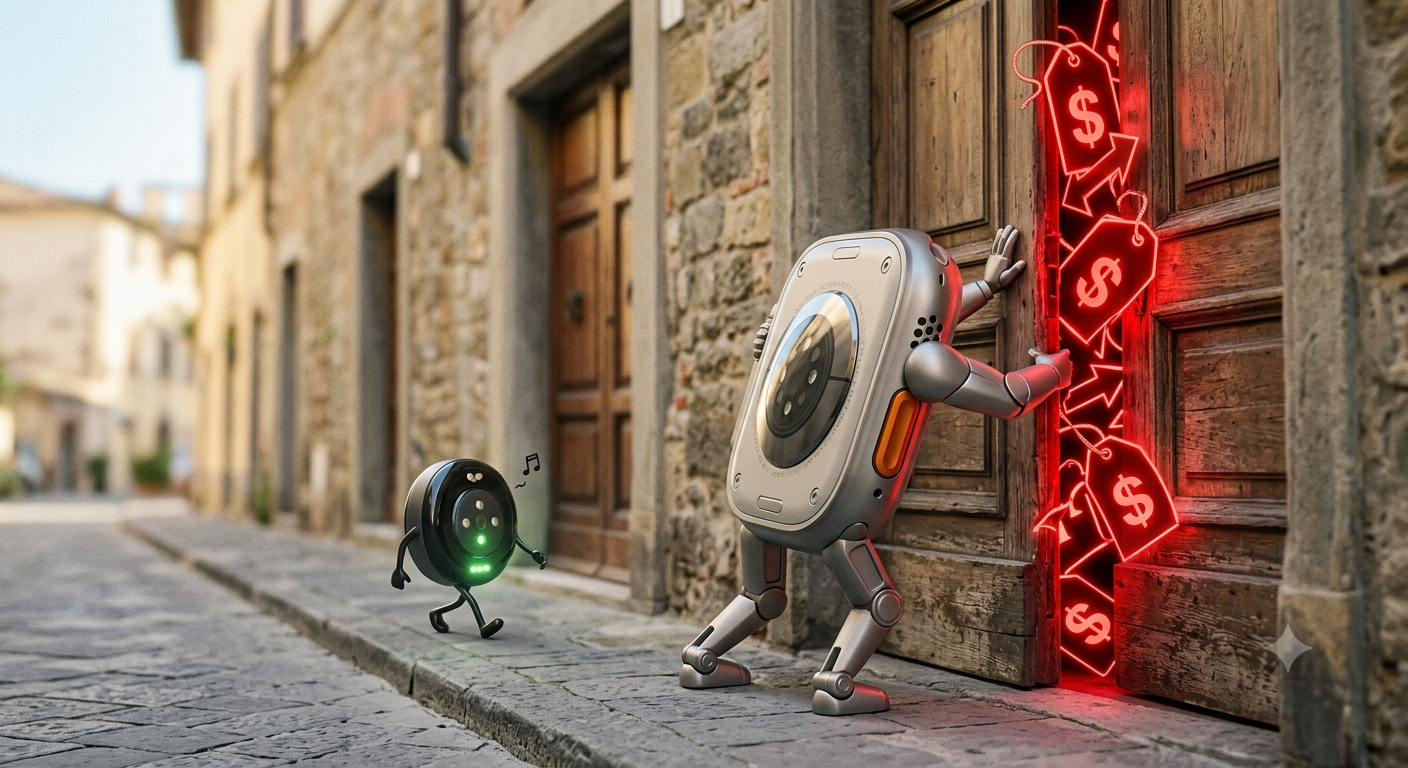
Apple raised prices across most of its lineup on 25 June, citing a memory shortage. The Watch was spared. It was never going to be hit, because a Watch uses so little memory. But there is a September launch looming, and the nature of that may see headline Apple Watch prices rise for the first time in years.
The two factors in play are rising component costs at the product level and market share at the strategic level. Let’s dig into the background.
Context
The increases ran from $30 to $1,300 across Mac, iPad, Apple TV, HomePod and Vision Pro. Apple named the cause as rising costs of memory and storage components, driven by shortages elsewhere caused by AI data centre demand. iPhone, Watch, AirPods and AirTag held prices.
A watch uses a fraction of the memory on a Mac or iPad, so the cost shock is trivial. Counterpoint made the same point a week before the rise: smartwatches are insulated because their bill of materials is light. Apple had nothing to pass on and no cost story to justify a mid-cycle increase.
The common read is that low memory exposure means the Watch price is safe. That assumes memory is the only thing that moves a Watch price. It is not.
September Launch Details Will Be Key
A new CPU arrives every September and usually brings modest changes. It’s routine. AI does not change this narrative, because the Watch runs no AI of its own; that work happens on the paired iPhone. The single most likely candidate for a cost-driven Watch price rise is a refreshed optical heart rate sensor.
Live glucose measurement and true blood pressure remain years out. Yet a new sensor is significantly overdue and widely rumoured. In 2026, that sensor would improve capability, performance and power draw without a transformative new metric. The platform improves, but the headline capability barely moves, and Apple could still charge more for it.
Whatever the cost, Apple cannot push the price too far. The Watch grew 21% year on year in Q1 2026, the fastest of any major brand, while Samsung fell 28%. Apple has just rebuilt the market share it spent two years losing, and it will not carelessly price that away.
Garmin faces the same question. It reached for a higher price at the top end with the MicroLED Fenix 8 Pro and then cut it, and an Elevate Gen 6 sensor is due before long. A refreshed sensor on either wrist raises the same simple question: Will people buy it in sufficient numbers?
The current Series 11, SE 3, and Ultra 3 are only available at today’s prices until September. Series 11 already reached $299 and Ultra models $499 during Prime Day. Read the cause of any September price increase as sensor cost, rather than the memory shortage that explains price rises in other segments.
Takeaway
Apple key price rises were on products with high memory demand because supplies were diverted to fuel the AI boom. The Apple Watch requires relatively little memory. If its price rises in September, the shortage in every headline will have had nothing to do with it. A new optical sensor might.
Last Updated on 9 August 2026 by the5krunner
My favourite kit and nutrition
- Garmin Fenix 9 Pro — I’ve just bought one.
- Injinji – Runners protect your toes. Avoid discomfort and minor injury. Run more. Run faster. I use them.
- Garmin 90-degree charging adapter — A small keyring adapter you can use anywhere. Essential when away. I use one.
- Garmin charging puck — the fastest and most reliable way to top up your Garmin before a session. I use one.
- Ravemen FR300 — Front light that mounts directly under your Garmin or Wahoo head unit. Keeps your bars clean and your beam pointed where it matters. I use one.
- Body Glide – The blue anti-chafe stick that all swimmers and many runners use. I use it.
- Maurten — The race nutrition trusted by elite athletes. Gels and drink mixes engineered to be easy on the stomach. I use them.
- Garmin Varia RTL515 — A radar rear light that alerts you to vehicles approaching from behind. Pairs with your Edge or Wahoo. I use this model.
- Favero Assioma Pro RS2 — The power-meter pedals most serious cyclists choose. Accurate, easy to move between bikes. I use this model.
- Garmin Forerunner 970 — A serious choice for a pro-grade triathlon watch. I use this.
- Polar H10 — My daily driver for accurate, waking HRV readings.
- Wahoo ELEMNT Roam 3 — The bike computer that has the feature Garmin lacks: usability. I use mine on most rides.
Reader-Powered Content

This content is not sponsored. It’s mostly me behind the labour of love, which is this site, and I appreciate everyone who supports it.
Support the site: Follow (free, fewer ads) · Subscribe (paid, ad-free) · Buy Me A Coffee ❤️
All articles are written by real people, fact-checked, and verified for originality. See the Editorial Policy. FTC: Affiliate Disclosure — some links pay commission. As an Amazon Associate, I earn from qualifying purchases.
tfk is the founder and author of the5krunner, an independent endurance sports technology publication. With 20 years of hands-on testing of GPS watches and wearables, and competing in triathlons at an international age-group level, tfk provides in-depth expert analysis of fitness technology for serious athletes and endurance sport competitors. ID
