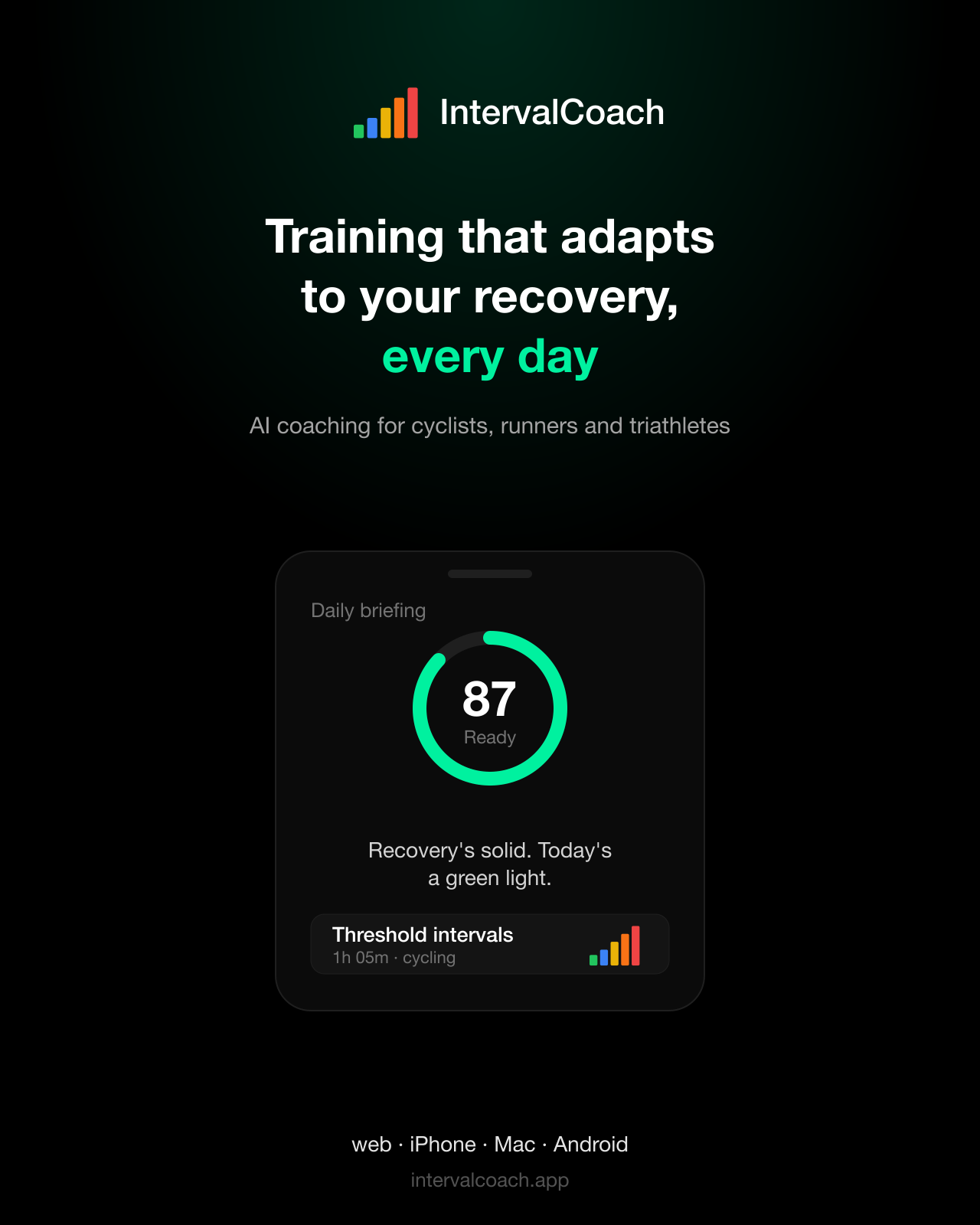
Most training plans are written once and then left to the athlete to follow, even when sleep, stress or a heavy week say otherwise. IntervalCoach takes a different approach. It is an AI training app for cyclists, runners and triathletes that reads the athlete’s recovery and fitness every morning and adjusts the day’s session when the data calls for it. Rather than handing over a fixed block of workouts, it works from the full picture: current fitness, recent training load, the goal event on the calendar, and the athlete’s recovery that day. It connects to the tools endurance athletes already use, runs established periodisations under the hood, and covers cycling, running, swimming and strength in a single plan. It runs in the browser and as native apps for iPhone, Mac and Android.
How it works
TL;DR: Each morning, IntervalCoach reads recovery and fitness data, rewrites today’s workout to match, and pushes it to the athlete’s watch or head unit.
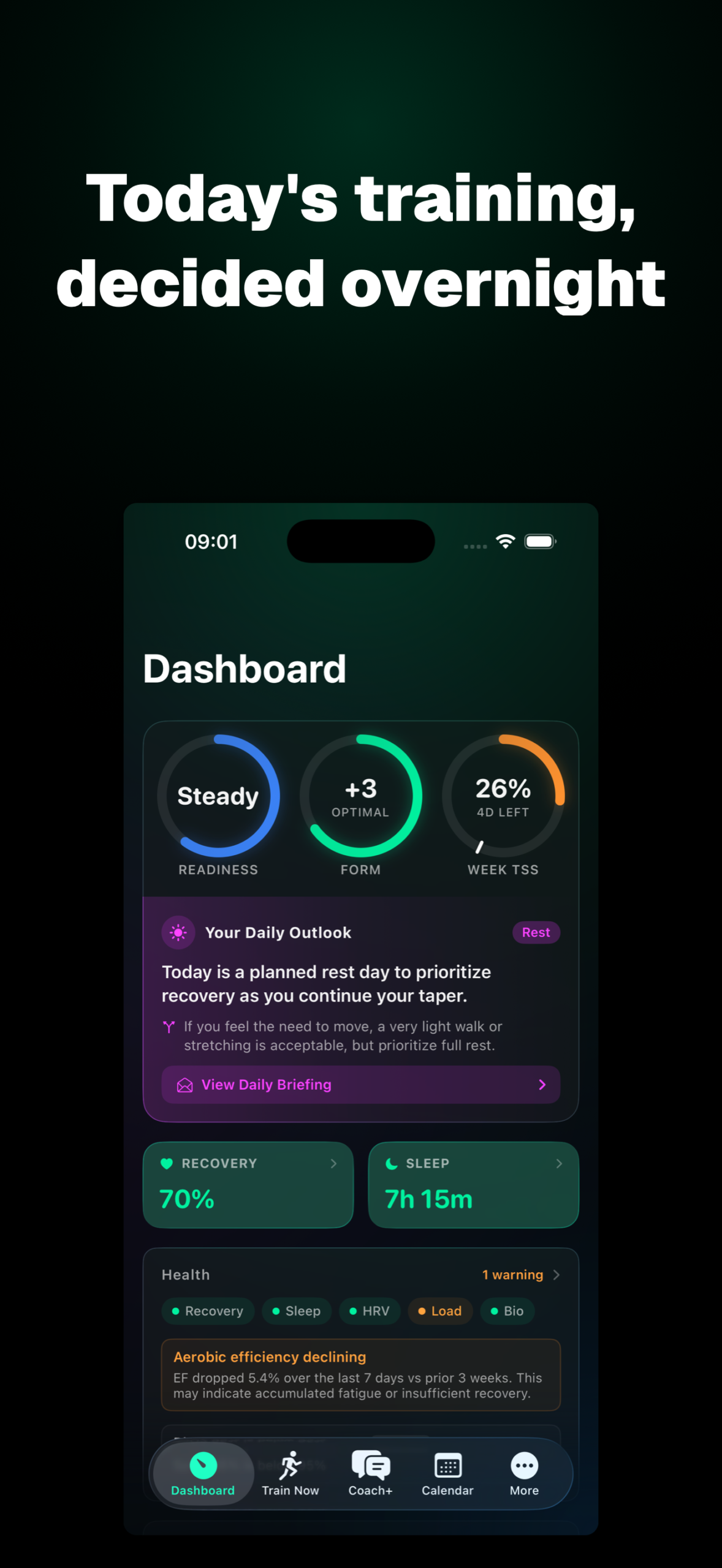
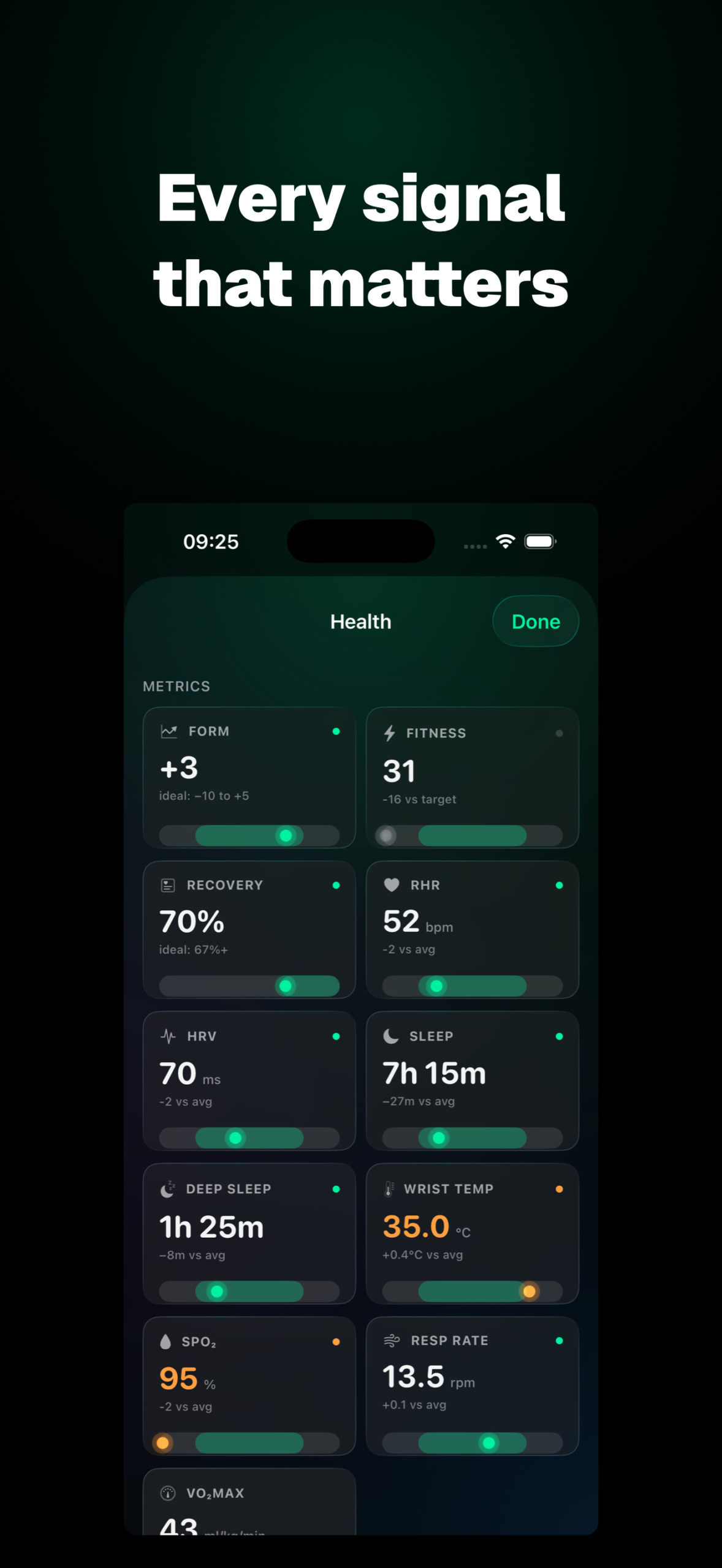
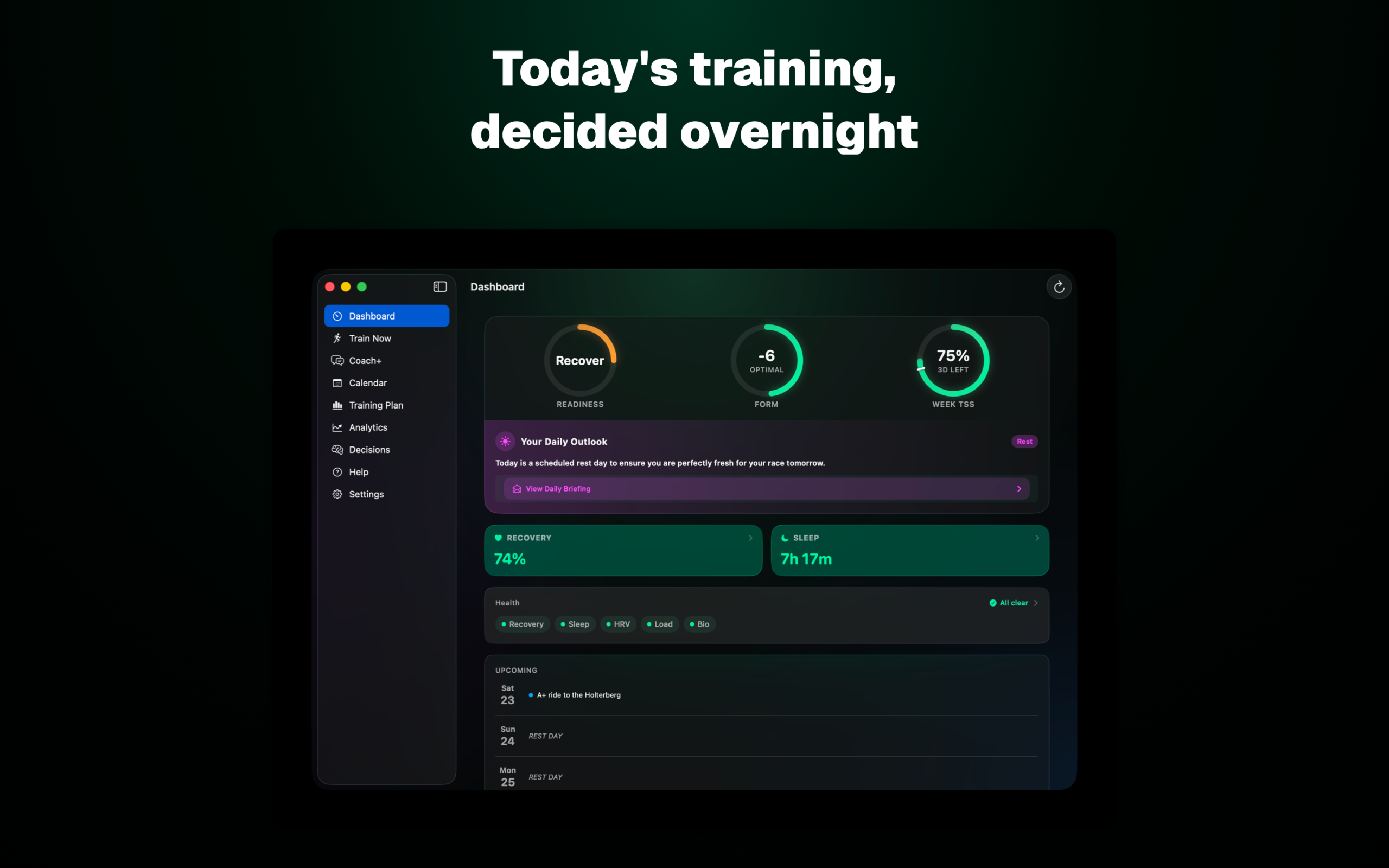
Each morning, IntervalCoach pulls the athlete’s latest data and builds a readiness picture from more than 60 signals, including heart rate variability, resting heart rate, sleep, sleep debt, training load, and subjective wellness, such as mood, soreness, and stress. From that, it decides whether today should go ahead as planned, be eased back, be pushed a little harder, or become a rest day.
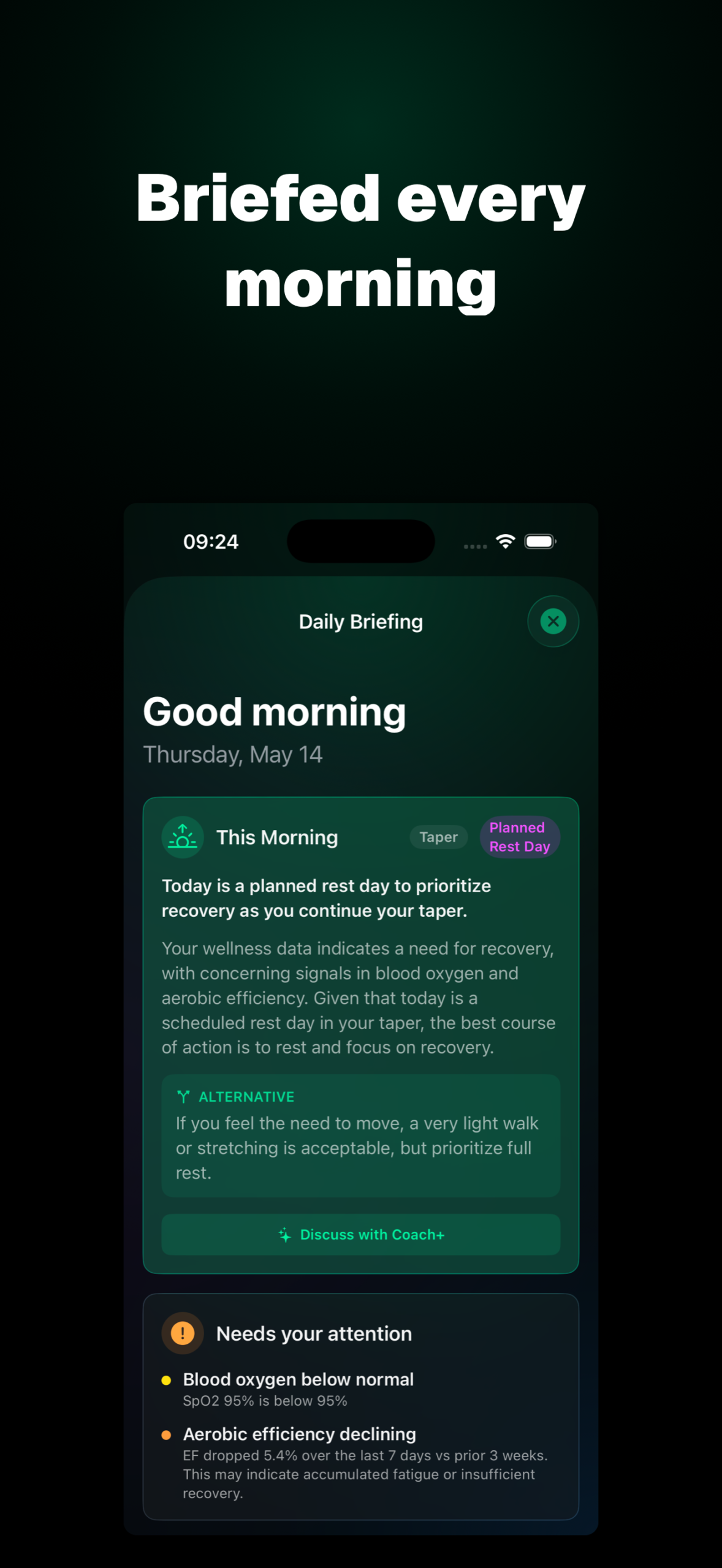
It then generates a structured workout to match, with power, heart rate or pace targets, and writes a short coaching note explaining why that session was chosen. The result is delivered as a daily briefing: readiness status, the reasoning, the workout, and how the week is shaping up. The structured workout is pushed to the athlete’s calendar so it syncs to a Garmin, Wahoo or other head unit or watch, ready to follow.
Athletes can also generate a session on demand rather than wait for the morning briefing, and after a workout, they can log how it felt in a couple of taps, which feeds back into the next day’s decision.
What it handles
IntervalCoach is built around multi-sport training in one plan rather than a single discipline. It supports:
- Cycling, including indoor and virtual riding
- Road and trail running, with terrain-aware analysis for trail
- Triathlon, swimming and strength work alongside the main sports
- Hiking and walking are first-class activities
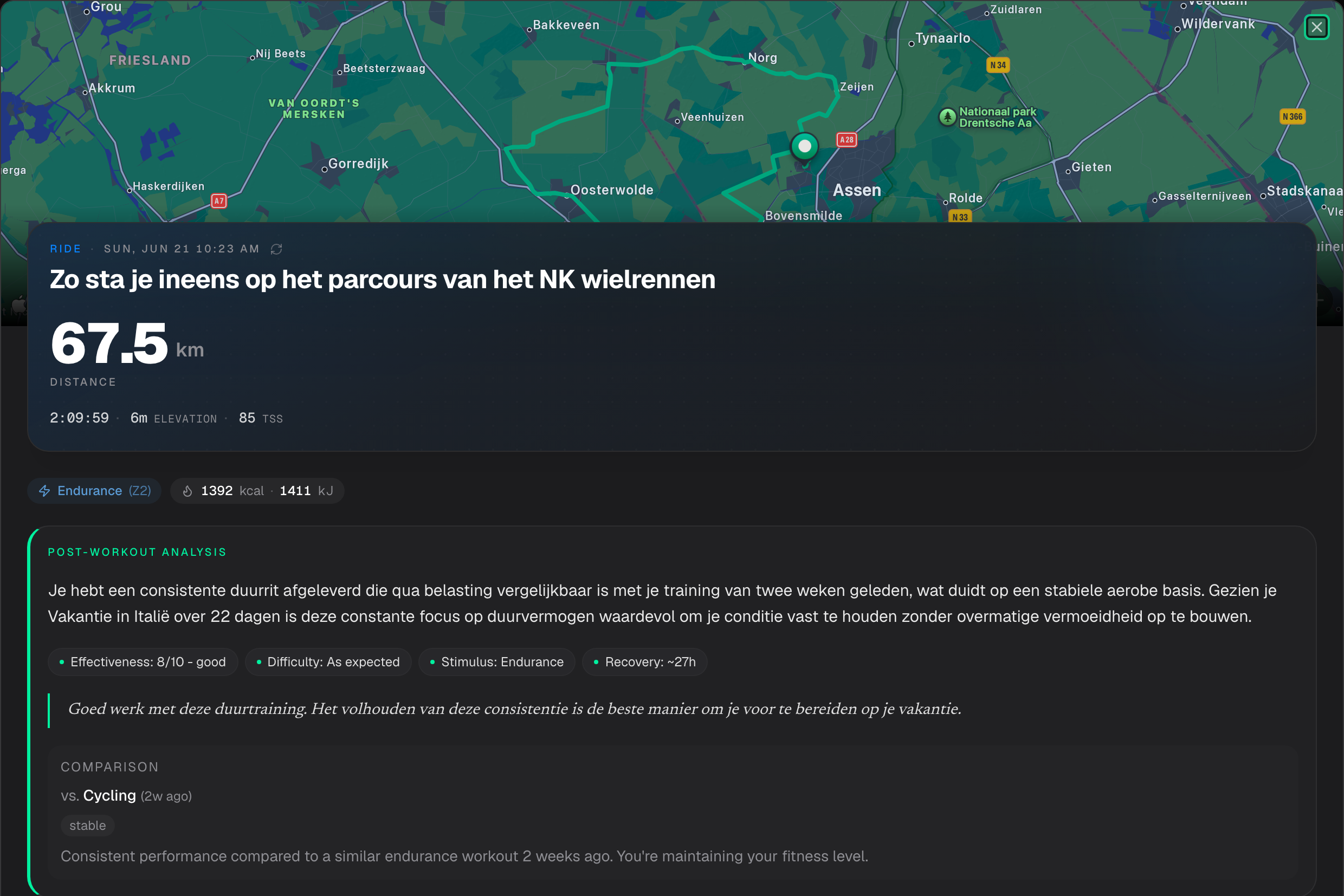
On top of the daily workout, it builds a weekly plan that works back from the athlete’s goal event, runs five periodisations (linear, undulating, polar, polarised, and block), and produces post-workout analysis with an effectiveness score, zone distribution, and recovery guidance.
Free, Pro and Max
IntervalCoach has a free tier that gives every athlete an ongoing weekly training plan at no cost, so it is genuinely usable without ever paying. The paid tiers add the daily adaptive engine on top. Pro, at three euros a month, turns the weekly plan into a workout rebuilt each morning based on the athlete’s recovery, and adds the full multi-sport engine and analytics. Max, at eight euros a month, adds Coach+, a conversational AI coach the athlete can ask about workout tweaks, race-day pacing or plan changes, plus performance benchmarks against peers. New users get a 14-day trial of the paid features with no card required, and a single subscription works across every platform, so subscribing on the web does not mean paying again on the phone.
Data and integrations
IntervalCoach does not ask athletes to move their data. It connects through Intervals.icu and Apple Health and Google Health, which together cover a broad ecosystem of devices and services.
That includes head units and watches such as Garmin, Wahoo, Polar, Coros, Suunto, Hammerhead and Amazfit; indoor and virtual platforms such as Zwift, MyWhoosh and Rouvy; apps such as Strava; and recovery sources such as Whoop, Oura, Apple Health, Google Fit and Huawei Health. The connection is two-way: IntervalCoach reads the athlete’s history and wellness, and writes structured workouts back so they appear on the device. Training data stays in the athlete’s own Intervals.icu account.
Apps and devices
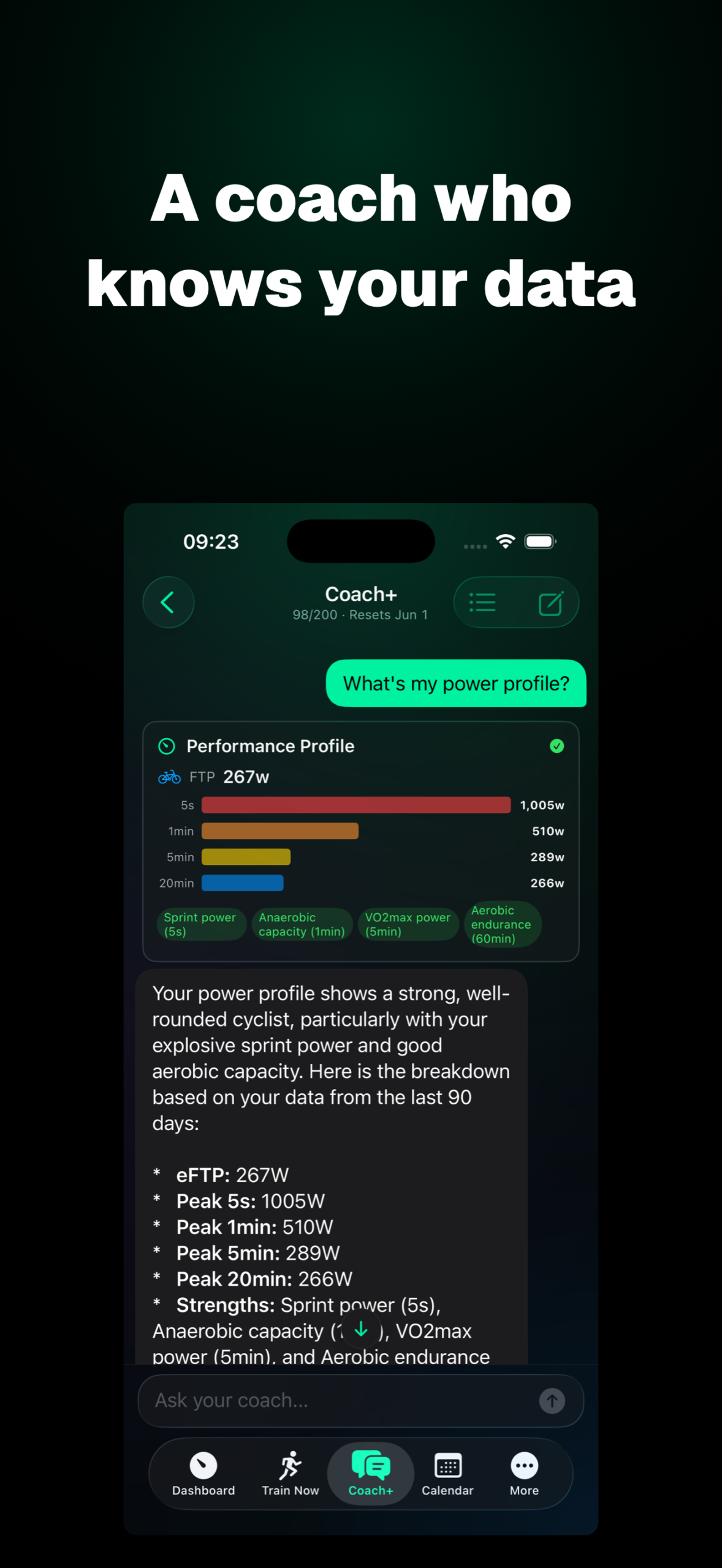
IntervalCoach started on the web and is now available as native apps across the main platforms. The iPhone app delivers the daily briefing as a push notification, includes Coach+ chat, and shows activity charts for heart rate, power and speed, along with the power curve and a durability view. There are Mac and Android apps that are fully in parity with the iPhone version, closing the gap for the large share of endurance athletes who are not on an iPhone. One account keeps fitness, plan and calendar in sync across all of them, so an athlete can check today’s session on a phone and dig into the details on a larger screen later. The app is localised into languages.
Things to note
IntervalCoach connects to an athlete’s data via a free Intervals.icu account, so that step is required to get started. It is aimed at self-coached athletes who want a plan that responds to their data, rather than at those who want a hands-on human coach. As with any data-driven tool, the quality of its decisions depends on the quality of the data the athlete records, so consistent device use and honest wellness check-ins matter.
What’s next
IntervalCoach updates often. Recent additions include time-series activity charts with a power curve and a durability view that shows whether power held up as fatigue set in; a 0 to 100 Training Score that sums up fitness, overload, consistency and load management in one number; recovery curves that learn each athlete’s own recovery rate instead of using a population average; and a check that separates ordinary training fatigue from early illness using signals training cannot fake, such as breathing rate, blood oxygen and skin temperature. On the roadmap are deeper recovery data through Google Health, training that follows an athlete’s own tested zones rather than FTP alone, and route-based sessions built from a GPX or FIT upload. Because the engine reassesses every day, athletes feel new work as soon as it ships.
Summary
IntervalCoach suits self-coached cyclists, runners and triathletes who want a training plan that reacts to real life rather than a static calendar. It reads recovery and fitness daily, adjusts the session accordingly, and works with the devices and services athletes already use. There is a free tier with a weekly plan, a 14-day trial of the paid features, and then Pro at three euros a month and Max at eight euros a month, across web, iPhone, Mac, and Android.
Quick answers
Do I need to sign up for Intervals.icu to use IntervalCoach?
Yes. IntervalCoach uses a free Intervals.icu account as the data hub. Training history and workouts stay in the athlete’s own Intervals.icu account, and IntervalCoach reads from it and writes structured sessions back to it. Setting up Intervals.icu is part of the onboarding, and the account itself is free.
Will this work for me if I train across multiple sports rather than one?
Yes. IntervalCoach was built specifically for multi-sport training in one plan. The daily decision considers cycling, running, swimming and strength as a single training picture, rather than treating each as a separate calendar. Hiking and walking are first-class activities too, so triathletes, duathletes, and mixed-sport athletes all sit within the same engine rather than needing a separate plan for each discipline.
How is this different from TrainingPeaks and other static training plan platforms?
The core difference is that IntervalCoach rewrites today’s workout each morning based on recovery and fitness data, rather than handing the athlete a fixed plan to follow. Static plans assume the athlete will execute what was written weeks earlier, even when sleep is poor or stress is high. IntervalCoach reads more than 60 recovery and fitness signals every morning and adjusts the session accordingly. It also connects via Intervals.icu and major device ecosystems, rather than locking the athlete into a single closed platform.
More: IntervalCoach (14 day free trial)
Author: Martijn from IntervalCoach, edited by the5krunner
Last Updated on 29 June 2026 by the5krunner
My favourite kit and nutrition
- Garmin Fenix 9 Pro — I’ve just bought one.
- Injinji – Runners protect your toes. Avoid discomfort and minor injury. Run more. Run faster. I use them.
- Garmin 90-degree charging adapter — A small keyring adapter you can use anywhere. Essential when away. I use one.
- Garmin charging puck — the fastest and most reliable way to top up your Garmin before a session. I use one.
- Ravemen FR300 — Front light that mounts directly under your Garmin or Wahoo head unit. Keeps your bars clean and your beam pointed where it matters. I use one.
- Body Glide – The blue anti-chafe stick that all swimmers and many runners use. I use it.
- Maurten — The race nutrition trusted by elite athletes. Gels and drink mixes engineered to be easy on the stomach. I use them.
- Garmin Varia RTL515 — A radar rear light that alerts you to vehicles approaching from behind. Pairs with your Edge or Wahoo. I use this model.
- Favero Assioma Pro RS2 — The power-meter pedals most serious cyclists choose. Accurate, easy to move between bikes. I use this model.
- Garmin Forerunner 970 — A serious choice for a pro-grade triathlon watch. I use this.
- Polar H10 — My daily driver for accurate, waking HRV readings.
- Wahoo ELEMNT Roam 3 — The bike computer that has the feature Garmin lacks: usability. I use mine on most rides.
Reader-Powered Content

This content is not sponsored. It’s mostly me behind the labour of love, which is this site, and I appreciate everyone who supports it.
Support the site: Follow (free, fewer ads) · Subscribe (paid, ad-free) · Buy Me A Coffee ❤️
All articles are written by real people, fact-checked, and verified for originality. See the Editorial Policy. FTC: Affiliate Disclosure — some links pay commission. As an Amazon Associate, I earn from qualifying purchases.
tfk is the founder and author of the5krunner, an independent endurance sports technology publication. With 20 years of hands-on testing of GPS watches and wearables, and competing in triathlons at an international age-group level, tfk provides in-depth expert analysis of fitness technology for serious athletes and endurance sport competitors. ID

I assume that power is a more definitive metric to work with, relatively few runners use running power (vs HR or PACE)
Martijn from IntervalCoach here. Good question, and tfk’s instinct is right: cycling has power, a clean and absolute signal, so it is the easiest sport to build structured AI training on. Running leans on pace and heart rate, which drift with heat, hills and fatigue, so it is harder to model, and a lot of tools take the easy route and bolt running on afterwards.
We tried not to. Running here works from pace, heart rate and your recovery data, so you do not need a running power meter, and if you do run with power (Stryd, Garmin) it supports that too. Trail running is a first-class sport with terrain-aware analysis (elevation, gradient, power-hike thresholds) and its own workout templates, not road sessions relabelled. And because the plan is multi-sport in one engine, runners, cyclists and triathletes sit in the same picture rather than juggling separate plans.
So the short version: cyclists got served first because power made it easy, but runners do not have to be the afterthought.
I’ve been using the Max version for a while now and am more than satisfied. Finally, an AI platform that is not only affordable but actually works—and looks phenomenal, too.
P.S. This isn’t a sponsored post 🙂
regards
robert
cichykot.
ps
As a bonus, excellent communication with the creator.
I’ve been using for quite a while and really impressed with what it offers.
Using stryd running power works really well as you get power based workouts on the calendar.
It’s very feature rich on web and mobile. Plus Martijn ships new stuff at an insane rate.
Just downloaded the app. Loving it but really hoping we get an option for runs to be “indoor” soon as it’s 105 today and I’d prefer to be on a treadmill with my structured workouts.
Other than that, I’m loving the app so far!
Another vote of confidence here. Finally an affordable app that serves correct workouts (mostly). Attractive, modern interface. New functionality rolled out regularly. Developer responds quickly to bugs, suggestions, etc.
Note: I’ve been subscribed since day 1 on the Pro plan. I’ve got a free upgrade to a Max plan, due to my regular feedback on the product.